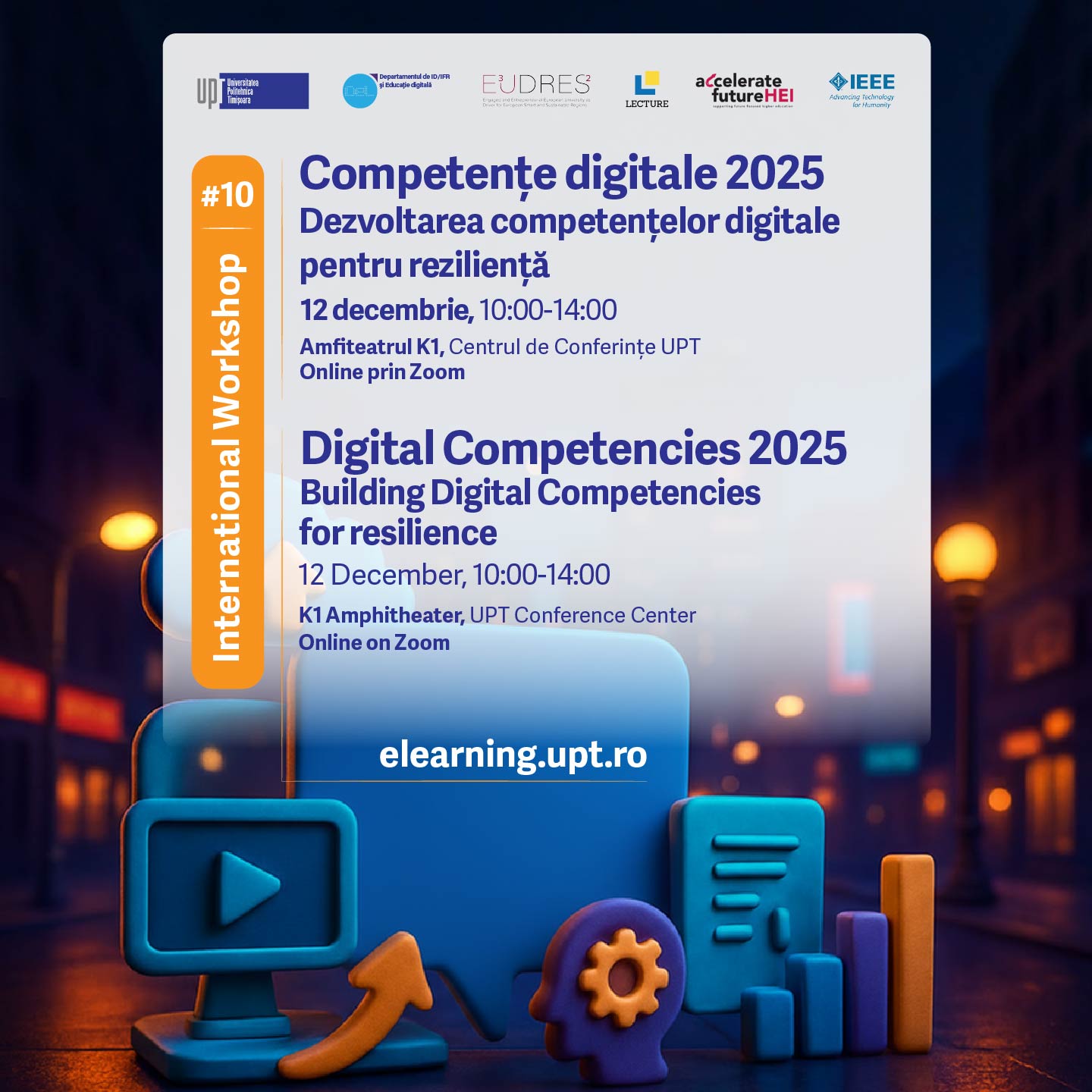
International Digital Skills Workshop 2025: Developing Digital Skills for Resilience

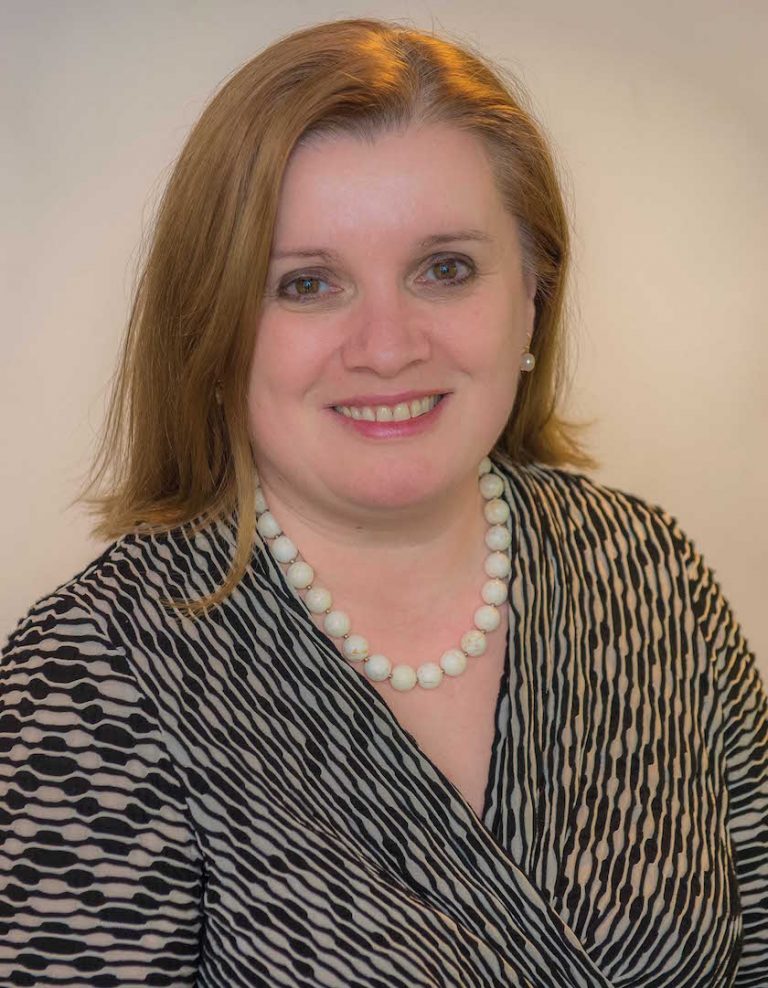
Diana Andone | On-site
Director of the ID/IFR and Digital Education Department
Dr. Diana Andone is the Director of the Department of ID/IFR and Digital Education at Politehnica University of Timișoara, Romania, responsible for the planning and implementation of digital technologies, online learning technologies and the university's award-winning CVUPT Virtual Campus. She is also an Associate Professor at Politehnica University of Timișoara, Romania, in the field of multimedia, interactive and web technologies. Since 1998, she has been teaching course modules at universities in the UK, France, USA, Finland, Italy, Greece.
She holds a PhD in Designing eLearning Spaces for Digital Students from Brighton University, UK, has extensive research experience, with an intense publishing activity (over 17 books, 100 research papers, 11 Best Paper Awards), and over 30 research and educational projects, mainly funded by the European Commission. She is passionate about ubiquitous access to technologies and how they can be used to improve people's lives.
Dr. Andone actively promotes the use of OER, MOOCs and open education principles, developing UniCampus.eu for digital skills training, acting in international associations (EDEN, IEEE, AACE, IADIS, IAFES,) actively supports the local start-up movement (StartUp Weekend, HackTM, hackathons, CoderDojo) and Girls in Tech, Women in Tech and STEM education. She also works on the Board of Directors of Romanian NGOs (Fundația Pentru Voi), in Timișoara 2021 European Capital of Culture Task Force and in other volunteer organizations. Dr. Andone is an EDEN Senior Fellow, IEEE Education Society 2021 Distinguished Chapter Leadership Award recipient, EDEN Vice President for Communication and Communities (2018-2021) and member of the Board of Governors of the IEEE Education Society (2021-present), and within the IEEE Romania Section the Educational activities Chair (2019-present).

Judith Cosgrove | Online
European Commission, Joint Research Centre.
Judith Cosgrove works in the Digital Economy Unit of the European Commission's Joint Research Centre (JRC) in Seville. His work focuses on digital skills (management of the DigComp framework) and digital skills analysis.
Before joining the JRC, she had worked in various roles, including Chief Executive Officer of the Educational Research Centre in Ireland, overseeing research projects, test development, national and international studies, and program evaluations.
She has collaborated internationally in several roles, including as Ireland's governing board representative on OECD's PISA and PIAAC studies, as well as national project manager on OECD's PISA study. She holds a PhD in comparative education and a Master’s in psychology.

Ilona Buchem | Online
Beuth University, Berlin
Ilona Buchem is a professor of media and communication at the Beuth University of Berlin, Faculty I of Economics and Social Sciences. He holds a PhD in Business Education from the Humboldt University of Berlin, a Certificate in Business Administration from the University of St. Gallen in Switzerland, and a Master's degree in Applied Linguistics and Communication from the University of Warsaw (Poland). Ilona Buchem has led a number of research and development projects, including the recent Open Virtual Mobility project (Erasmus+, Strategic Partnership 2017-2020), the Open Badge Network (Erasmus+, Strategic Partnership 2014-2017), BeuthBonus and CreditPoints Migrant Academics as part of the German Federal Programme “IQ – Integration through Qualification”, 2013-2020), Digital Future (Digital Strategies for Higher Education, Stifterverband – German Association of Science Foundations, 2015-2017), Wikipedia-Diversity – , in collaboration with Wikimedia Germany, which promotes the integration of a gender perspective into the German Wikipedia.
Nataliia Ponomarova | On-site
HS Skovoroda Kharkiv National Pedagogical University, Kharkiv, Ukraine
Doctor of Pedagogical Sciences, Professor, Dean of the Faculty of Physics and Mathematics, H.S. Skovoroda Kharkiv National Pedagogical University, Kharkiv, Ukraine
Doctor of Science (Pedagogical Sciences), PhD (Pedagogical Sciences), Full Professor. Dean of the Faculty of Physics and Mathematics. Has 30 years of experience in the introduction of information and communication technologies to the educational process in educational institutions of various levels, with personal experience in teaching Computer Science disciplines in secondary and higher education institutions.
Project coordinator and speaker of the regional centre of mixed education Skovoroda-hub H.S.Skovoroda KhNPU. Member of the improvement of scientific qualification and internships abroad. Member of the association PA "International Association of Researchers in Mathematics Didactics".
The scientific adviser of dissertations and master's theses. Member of the editorial board of the specialized scientific and information journal "New College". She has authored and co-authored about 200 publications, among which about 50 are related to the subject of the project
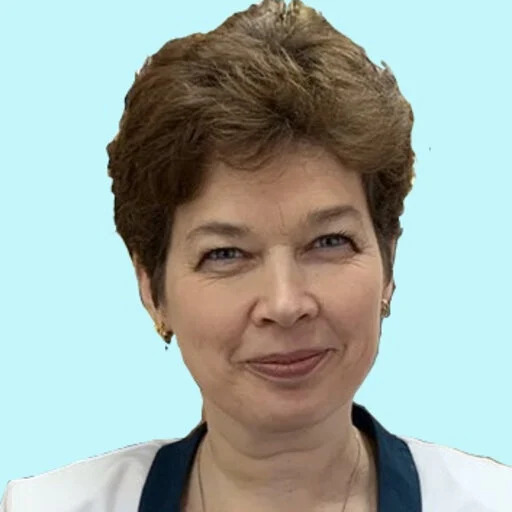
Nadiia Olefirenko | On-site
HS Skovoroda Kharkiv National Pedagogical University, Kharkiv, Ukraine
Doctor of Science (Pedagogical Sciences), PhD (Pedagogical Sciences), Full Professor, 25 years of teaching experience.
The research interests focus on the field of training teachers of Computer Science, utilizing ICT in education, designing e-resources for teaching, and the didactics of informatics.
The author has more than 240 scientific and methodical publications, as well as textbooks, educational, and training manuals for pre-service teachers and schoolchildren.
She is a member of the Commission of the Ministry of Education and Science of Ukraine for the development of the standard of higher education, specialty A4: Secondary Education.
She is a member of the editorial board of two scientific journals on education, a specialist in assessing open-ended responses related to competence orientation in mathematics for PISA 2018 and 2022. ORCID, Web of Science, Scopus.
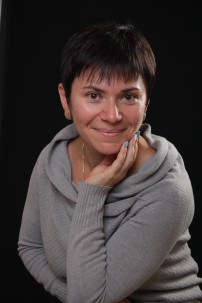
Ganna Krapivnyk | On-site
HS Skovoroda Kharkiv National Pedagogical University, Kharkiv, Ukraine
PhD (Philology), DSc in Philosophy of Culture, associate professor, 19 years of teaching experience.
Research interests focus on second language teaching methodology, language learning for special purposes, and linguo-cultural studies.
CELTA certified, NVC certified, Malteser psychosocial counselling project coordination, Access Microscholarship teaching and curriculum development, Pre-Service ELT Methodology Program (supported by US Embassy), participation in IVLP program.

Luca Contardi | ON-SITE
PhD student in Heritage Science, Roma Tre University, Italy
Luca Contardi is a Researcher at the Department of History, Humanities, and Society at the University of Tor Vergata, where he also serves as a subject expert in Experimental Pedagogy.
While attending the National PhD Programme in Heritage Science at Sapienza University of Rome, he was a Visiting Researcher at London Metropolitan University (UK) in 2024.
He holds a Master’s Degree in Historical and Oriental Studies from the Alma Mater Studiorum – University of Bologna, with a specific focus on Indian art between the nineteenth and twentieth centuries.
He also completed two post-graduate courses in Heritage Education and Digital Technologies (University of Modena and Reggio Emilia) and in Advanced Studies in Museum Education (a joint degree of Roma Tre University and the University of Modena and Reggio Emilia).
His research interests include new technologies for cultural heritage enhancement, museum education, and decolonial practices in museum contexts.
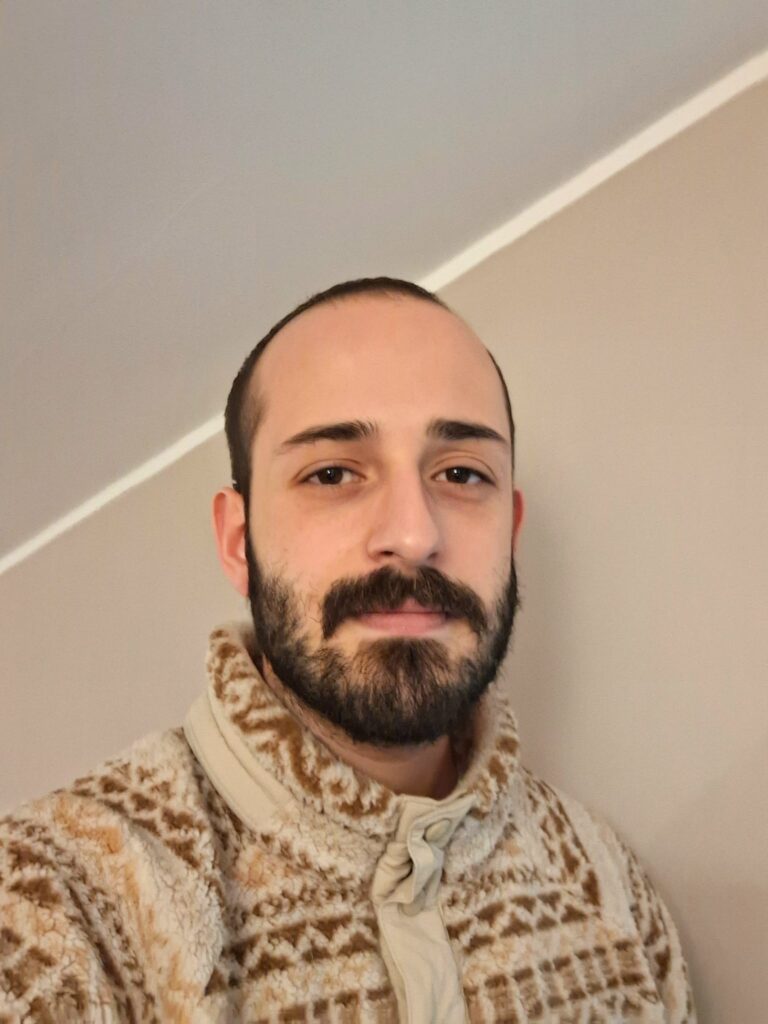
Gabriele Minotti | ON-SITE
Researcher at the Department of History, Humanities, and Society at the University of Tor Vergata
Gabriele Minotti is a Researcher at the Department of History, Humanities and Society at the University of Rome Tor Vergata. He is a Graphic Designer based in Rome, holding a Degree in Advertising Graphics and a Master's Degree in Computer Animation and Visual Effects, both from RUFA – Rome University of Fine Arts. He is one of the directors of the CGI animated short film, "Thinkle", shortlisted in several festivals in 2025, which explores education as a means of breaking intergenerational traumas.
He strongly believes in visual communication as a tool for public engagement and as a vector for social well-being, a perspective that informs his current research in the field of Experimental Pedagogy.

Carmen Holotescu | On-site
"Ioan Slavici" University Timișoara
Carmen Holotescu is a professor, rector of the “Ioan Slavici” University of Timisoara, with a PhD in new technologies and open education. She has participated in many European projects and has extensive experience in the design and implementation of learning and collaborative platforms based on open pedagogies.
She has written over 100 articles and chapters/books related to eLearning/Blended Learning, Social Media, Open Educational Resources (OER), Massive Open Online Courses (MOOC), Blockchain, mentioned in over 2,500 citations. She is a certified online instructor of the University of Maryland University College, USA, facilitating online courses at this university for 12 years.
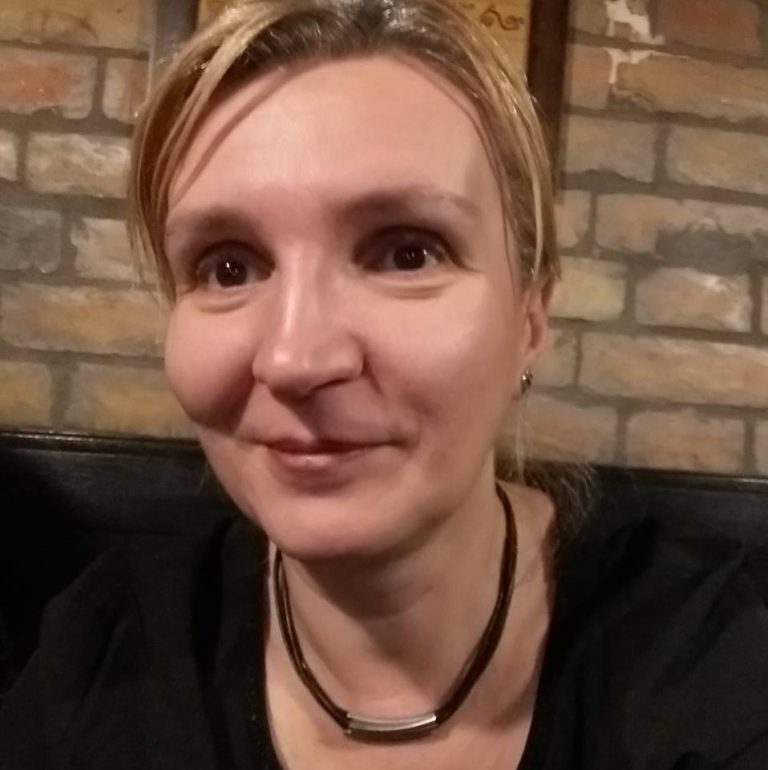
Gabriela Grosseck | ON-SITE
West University of Timisoara
Dr. Gabriela Grosseck is an associate professor in the Department of Psychology at the West University of Timișoara, Romania. With extensive experience in the use of ICT in education (teaching, learning and research), she is particularly concerned with the training of students and teachers, both in face-to-face and online environments.
For over a decade, she has been the editor-in-chief of the Romanian Journal of Social Informatics. Author of numerous articles in the field of e-learning, he has a sustained presence as a speaker at various international events, organizer of workshops or member of various editorial committees (journals and/or conferences).
Her research interests cover the main aspects of open education (OERs/OEPs and MOOCs), Web 2.0 tools and social media applications in higher education and, more recently, the area of "digital literacy".
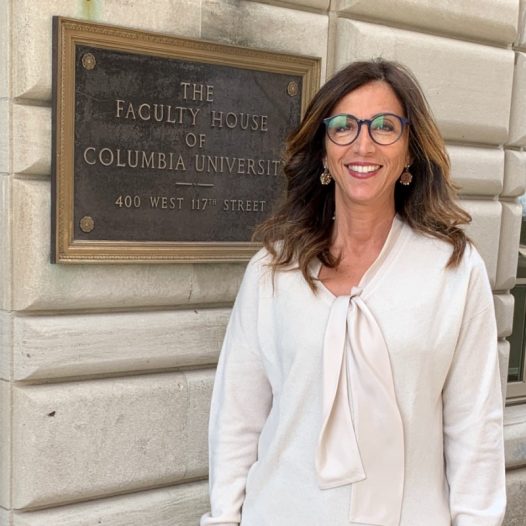
Prof. Antonella Poce | ON-SITE
Tor Vergata University of Rome
Antonella Poce is a full professor of experimental pedagogy in the Department of History, Humanities and Society of the Tor Vergata University of Rome, where she teaches experimental pedagogy, educational research methods and museum education.
From December 2020 to February 2023, he held the position of full professor in the same field at the Department of Education and Humanities of the University of Modena and Reggio Emilia, where he founded and chaired the international research center INTELLECT, focused on research in the field of heritage and museum education, well-being and teaching technologies. He currently chairs the following joint postgraduate programs (Tor Vergata University of Rome and Roma Tre University): the one-year program Empirical Studies in Museum Education and the two-year program Advanced Studies in Heritage Education. He coordinates national, international and European projects and has chaired international academic committees on assessment and distance learning.
His research focuses on innovative teaching and learning practices in higher education, both nationally and internationally.

Ana Stamatescu | PHYSICS
European Digital Education Hub (EDEH)
Her education began at POLITEHNICA University of Bucharest, where she obtained an Engineering Diploma in Automatic Control and Applied Informatics (2009–2013). She later obtained a degree in Business Management at the Bucharest Academy of Economic Studies (2014–2016).
With over 15 years of experience in NGOs in Romania, Ana decided to leverage her expertise in digital education and passion for nature to found Krontechies – an NGO dedicated to developing nature technology resources and programs for K-12 teachers, youth, and children. Currently, Krontechies builds technology and nature-based learning experiences for and alongside organizations such as the Propark Foundation for Protected Areas, Rewilding Romania, CULMEA: Film and Environmental Education, Carpathia Conservation Foundation, Lynx Festival, and others. Ana has been the Founder & Executive Director of Krontechies since August 2024.
Since August 2024, Ana has been involved in the European Digital Education Hub (EDEH) as an AI Member Expert. As part of EDEH, she actively contributes to overcoming the current fragmentation of policies, research and implementation practices in digital education at European level. Starting with October 2025, she is part of a new team that will be active until January 2026 on the topic „Key EU-level determinants for the effective adoption of AI in education”.
From August to December 2024, she was also a member of the Explainable AI team that developed guidelines and recommendations on explainable AI in education. This work promoted interdisciplinary research that shifts the focus from the currently dominant technological one to a more human-centered (educational and societal) approach.
Since August 2025, Ana has been a Senior Instructional Designer (Project-based) at the UiPath Foundation. The Foundation is committed to changing the trajectory of children through long-term, personalized support and innovative technology-based education. Their mission is to equip every child with the skills they need for the future and the confidence to succeed, both in and out of school. The Foundation also supports teachers in vulnerable communities by providing professional development, innovative teaching tools, and methodologies focused on inclusion and digital pedagogy.
It should also be noted that UiPath (company, https://www.uipath.com/) is the first Romanian unicorn, a global software company specializing in robotic process automation (RPA).
Her presentation, „Digital Skills and AI for Teachers,” will provide an overview of her favorite teaching and learning resources and experiences for K-12 teachers.

 Română
  English