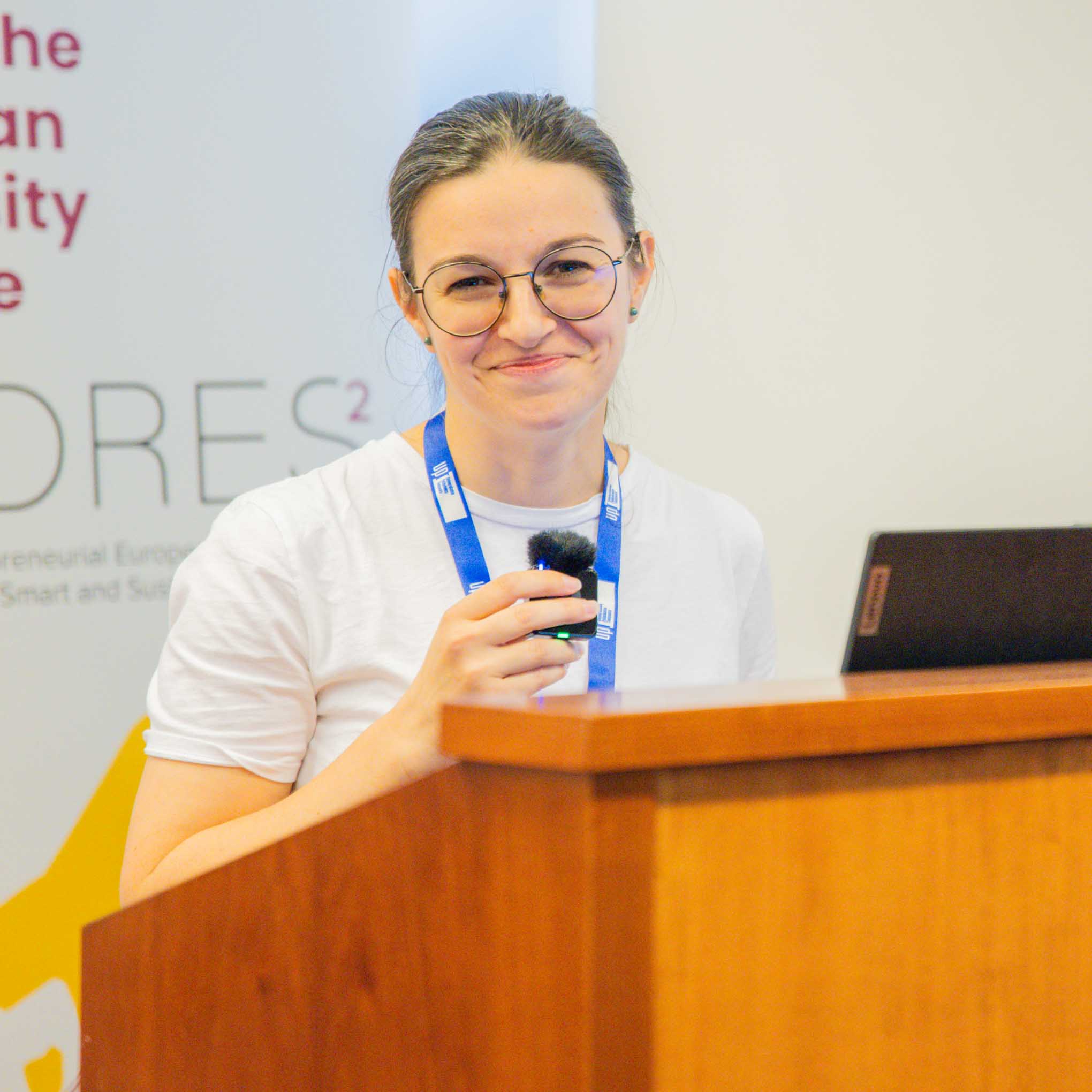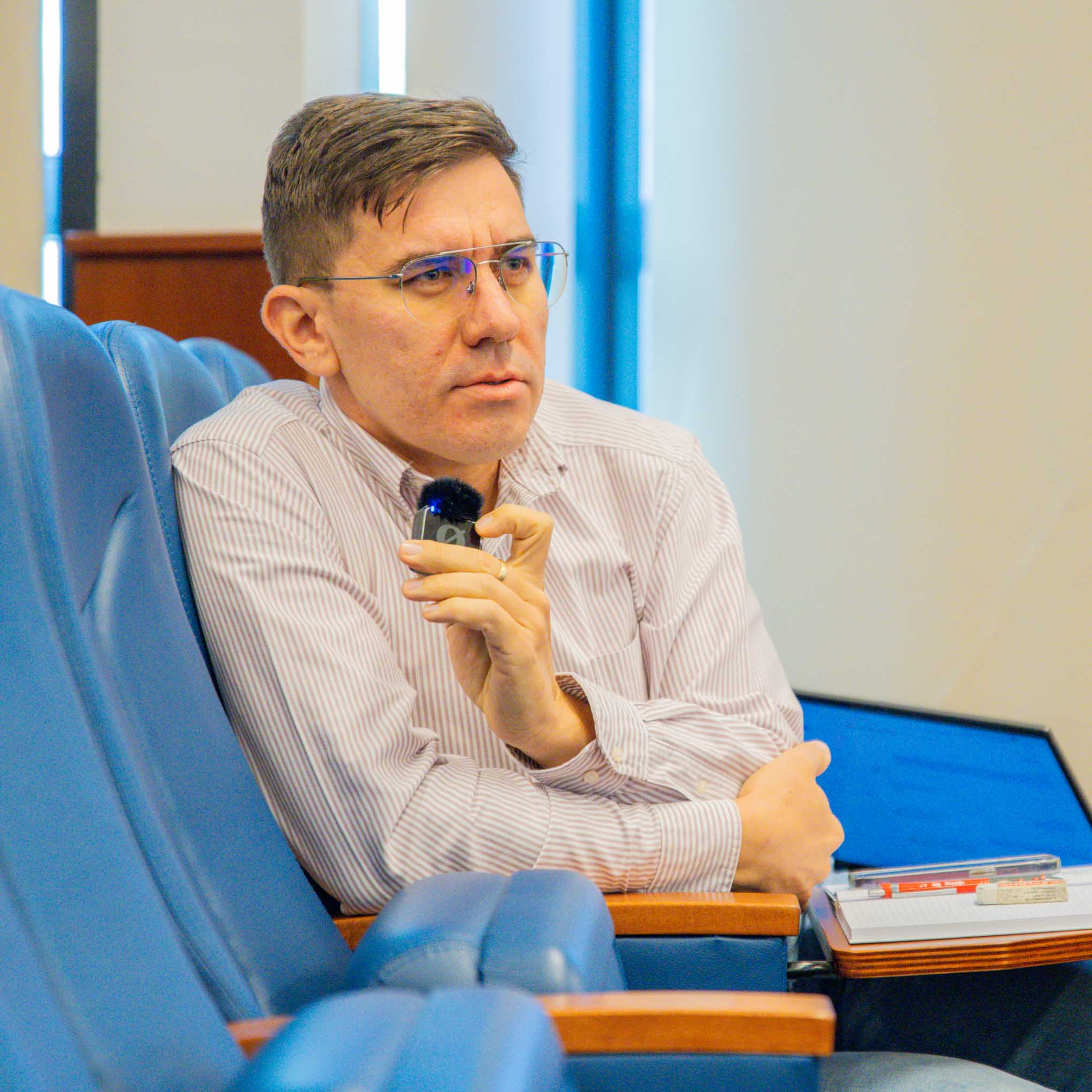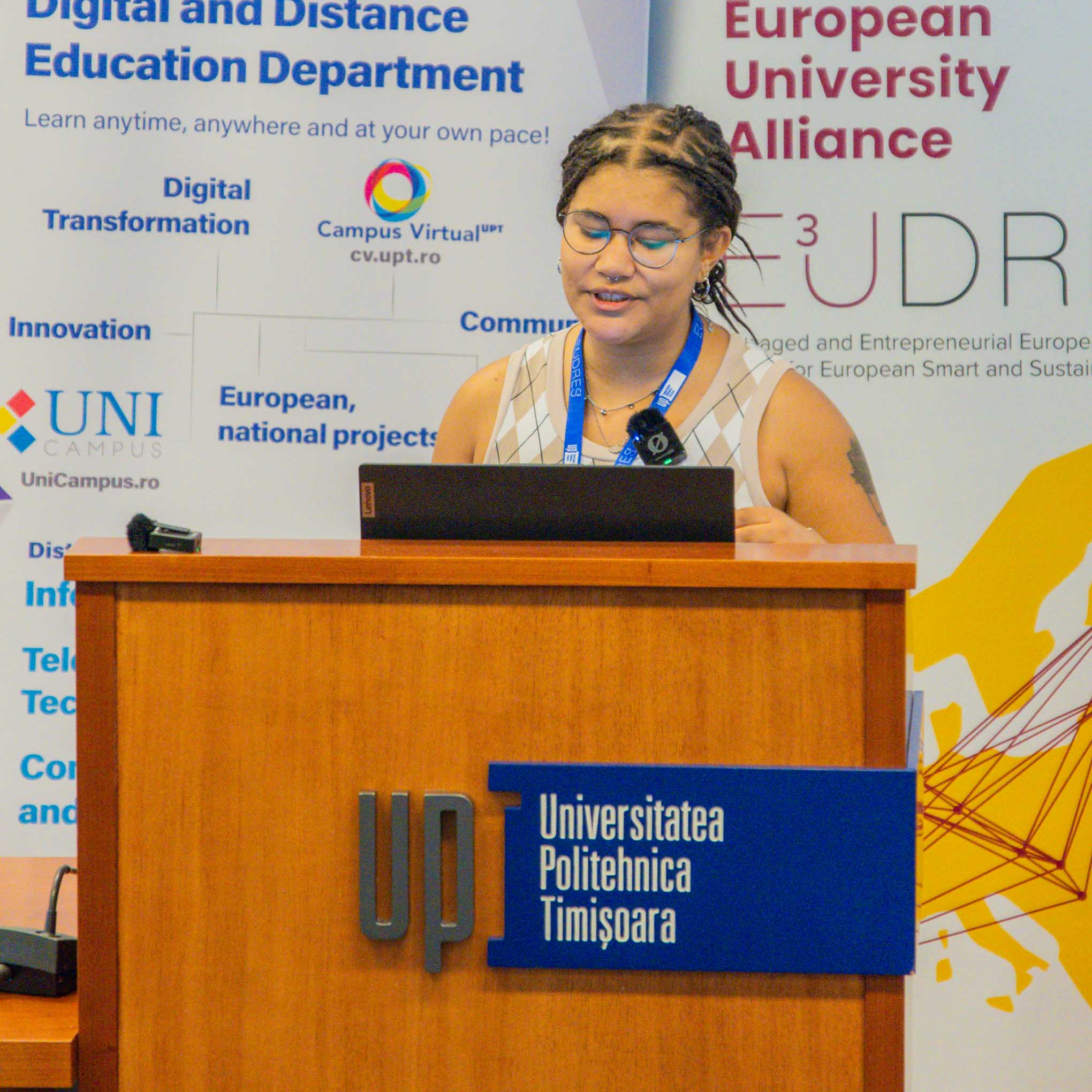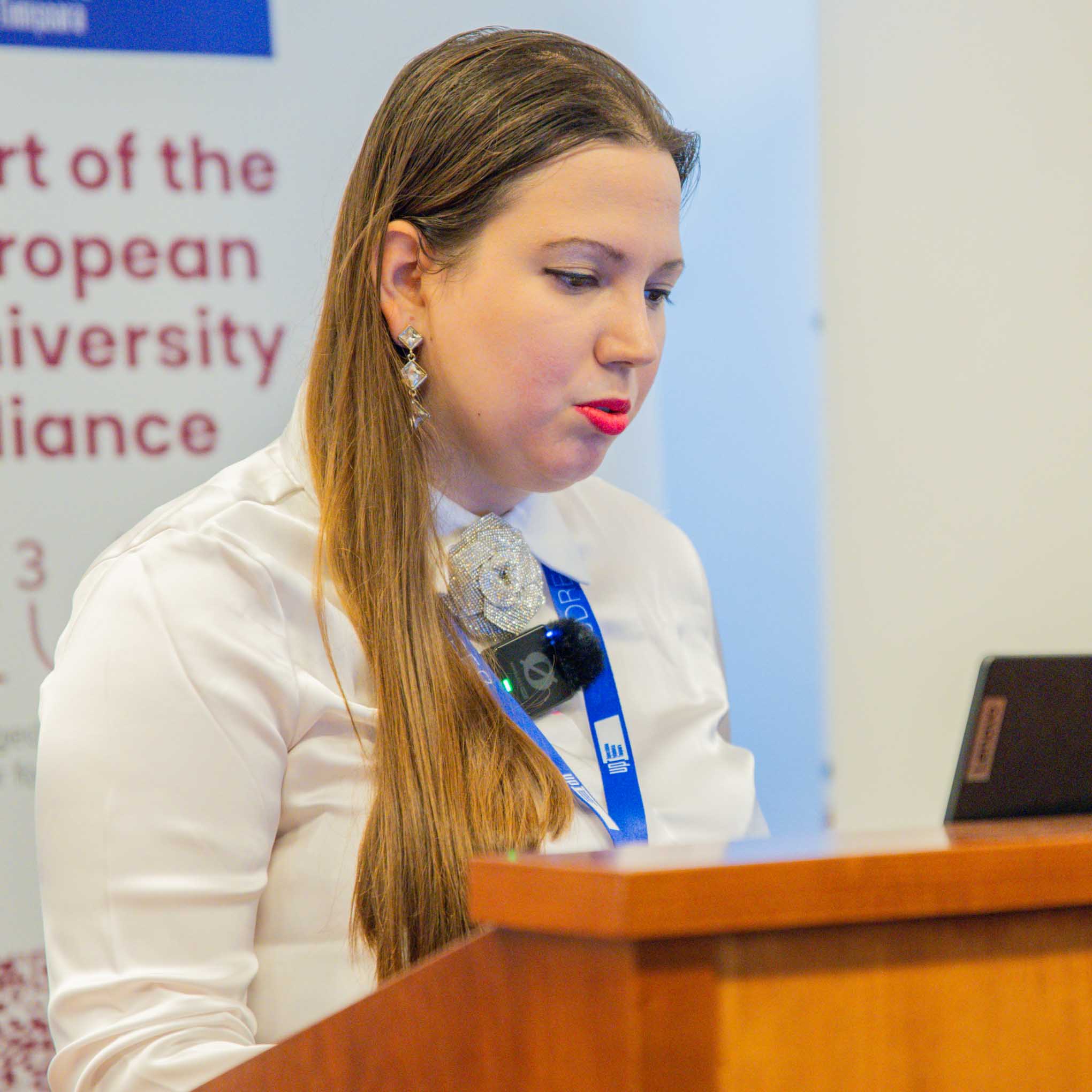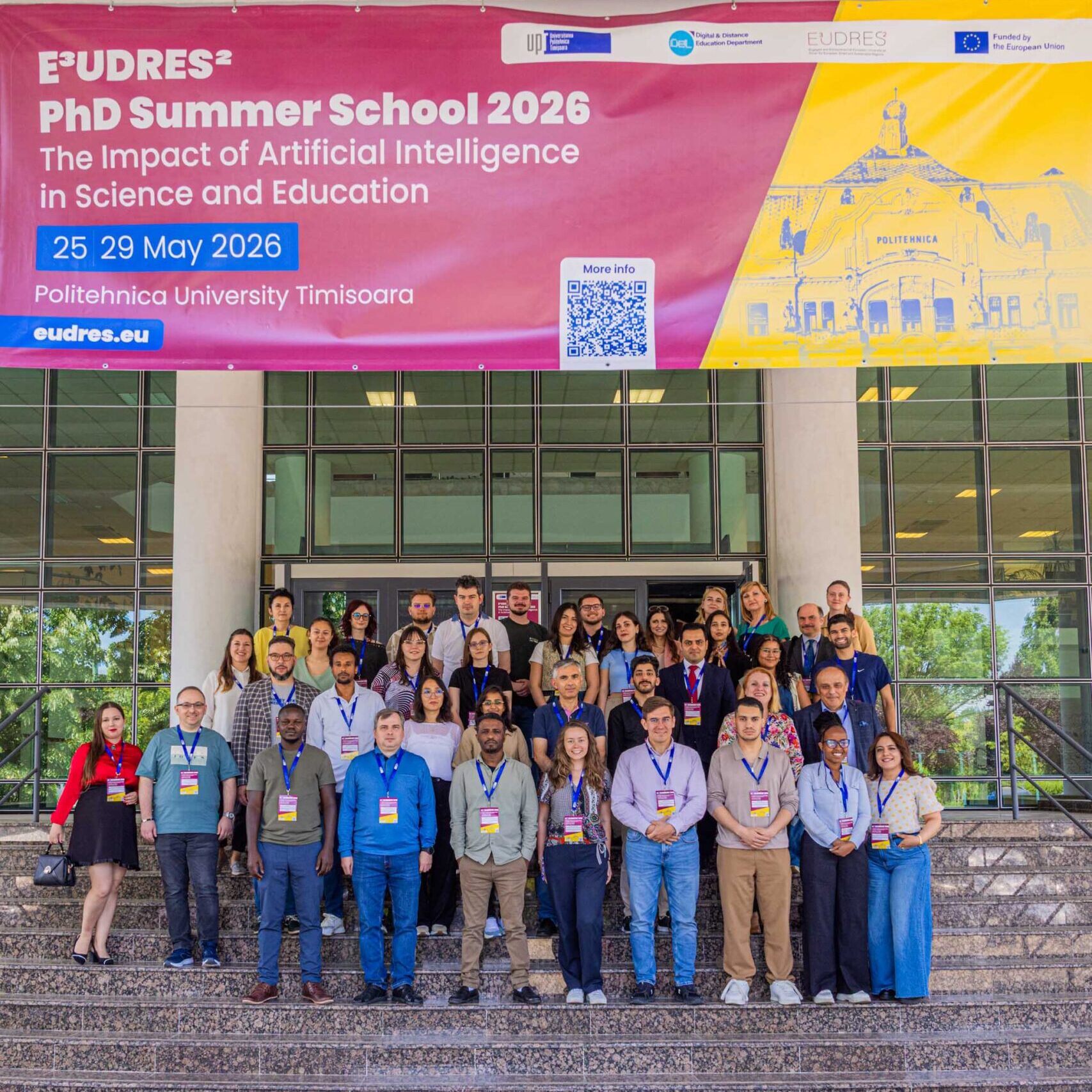
E³UDRES² PhD Summer School 2026 – The Impact of Artificial Intelligence in Science and Education
May 25 – 29 | 2026
Timisoara | Romania
Organized by Politehnica University of Timișoara, as part of the E³UDRES² European University Alliance
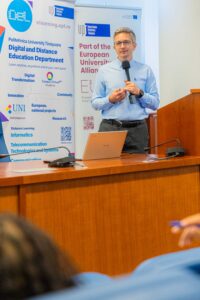
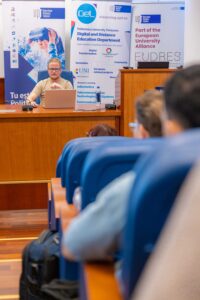
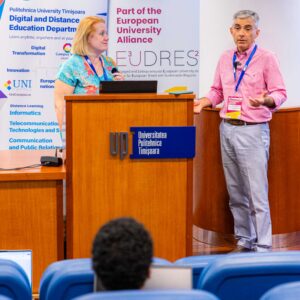
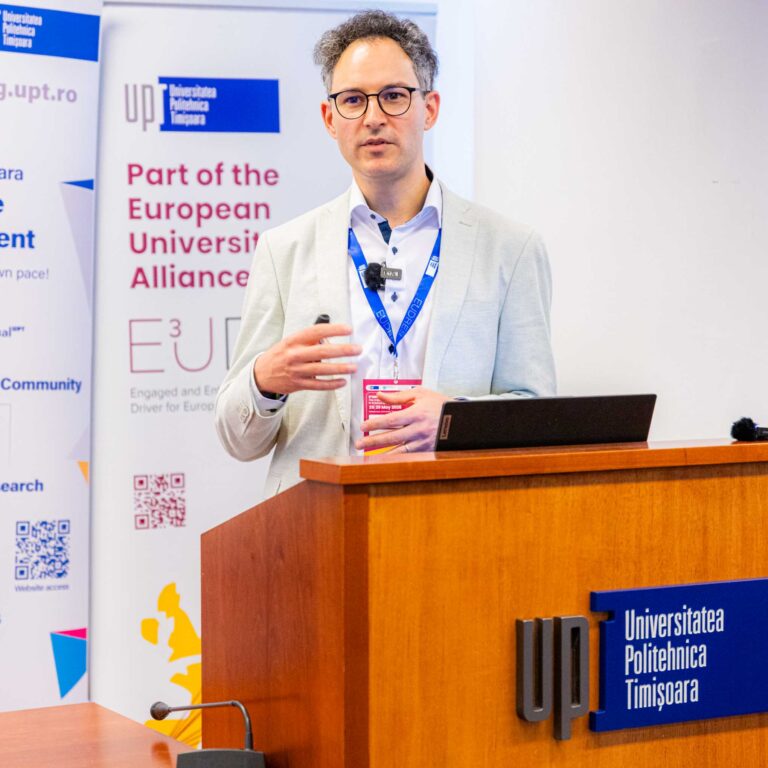
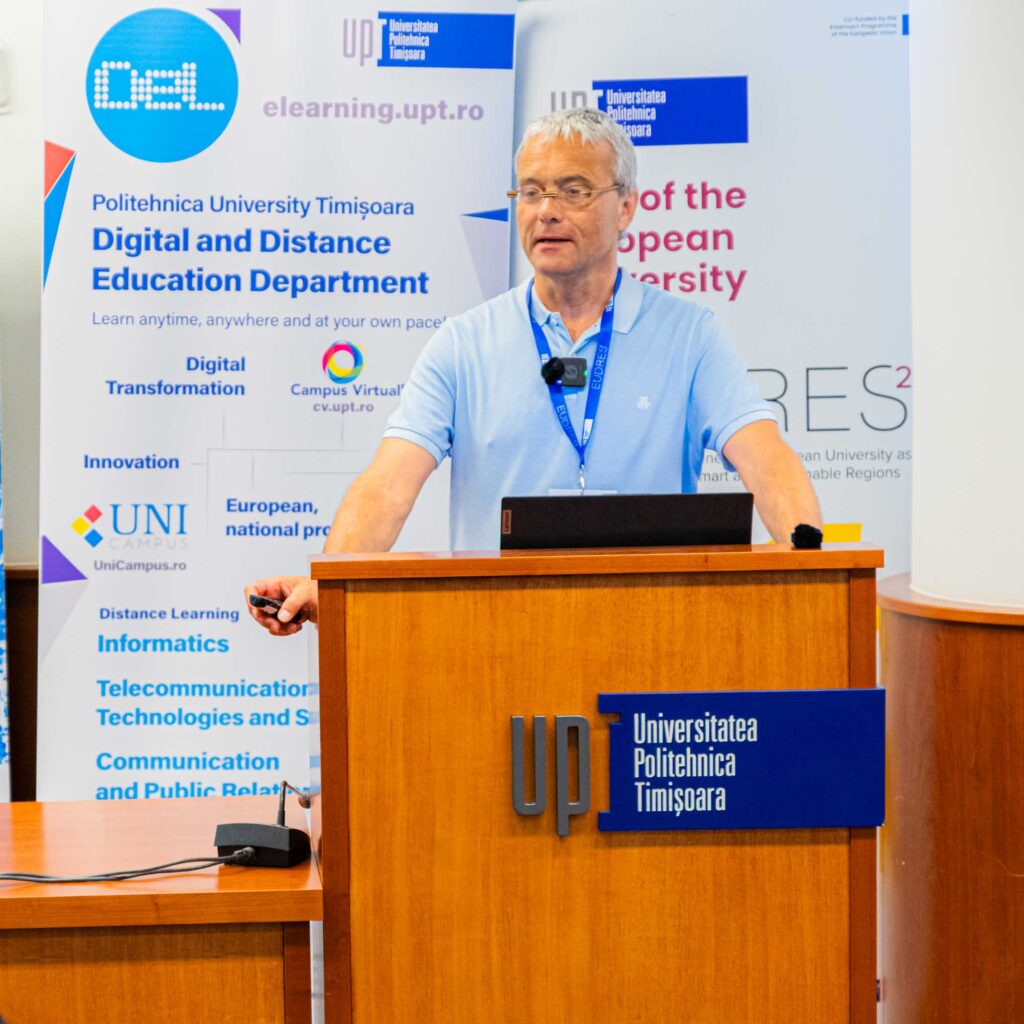
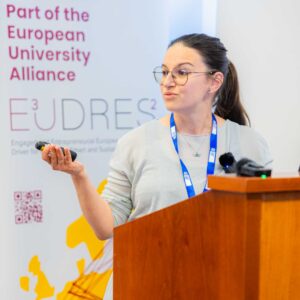
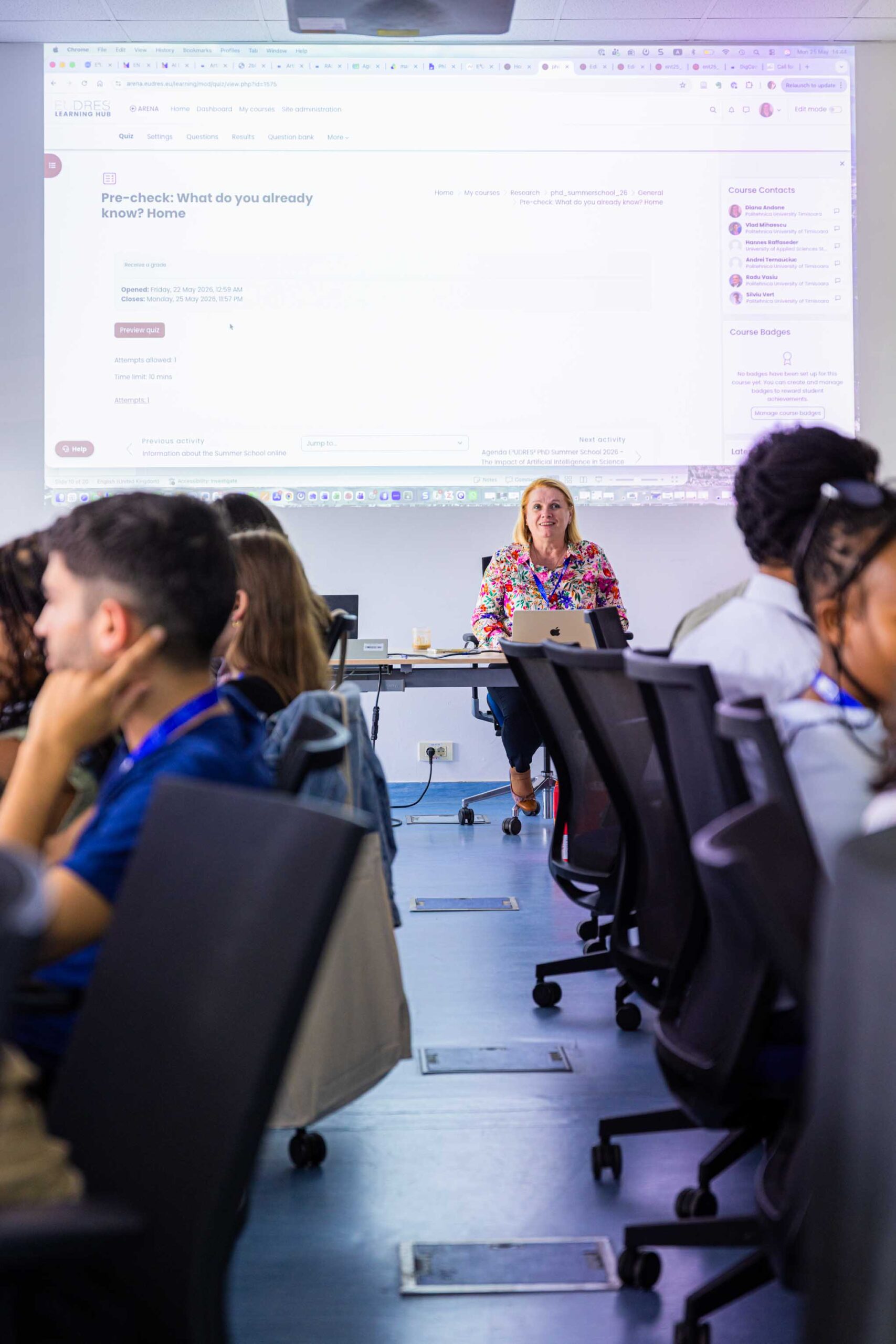
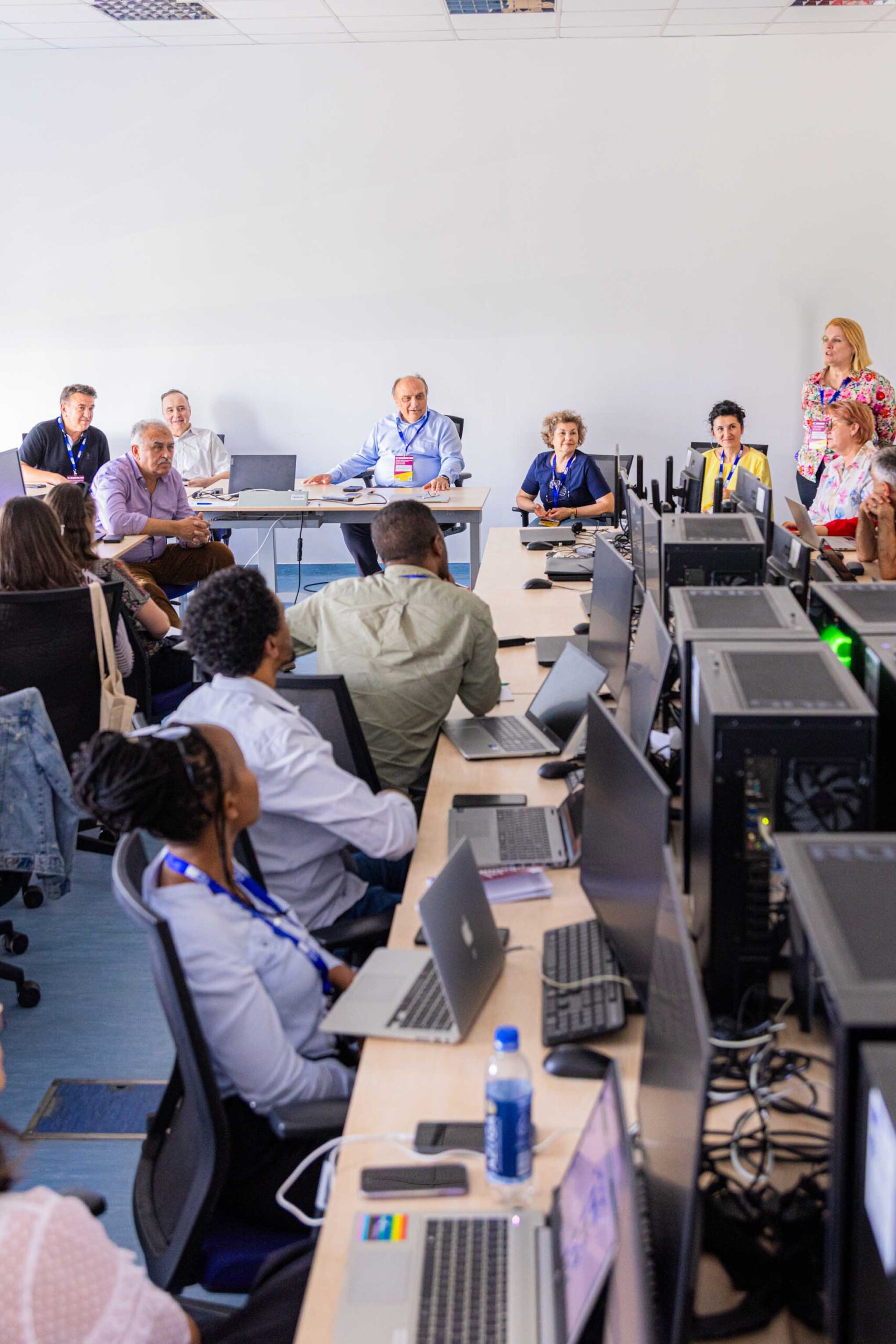
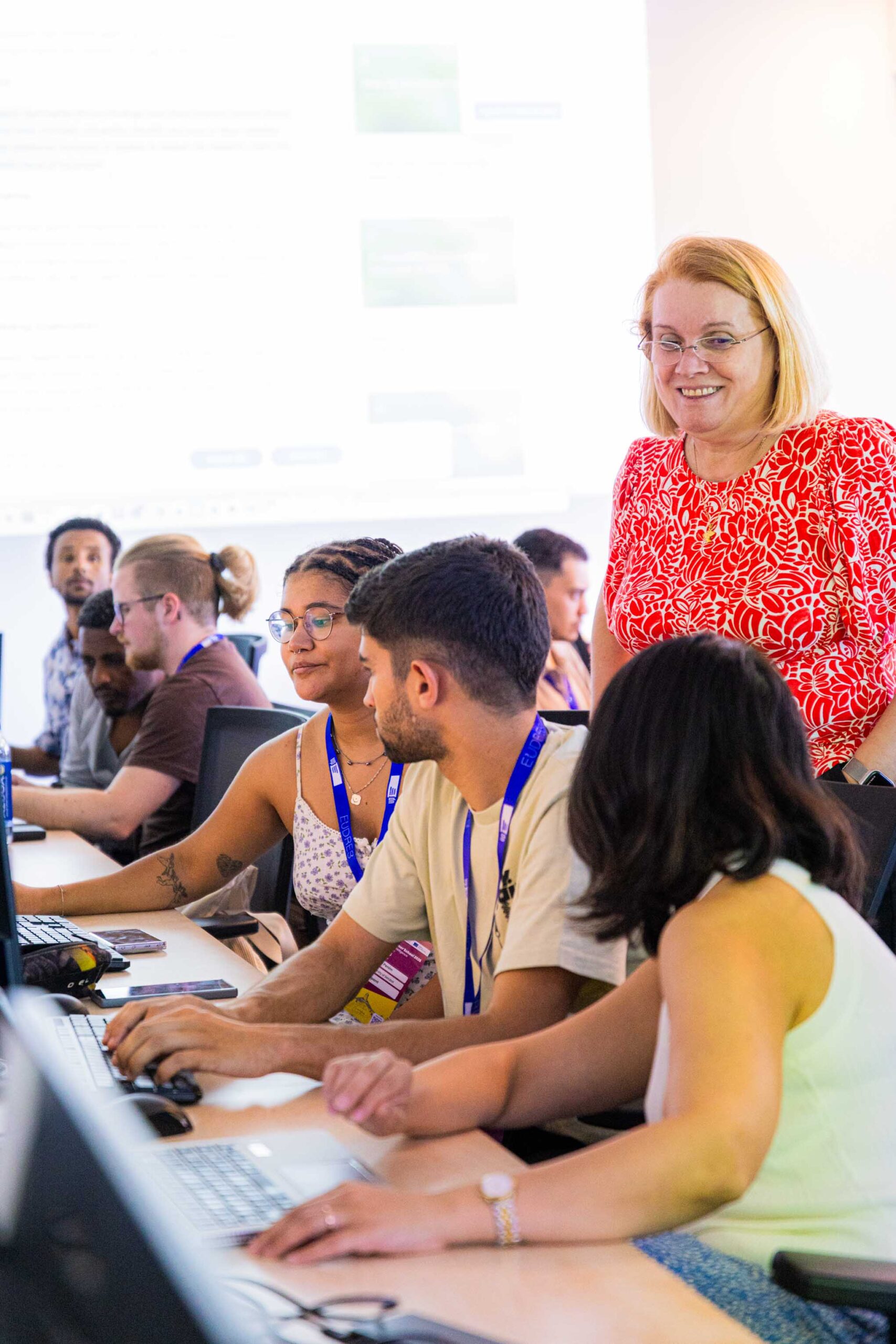
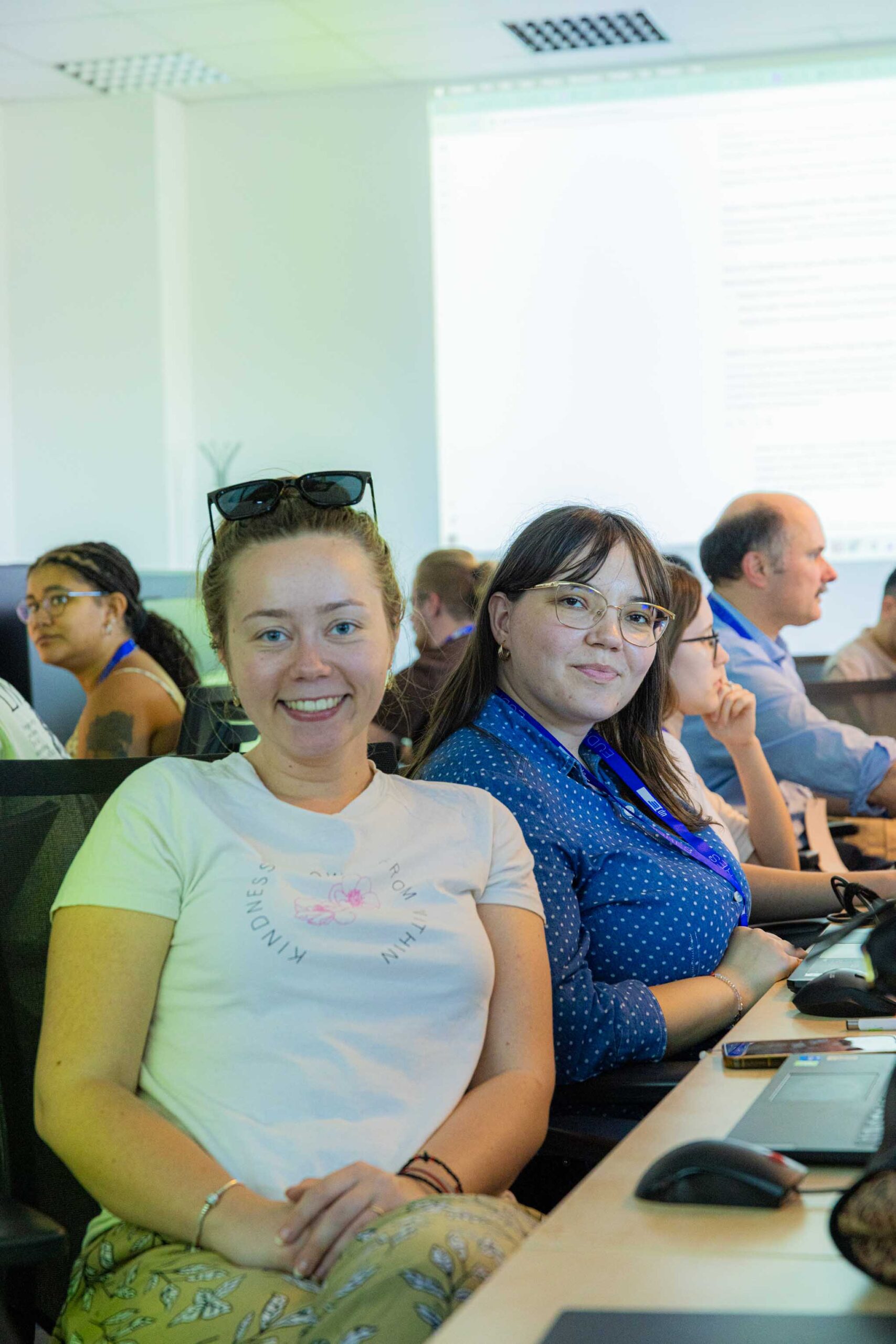
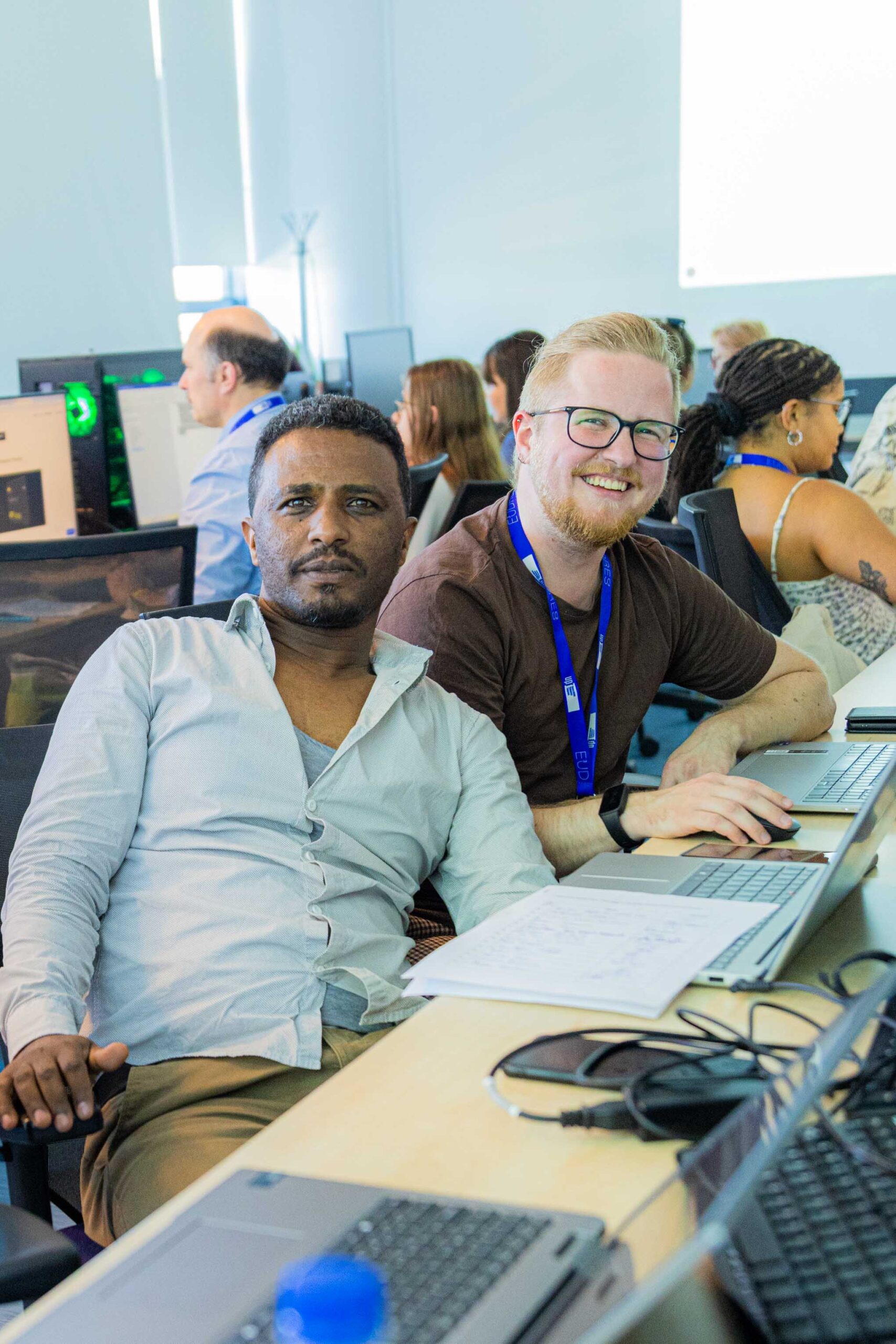
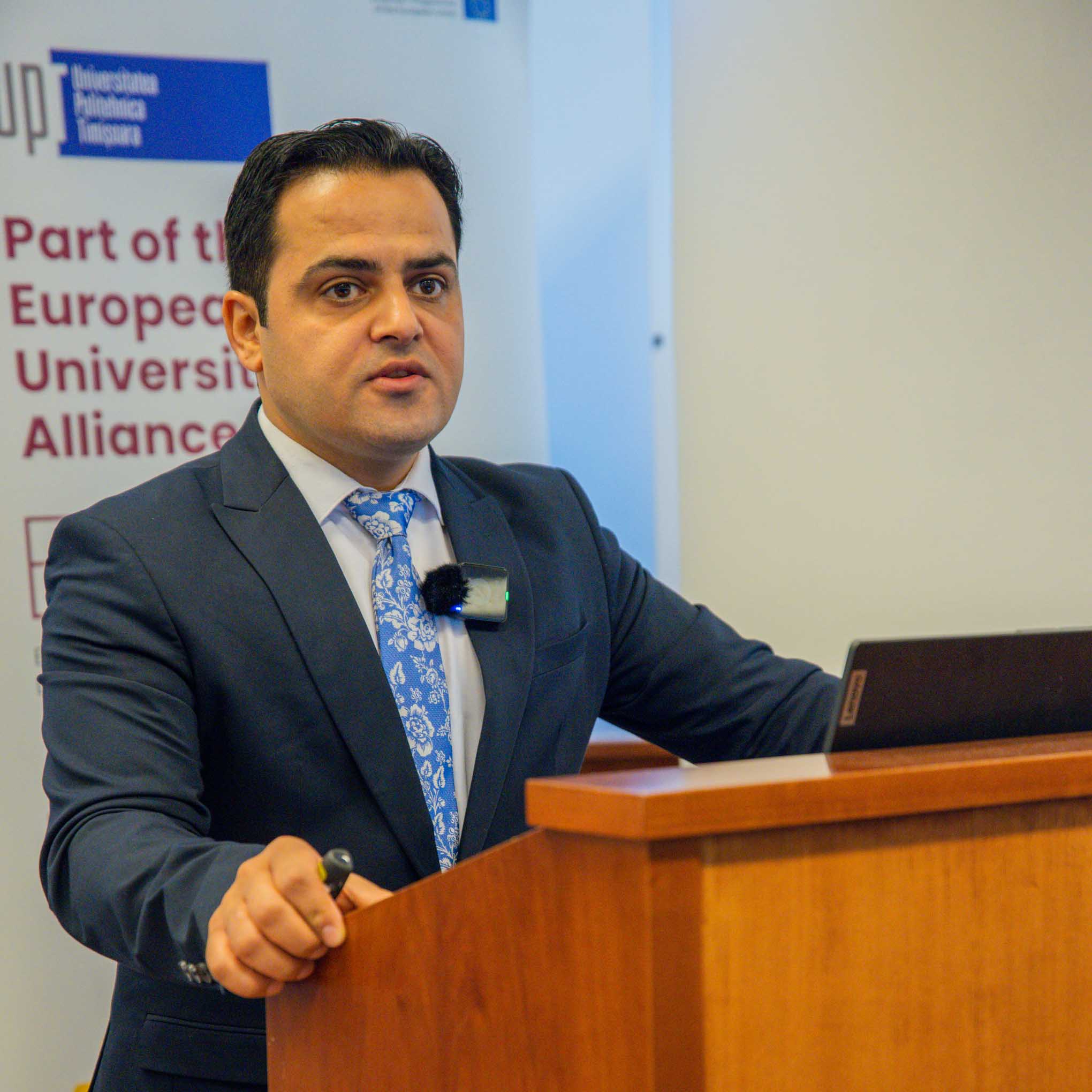
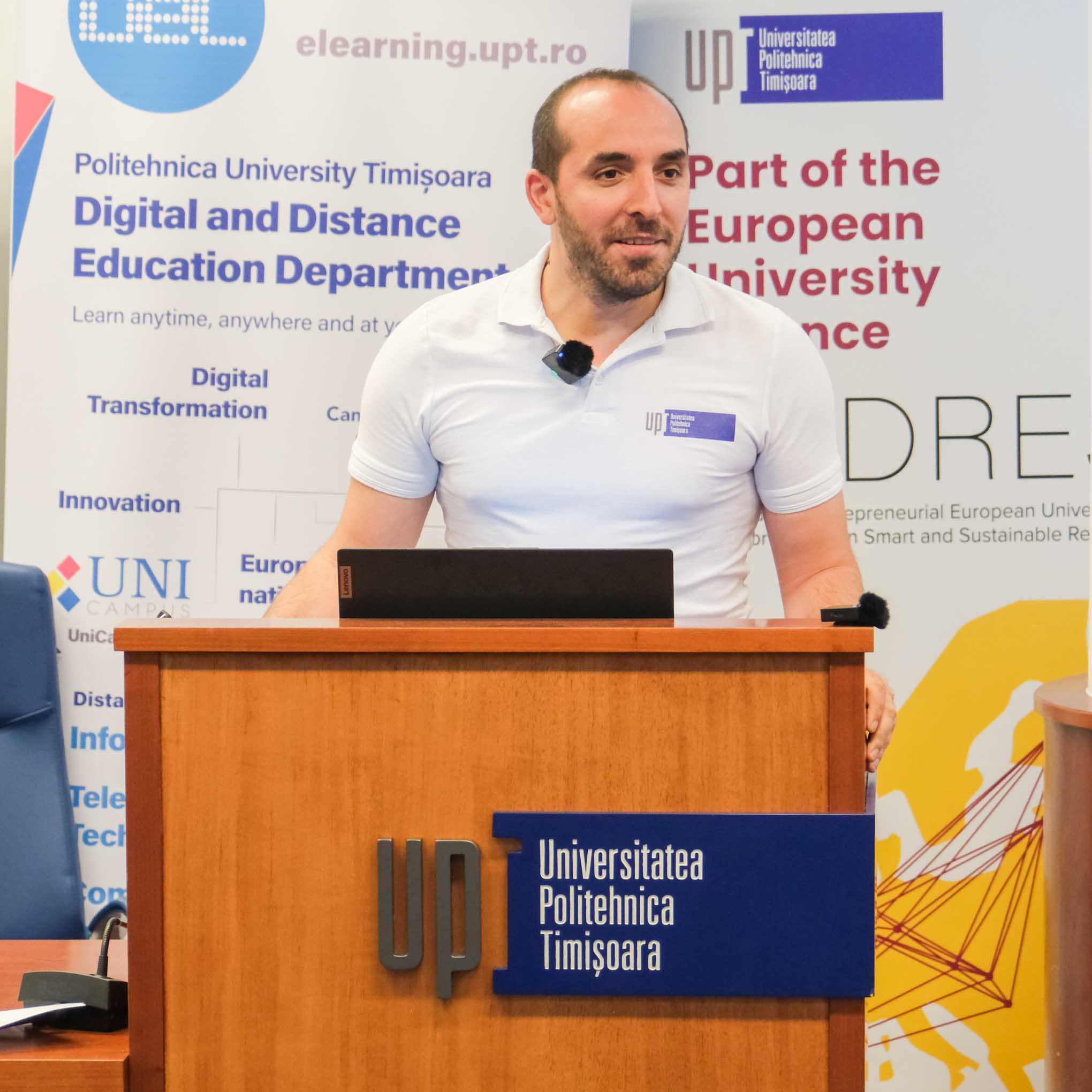
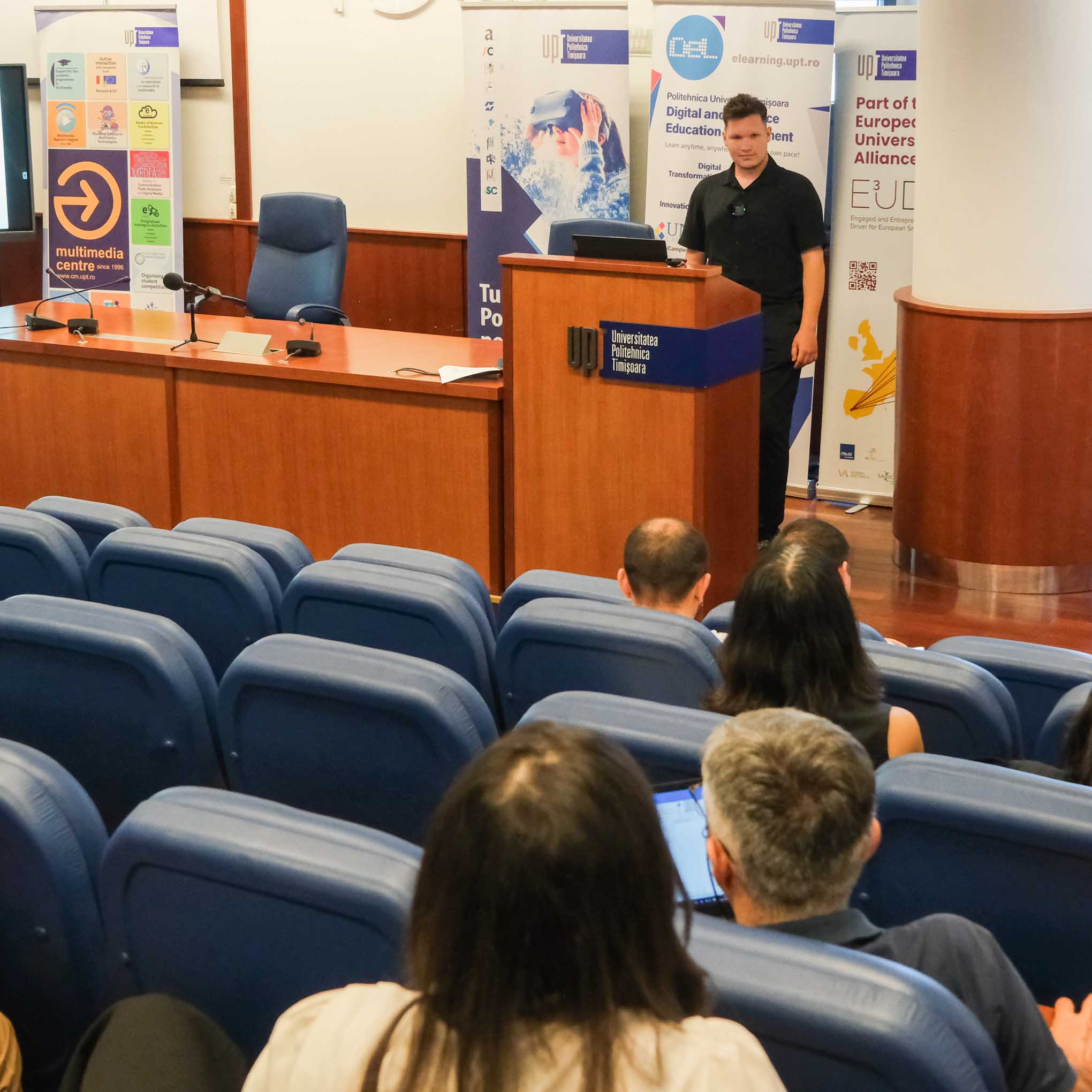
Between May 25 and 29, 2026, Politehnica University of Timișoara hosted the second edition of the E³UDRES² PhD Summer School – The Impact of Artificial Intelligence in ScienceEducation, organized by the Department of Distance and Digital Education (DeL) as part of the E³UDRES² European University Alliance. The event took place at the UPT Conference Center, Vasile Pârvan Boulevard No. 2B, Timișoara.
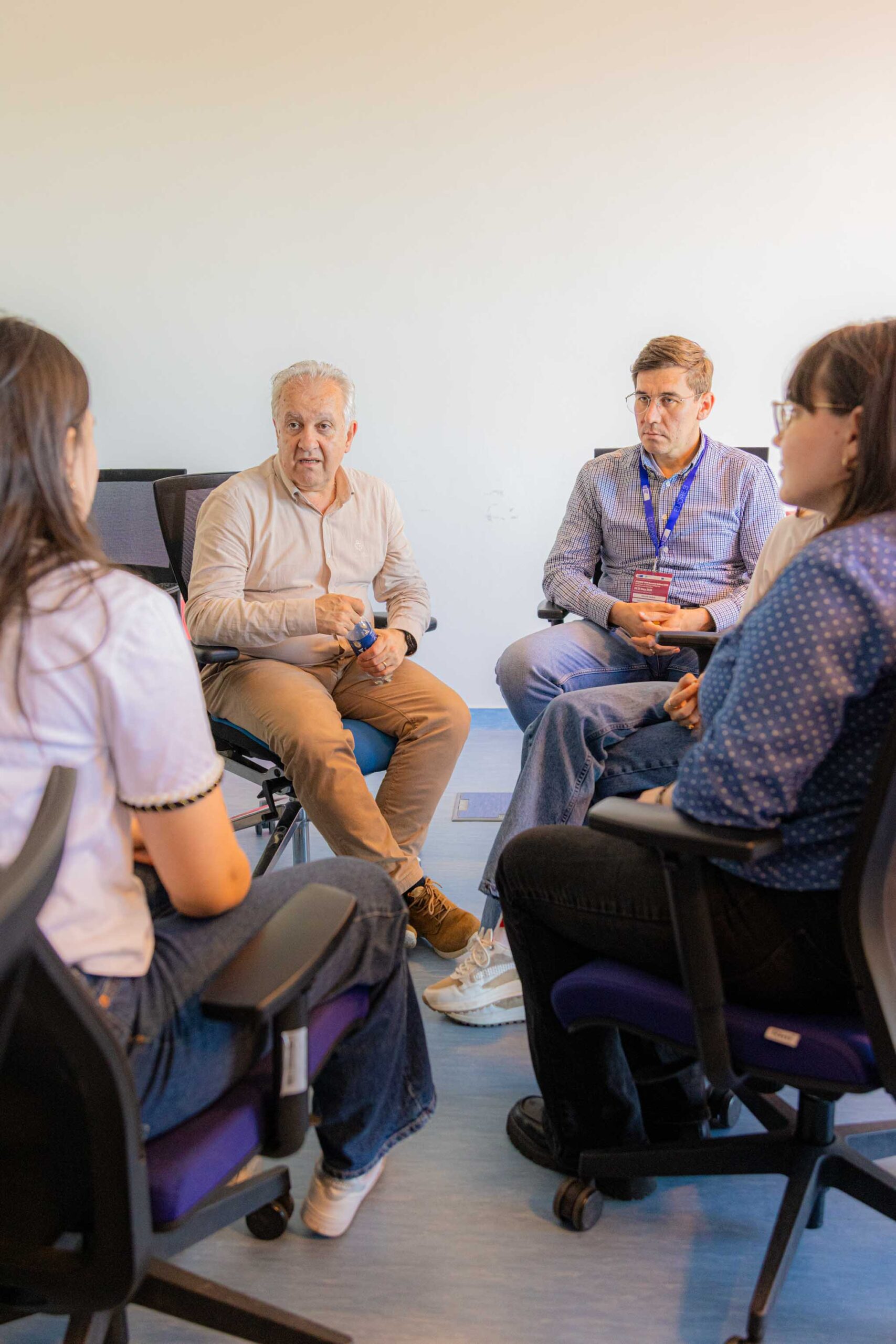
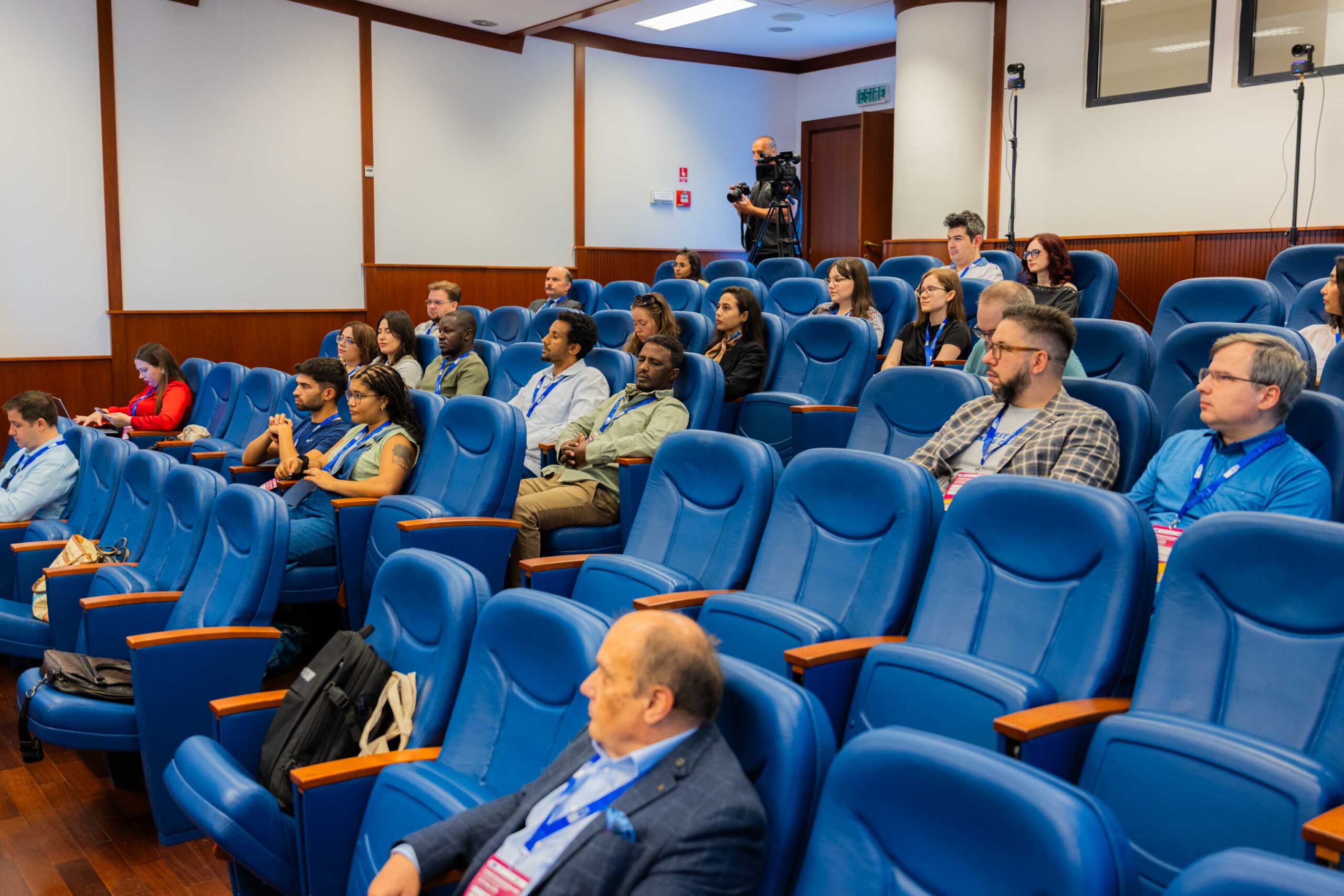
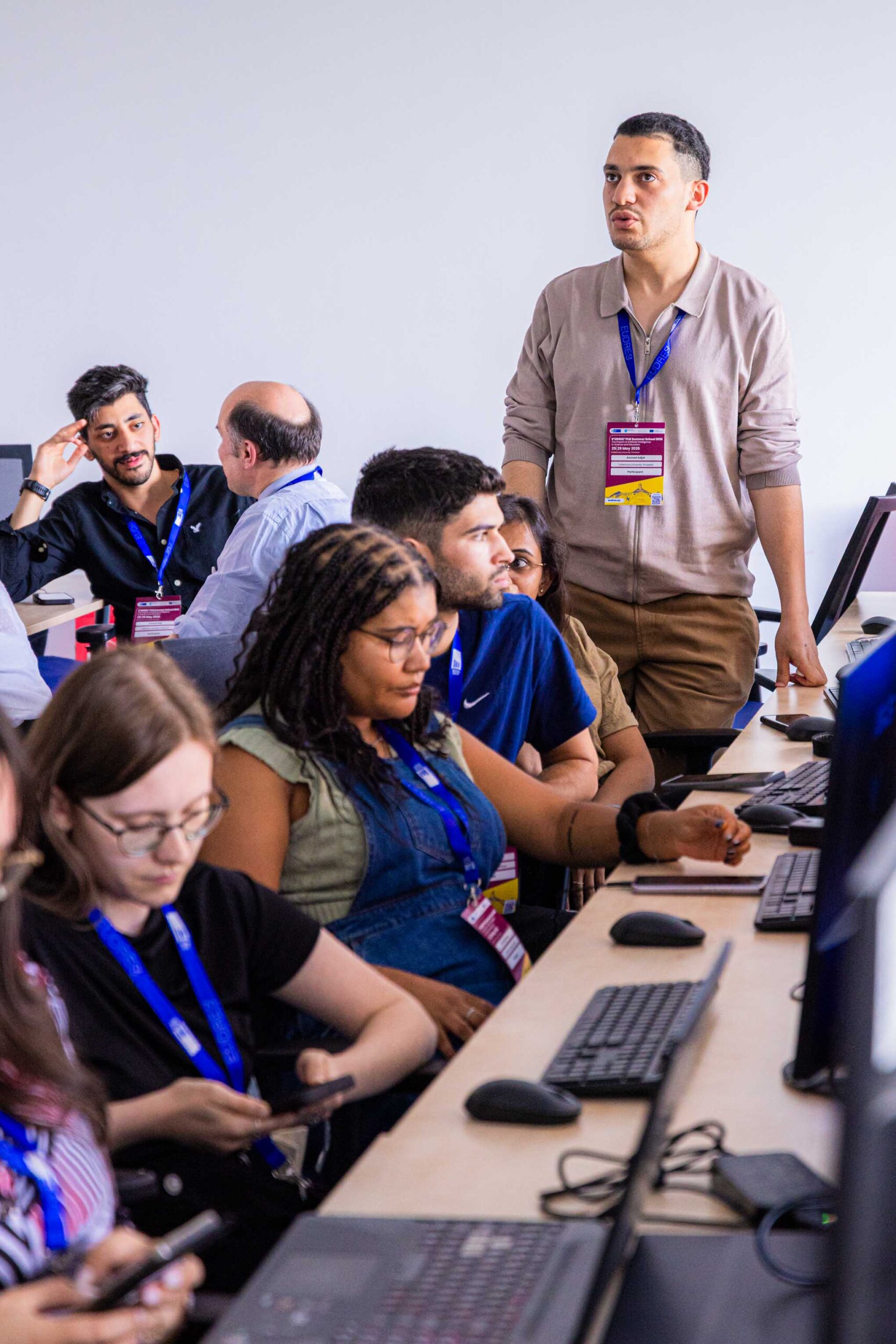
This edition brought together 28 Master's and PhD students from six European countries: Austria, Germany, Hungary, the Netherlands, Latvia, Portugal, and Romania. The morning presentation sessions were streamed live via Zoom, with over 20 online participants — Master's and PhD students who attended the international speakers' presentations free of charge.
The program featured 14 speakers from four countries — Malta, Austria, Portugal, and Romania — and combined morning presentation sessions with interactive practical workshops, mentoring sessions, and a social program that included exploring the city of Timișoara.
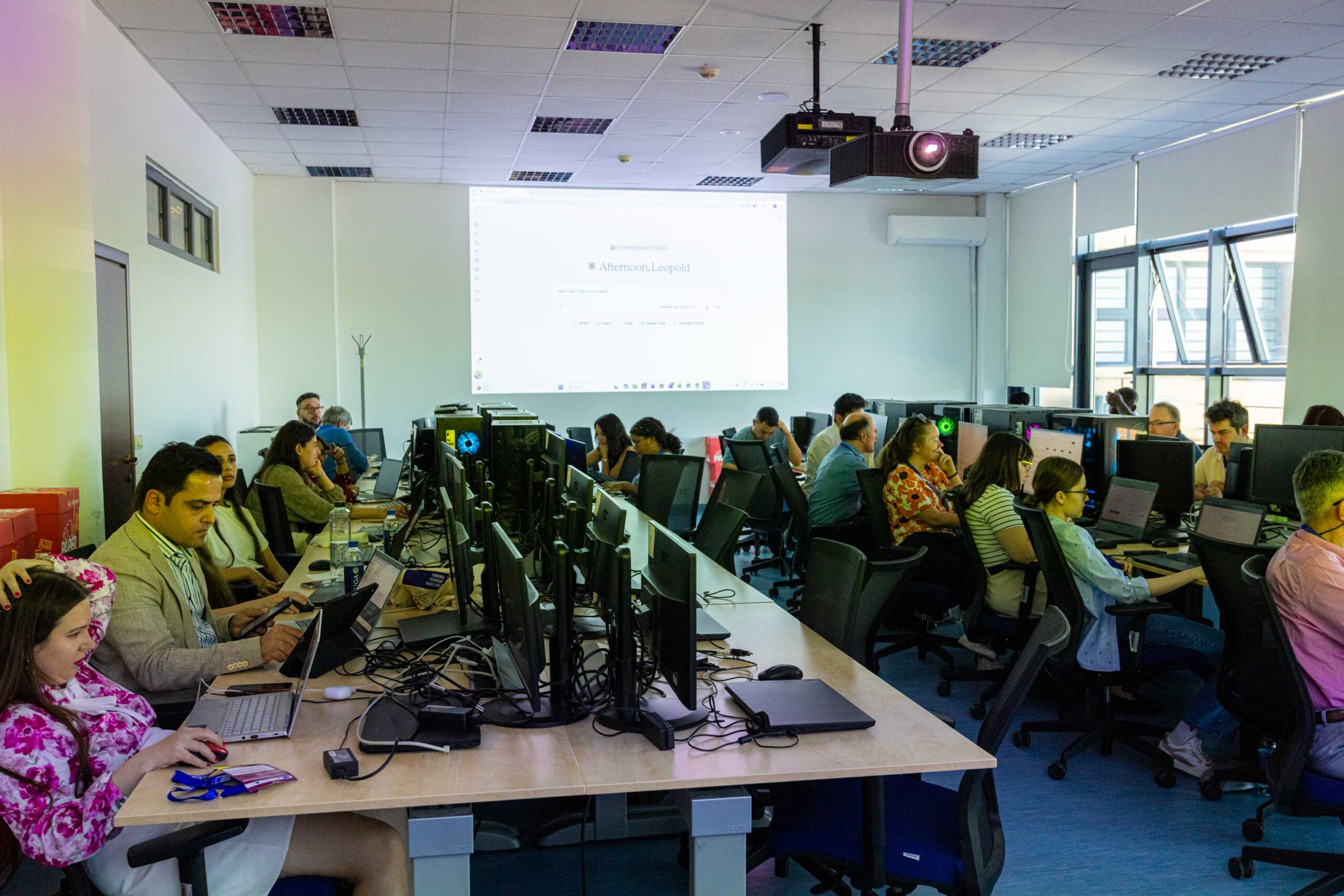
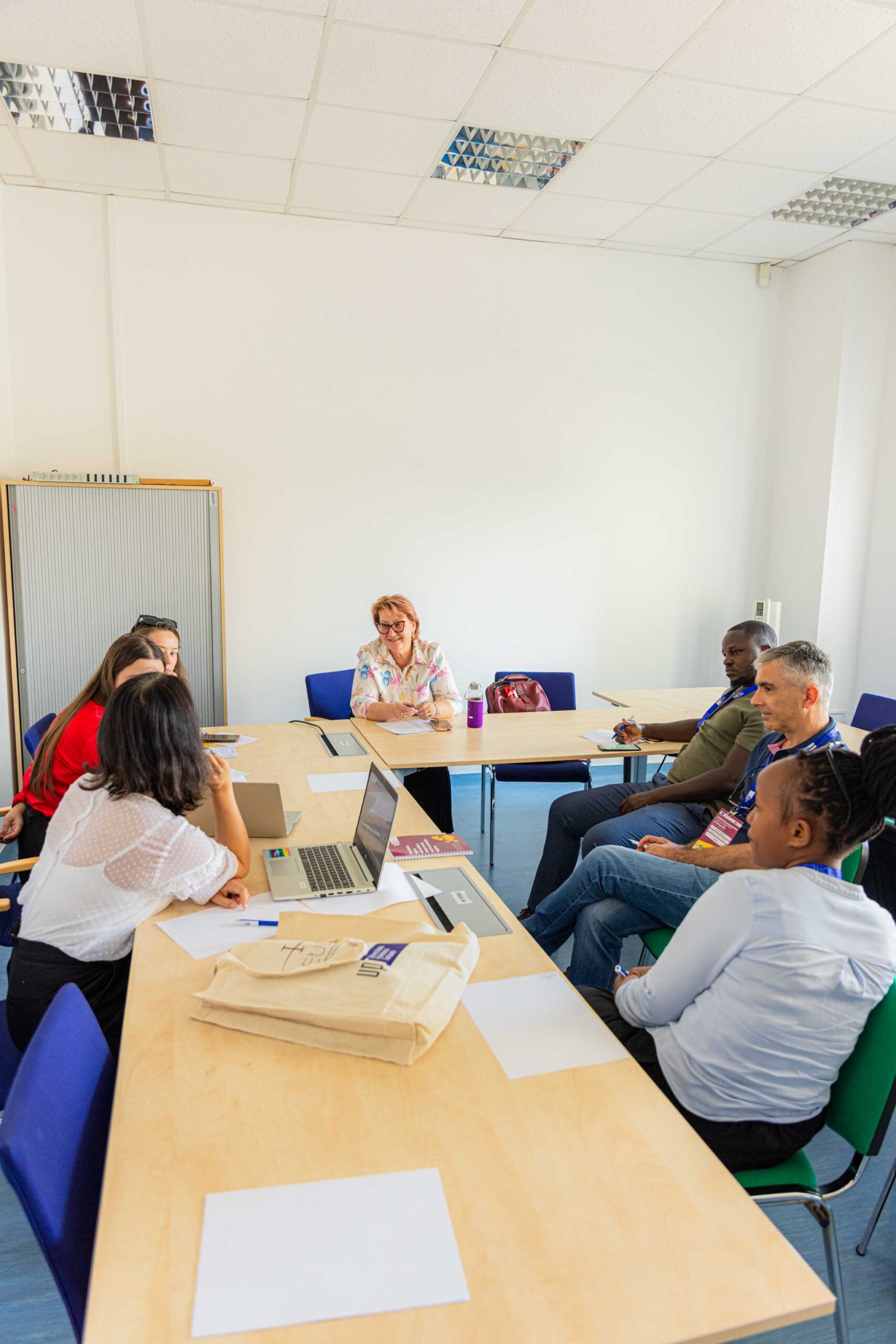
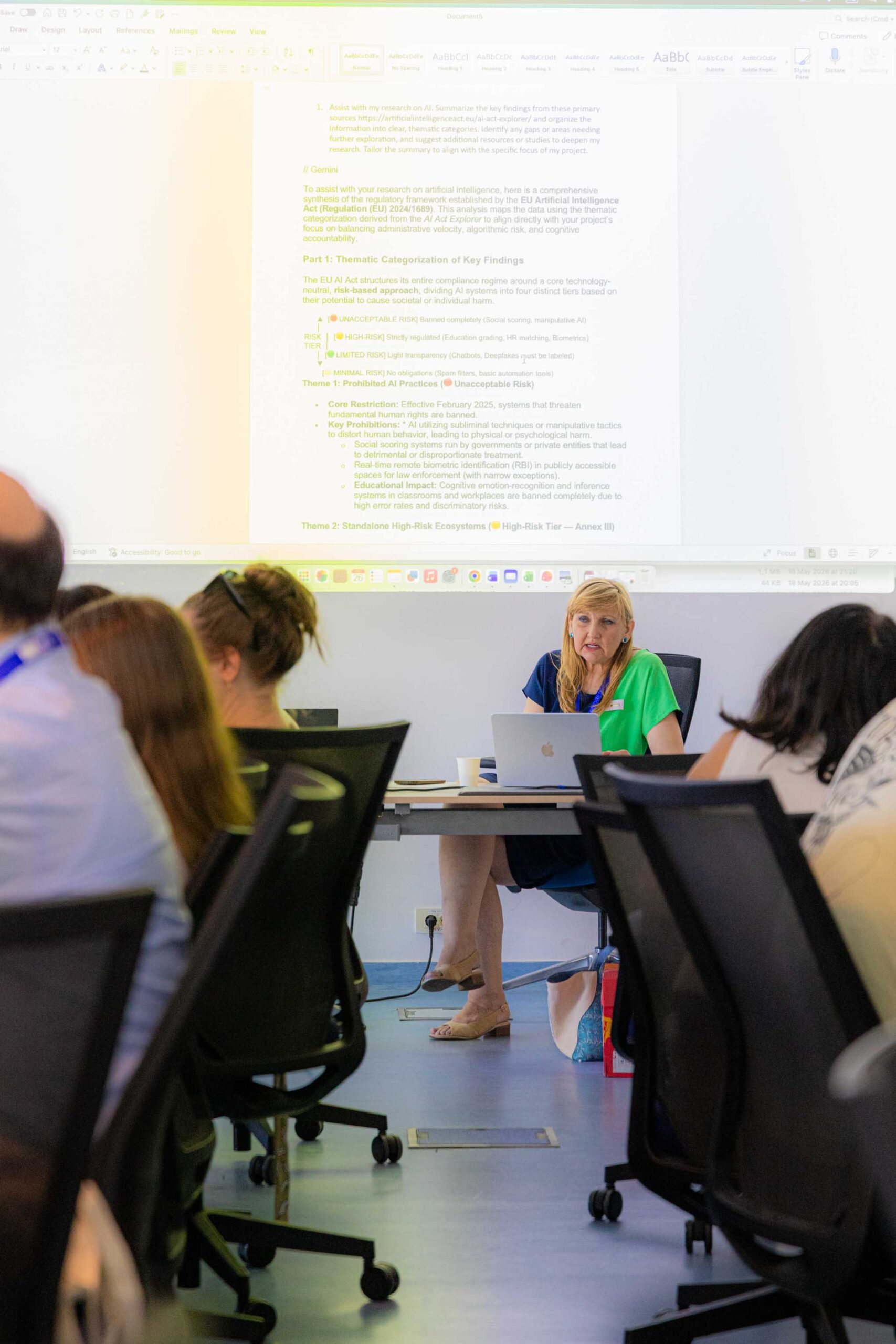
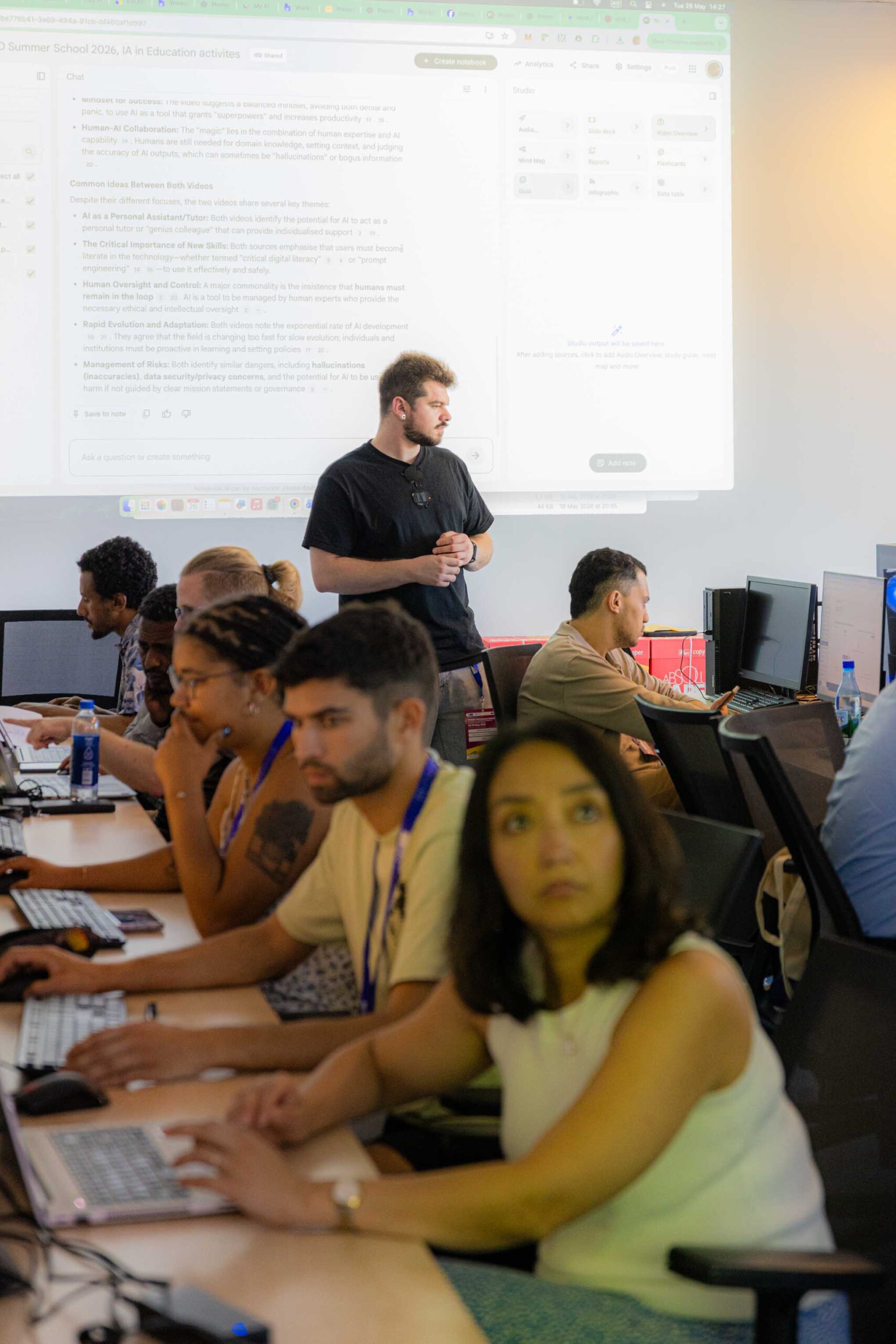
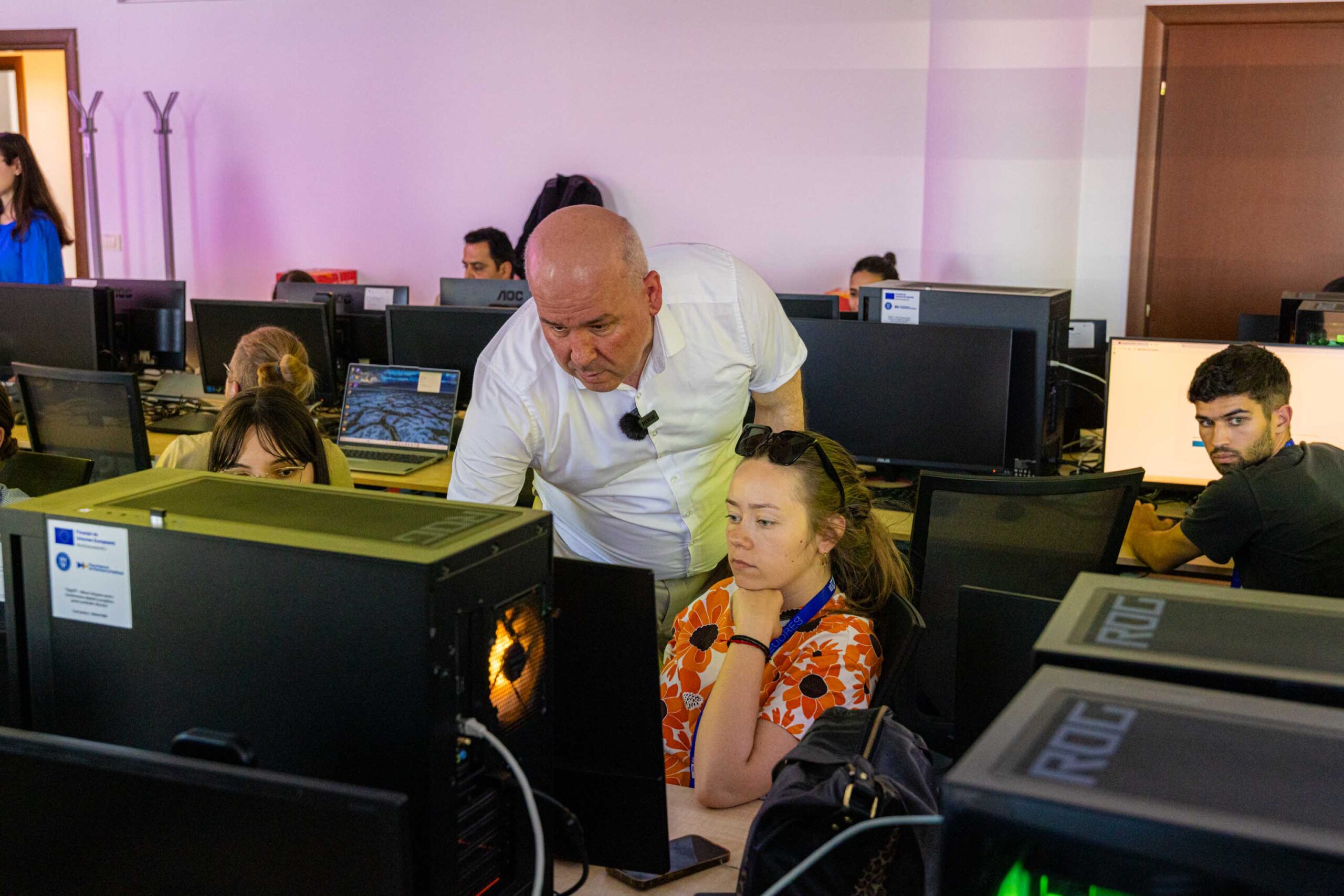
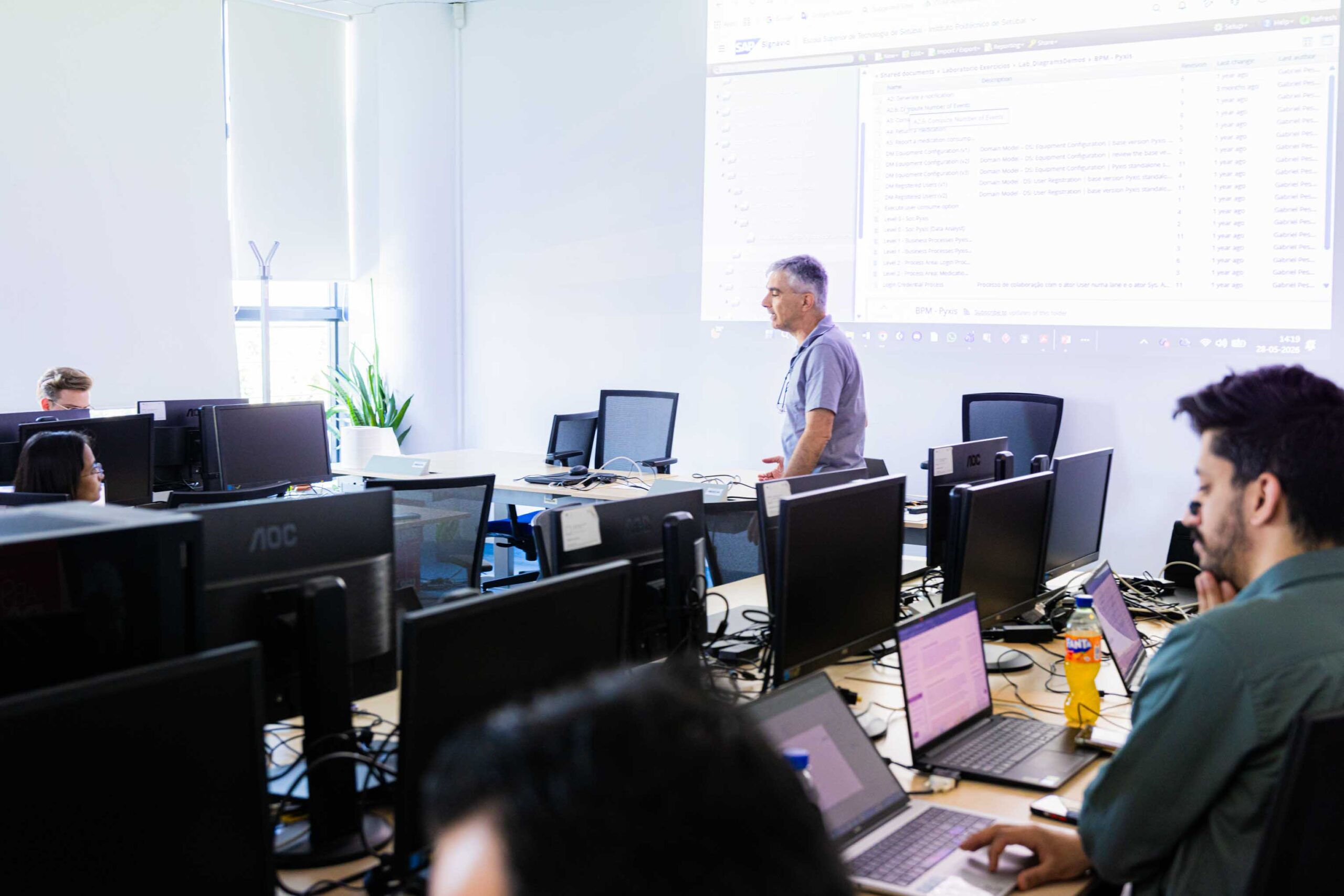
The afternoon sessions were held in rooms 401 and 403 of the Department of ID/IFR and Digital Education, and the activities were supported by E³UDRES² Arena Learning Hub, the alliance's communication and collaboration platform. Throughout all sessions, participants were active and asked numerous questions to the speakers, and several sessions included direct interaction through the app. Mentimeter, where students responded in real time to questions and surveys related to the topics presented.
Day 1 — Opening Ceremony and Mentoring Matching
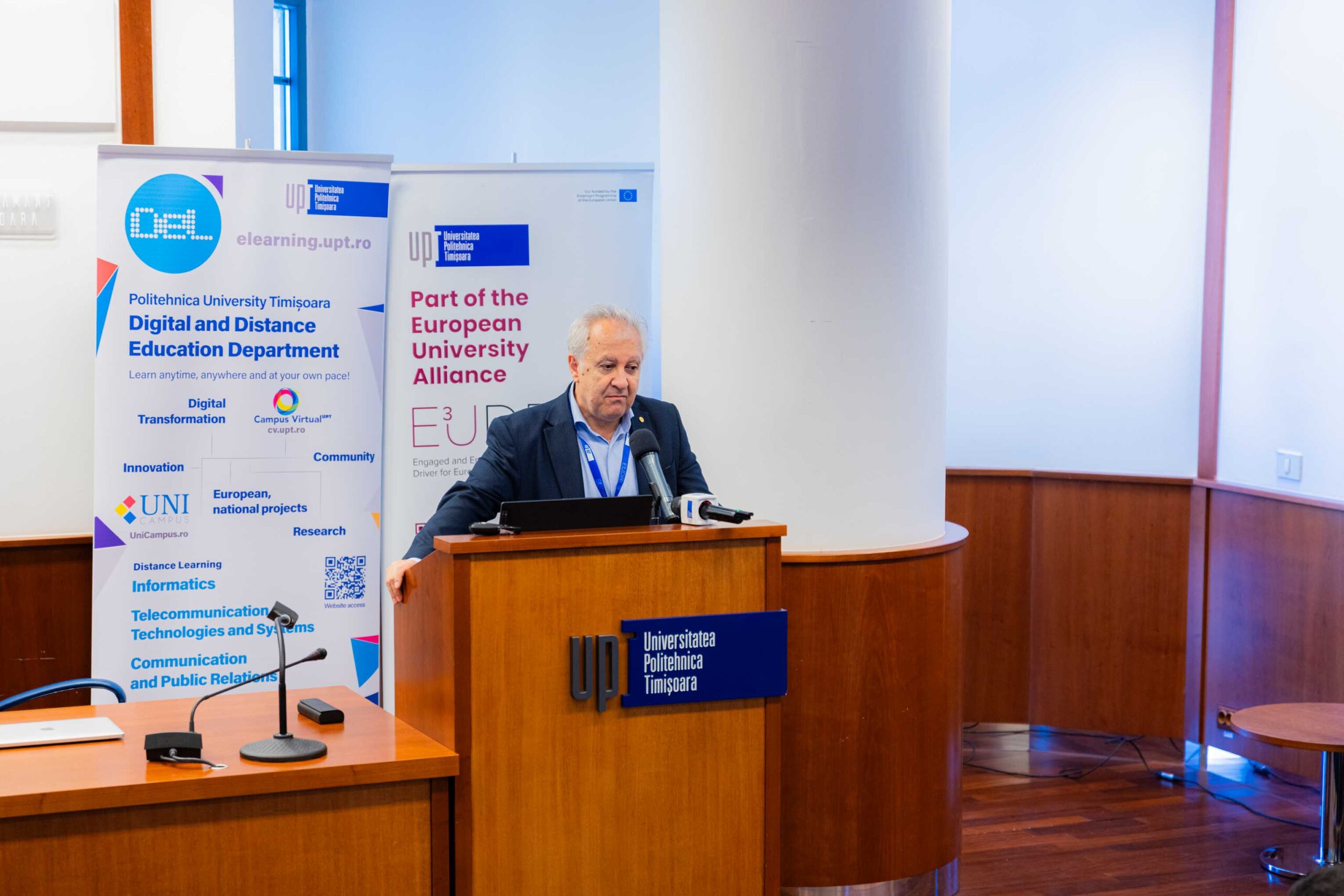
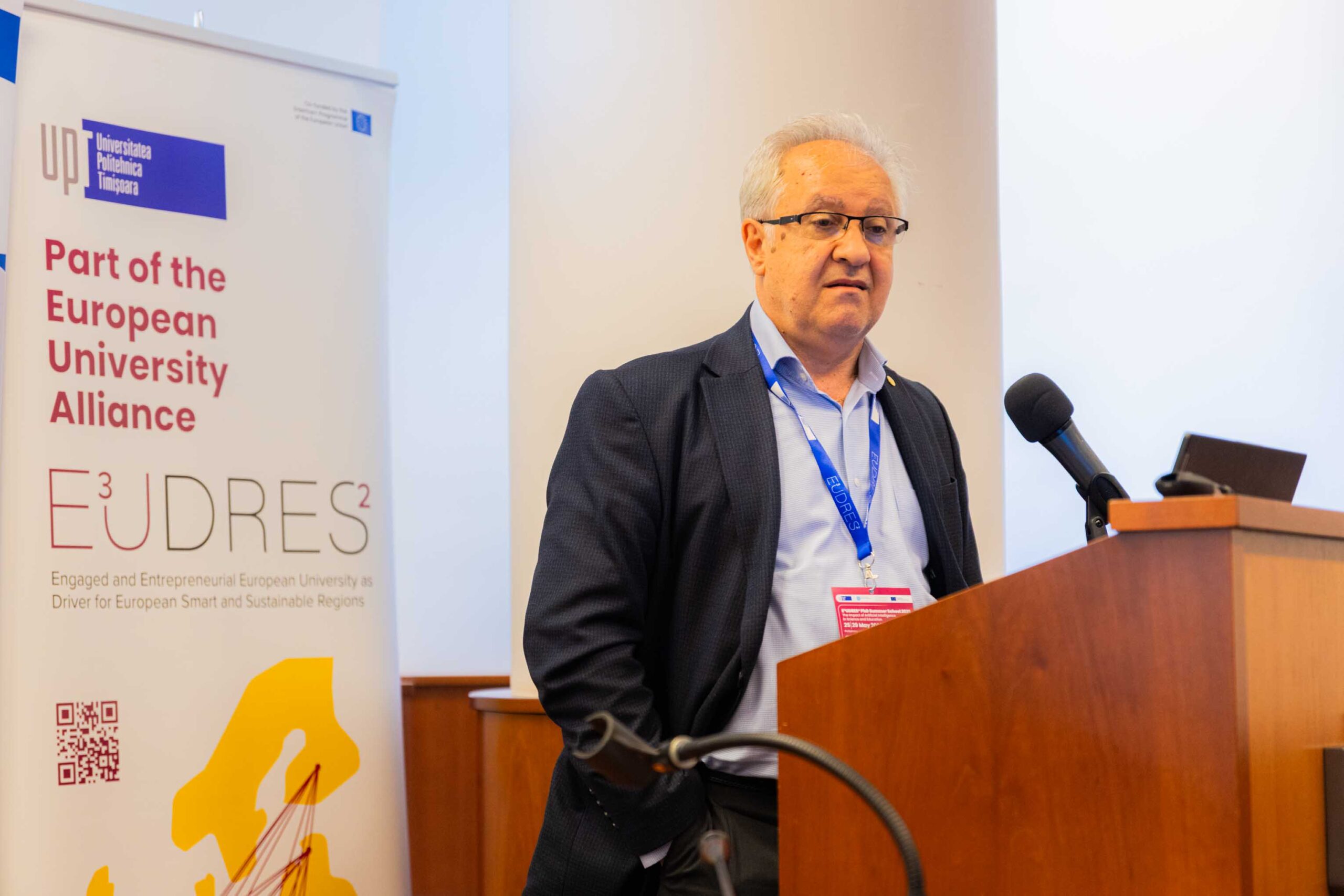
The event started with Opening ceremony, in which Acad. Prof. Dr. Eng. Liviu Marșavina presented the history of Politehnica University Timișoara and the course of the doctoral programs, Prof. univ. em. dr. eng. Radu Vasiu introduced the participants to the structure and objectives of the E³UDRES² alliance — the priorities, joint activities, applied research centers and joint doctoral programs of the nine partner universities — and Dr. Eng. Diana Andone presented the current edition, the program structure and the platform E³UDRES² Arena Learning Hub.
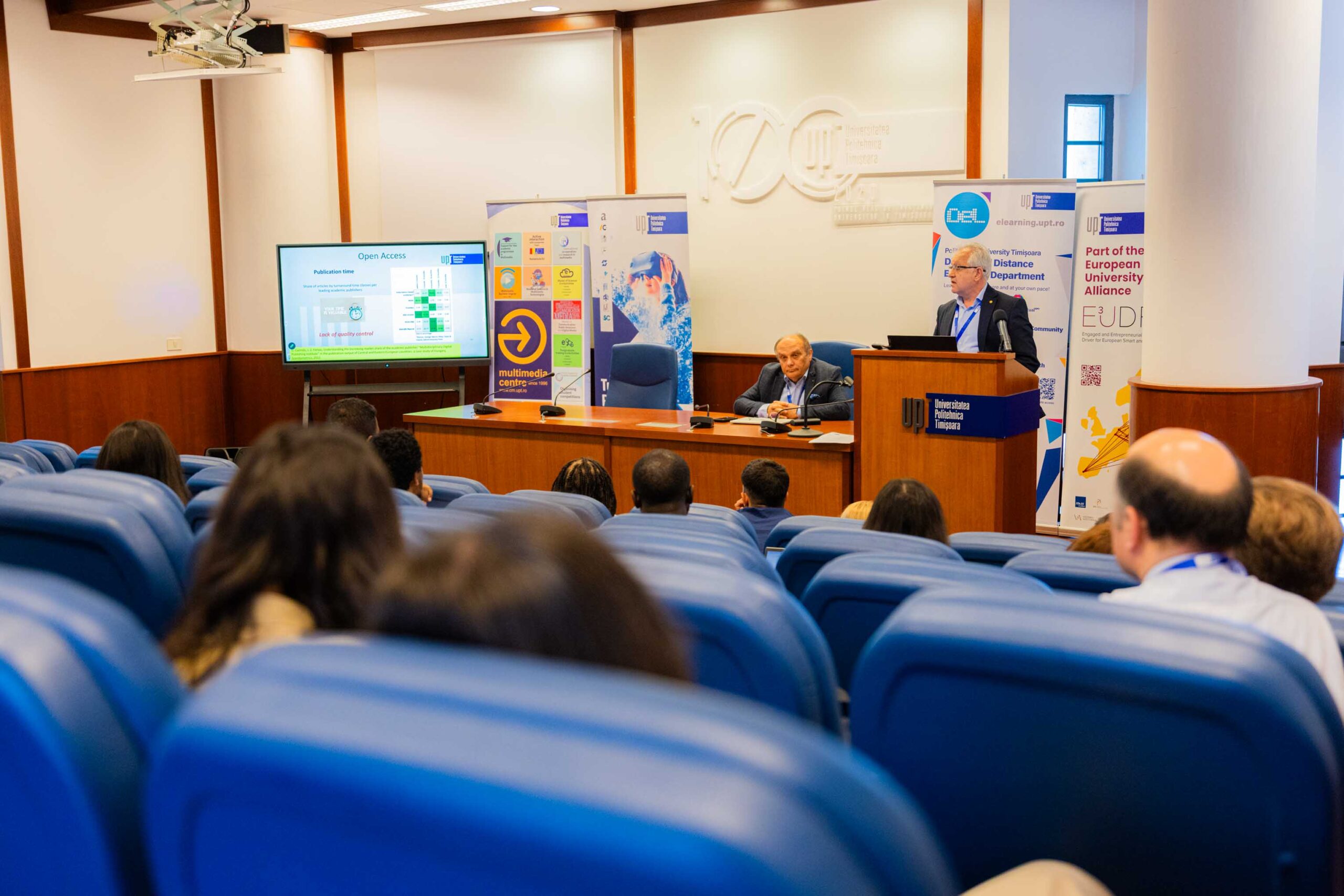
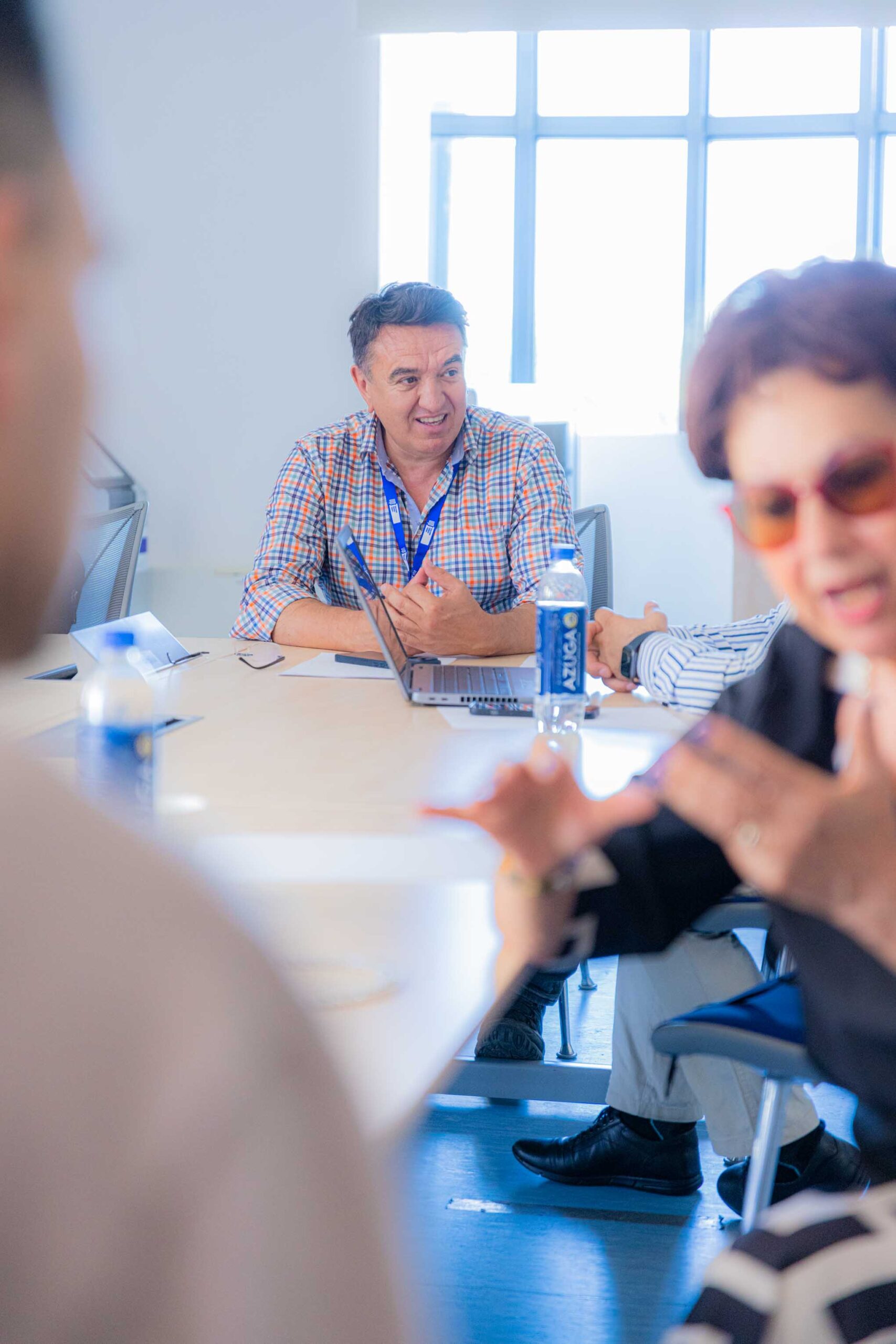
A dedicated session followed academic publishing and Open Science, supported by Prof. Emeritus Dr. Eng. Radu Vasiu and Acad. Prof. Dr. Eng. Liviu Marșavina. The session covered the principles of open publishing, UNESCO recommendations on Open Science, the difference between data and open data, European Open Science Cloud and the debate between the Open Access model and the traditional publishing model. Marșavina brought the perspective of an experienced doctoral supervisor, presenting both the advantages and the real limits of Open Access in practice. The debate generated numerous questions from the participants.
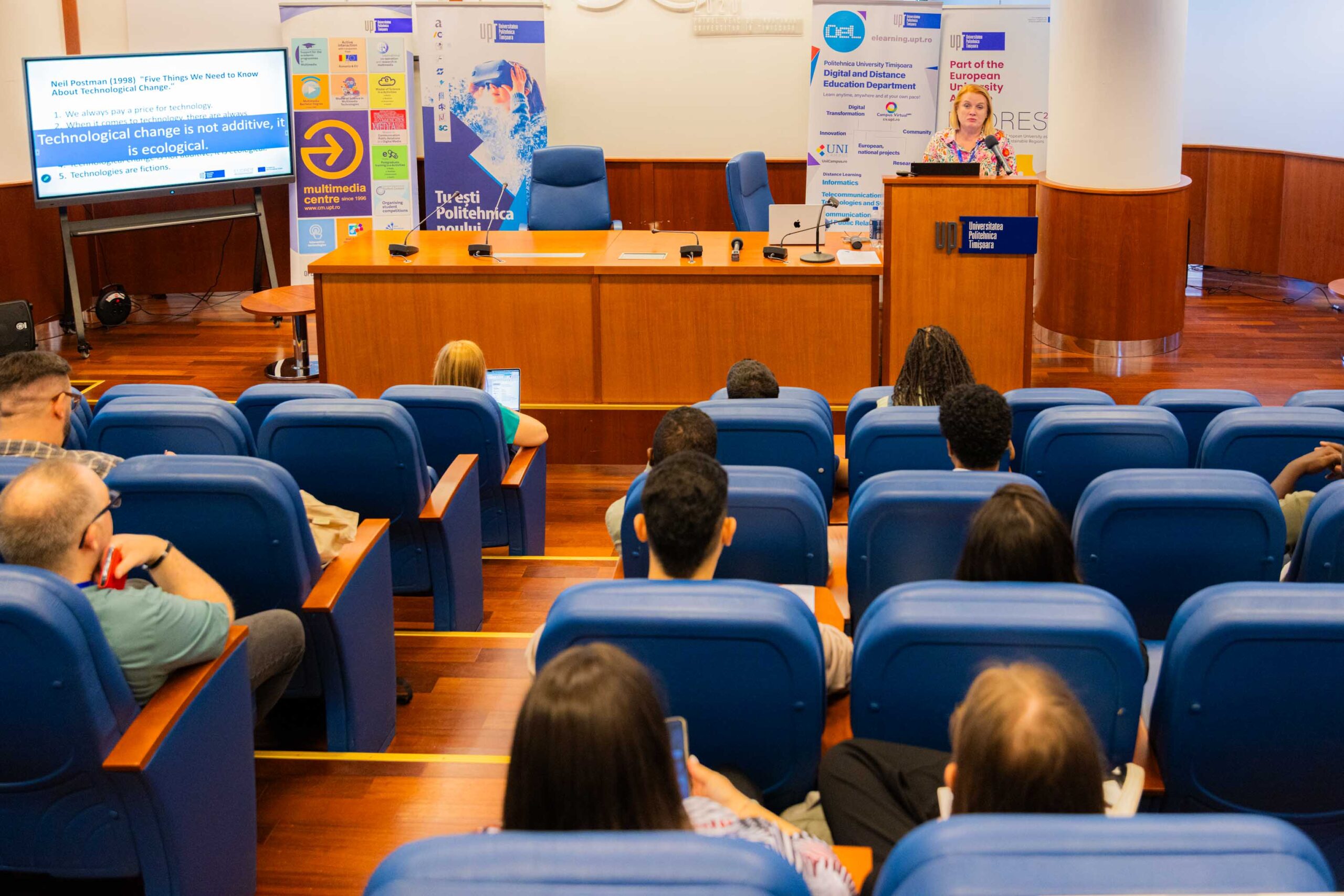
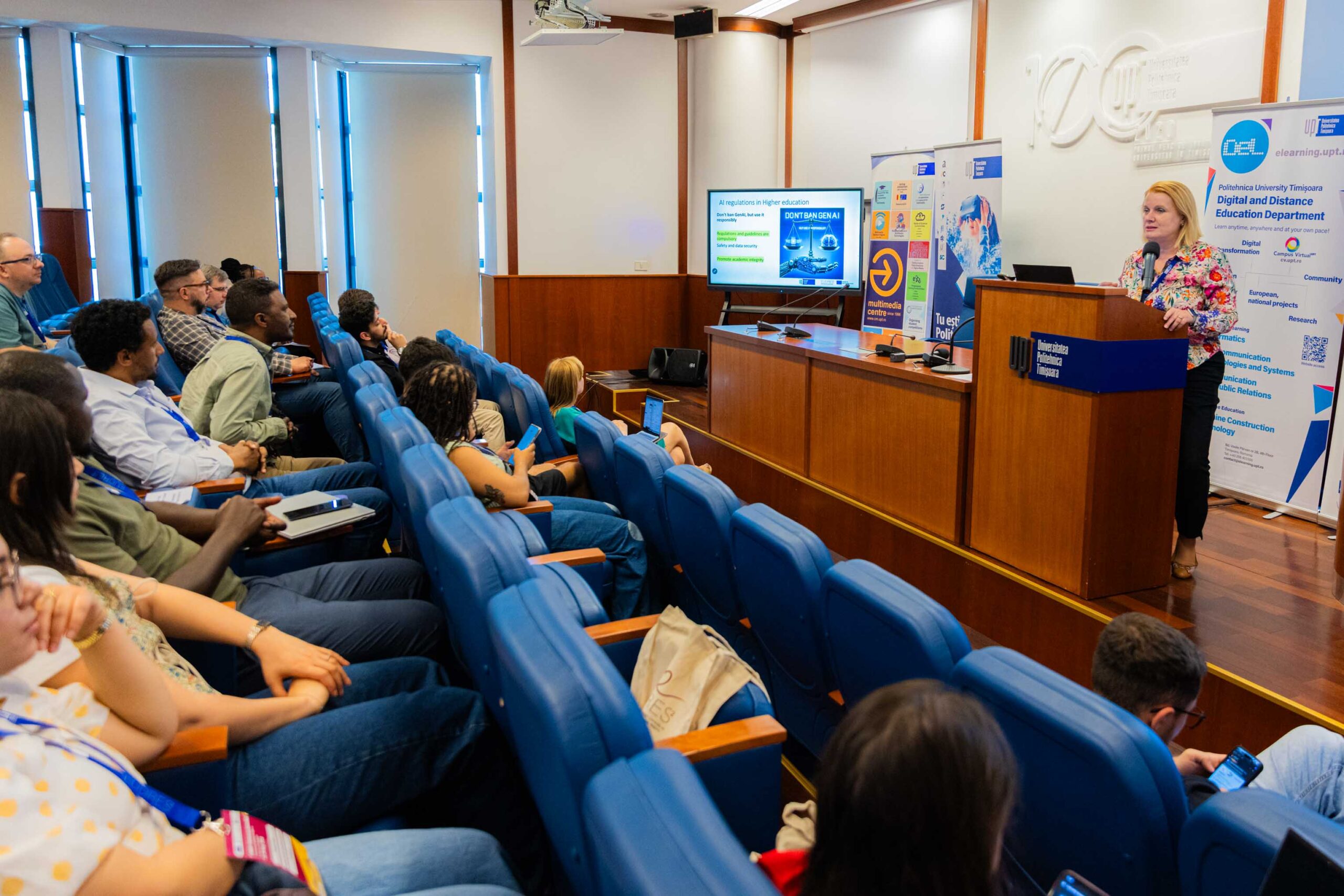
Dr. ing. Diana Andone later held a large session on AI ethics in education and science, covering AI terminology (predictive vs. generative), the AI Act, the European Digital Competence Framework DigComp 3, the UNESCO global report on AI and education, the ecological impact of generative AI and strategies for responsible use of AI in engineering research. He presented the UPT policy on the use of AI, approved by the Senate in 2023, and the EU RAISE European resource for AI in science.
The afternoon was dedicated to Open Science and AI workshops, and participants took part in a mentoring matching session, in which students from partner countries were connected with UPT professors based on shared research topics — a first concrete step toward international academic collaborations.
Day 2 — AI in Education, Digital Badges, and the Agentic AI Revolution
Prof. Dr. Eng. Carmen Holotescu, Rector of "Ioan Slavici" University of Timișoara, opened the day with a session on AI in education and research, covering the AI governance ecosystem, the three paradigms of academic knowledge creation (traditional, hybrid, and natively generative AI), the global benchmark Educause Horizon 2025, and a structured pipeline for using AI in research: the exploration, digestion, and drafting phases. She demonstrated the use of NotebookLM for generating multimedia academic presentations from one's own resources and presented a doctoral framework for the responsible use of generative AI. She concluded with a concrete case study on strategic integrity in AI-assisted research.
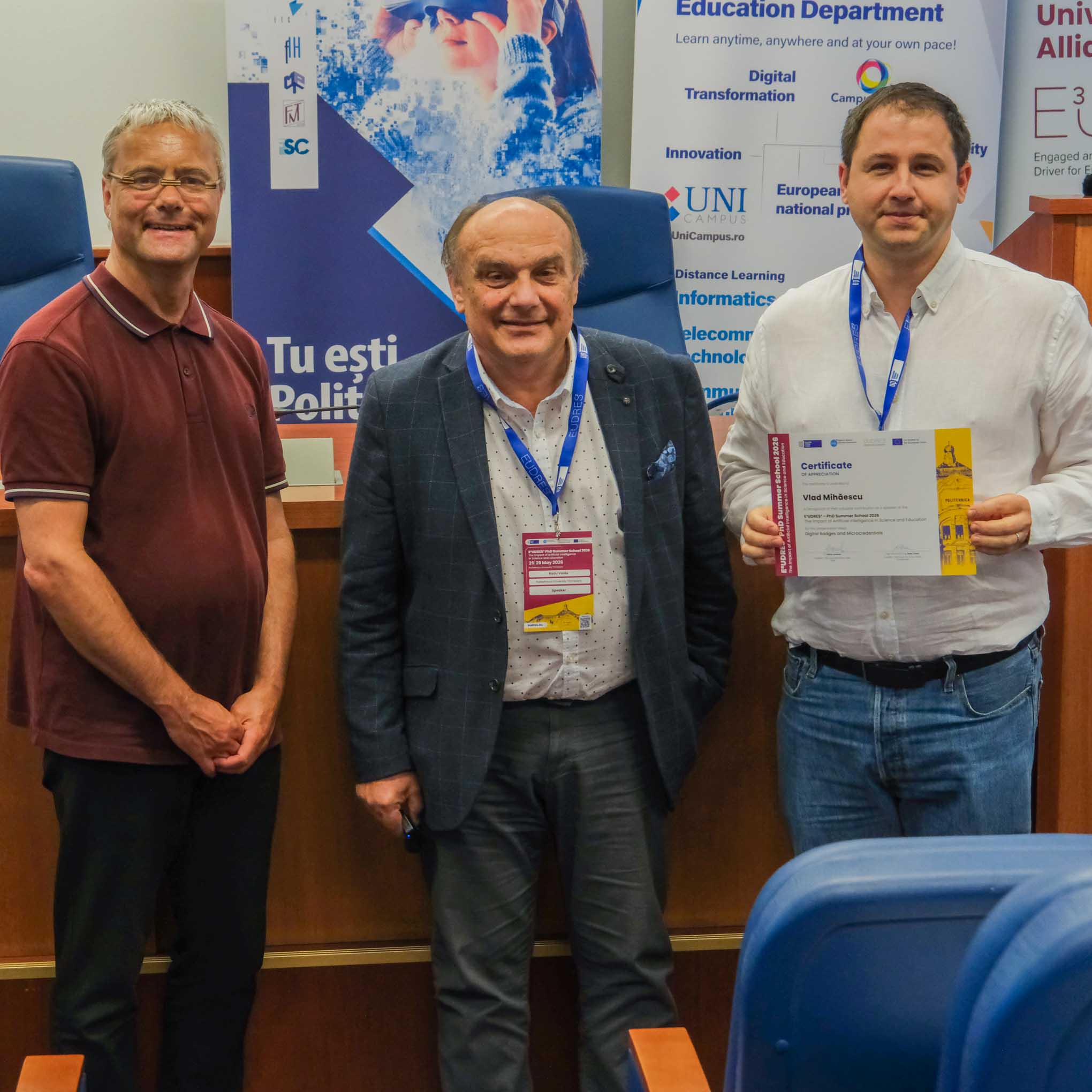
Assoc. Prof. Dr. Eng. Vlad Mihăescu (UPT) delivered a session on digital badges and microcredentials: what they are, the differences between them, their relevance for doctoral researchers, and the implementation of the five-pillar framework within the E³UDRES² alliance, with standardized processes, ENQA-aligned evaluations, and peer review mechanisms. The session included a live interactive poll on Mentimeter, to which 28 students responded, covering their perceptions of digital badges, barriers to the recognition of microcredentials, and motivations for completing online courses.
Ş.l. Dr. Eng. Daniel Iercan (UPT) addressed the topic skills in the AI era: which skills are losing value and which are gaining importance in the context in which, since 2025, AI has moved from tool to autonomous agent. He defined the concept of AI agent (autonomous, goal-oriented, with memory and adaptability), presented the agentic AI revolution of 2025, the new "stack" of skills for researchers, prompting techniques through the SCAMPER framework and three use cases of agentic AI in research: exploring ideas, analyzing and building solutions. He also discussed the clear limits of AI in research activity.
The afternoon included mentoring and research collaboration sessions, followed by a city tour of Timișoara.
Day 3 — AI Ethics, Reconceptualizing Learning, and Open Science
Leopold Štefanič from the Knowledge Innovation Center, Malta, opened the morning with a session on ethical AI fluency as a core competency for researchers. Through a practical exercise on the VitaScience platform, students explored the differences between AI models directly, including their real-time energy consumption. The session covered the 4Ds of responsible AI use (delegation, description, discernment, diligence), the right to privacy and data protection, responsibility and transparency, fairness and non-discrimination, and the risks of high-risk AI systems in education. It also included a demonstration of web search functionality and available connectors in current AI models. Participants asked numerous questions about the practical applicability of these principles in their own research.
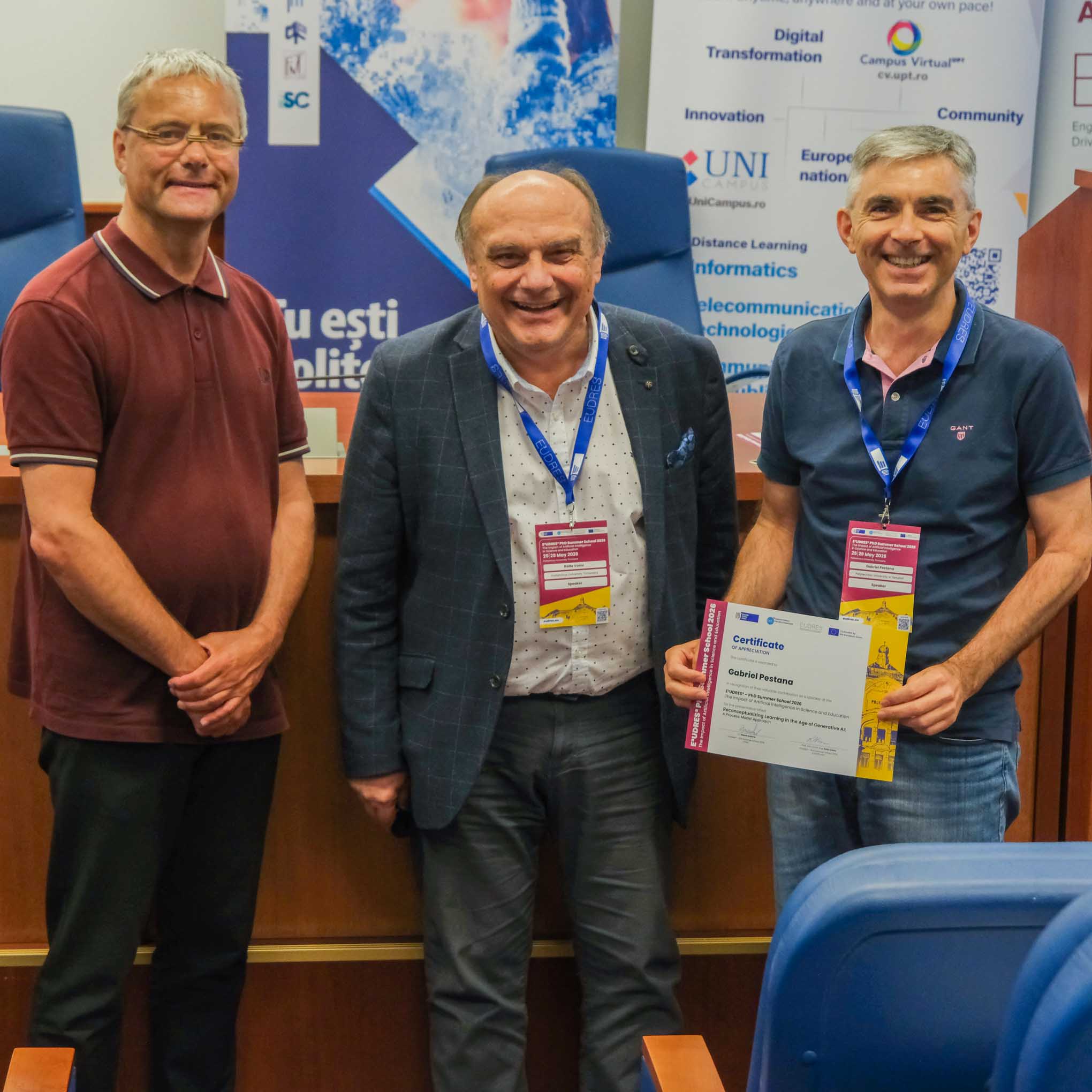
Conf. Dr. Gabriel Pestana from the Polytechnic Institute of Setúbal, Portugal, proposed a model for rethinking the learning process in the era of generative AI, starting from the forgetting curve (Hermann Ebbinghaus) and classical theories of cognitive, emotional and behavioral engagement of students. He presented a formal model of representing the learning process mediated by AI — Learner Cognition Graph — with an important distinction between the active and passive user of AI, and detailed the dynamics of metacognitive reconfiguration in eight subprocesses.
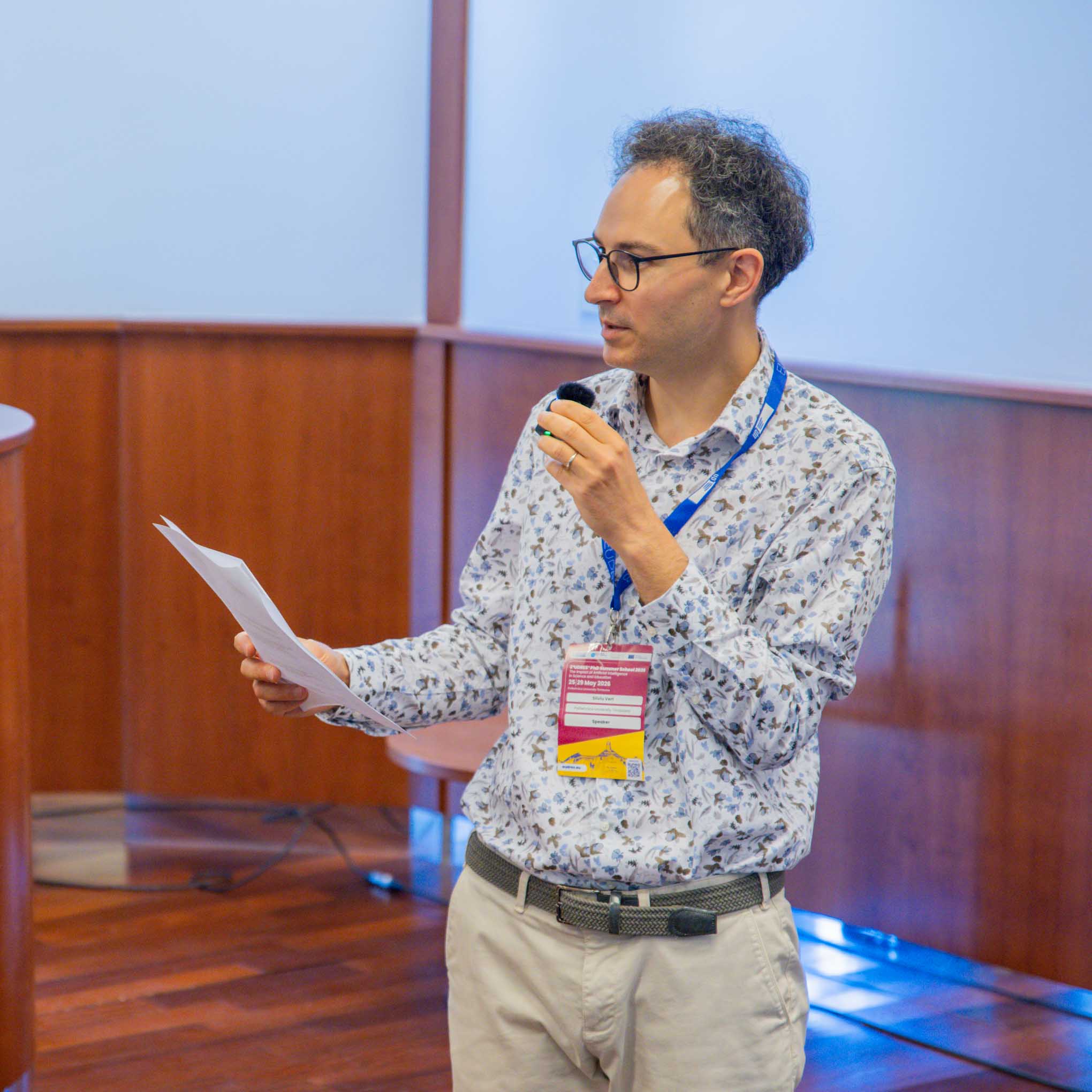
Assoc. Prof. Dr. Eng. Silviu Vert (UPT) presented a practical tour of the Open Science and Open Innovation ecosystem, structured around three pillars: open to participation, open to reuse, open to the world. He covered a comprehensive set of tools: Zotero and Scite for reference management, Hypothesis for collaborative annotation, AsPredicted for study pre-registration, Zenodo for publishing data and papers, GitHub for code sharing, Protocols.io, Authorea, and Overleaf for collaborative writing, Jupyter for actionable formats, arXiv for preprints, PubPeer for open peer review, Figshare for posters and presentations, and Altmetric for academic communication. The session included an interactive Mentimeter poll and a debate about participants' real experiences with Open Science.
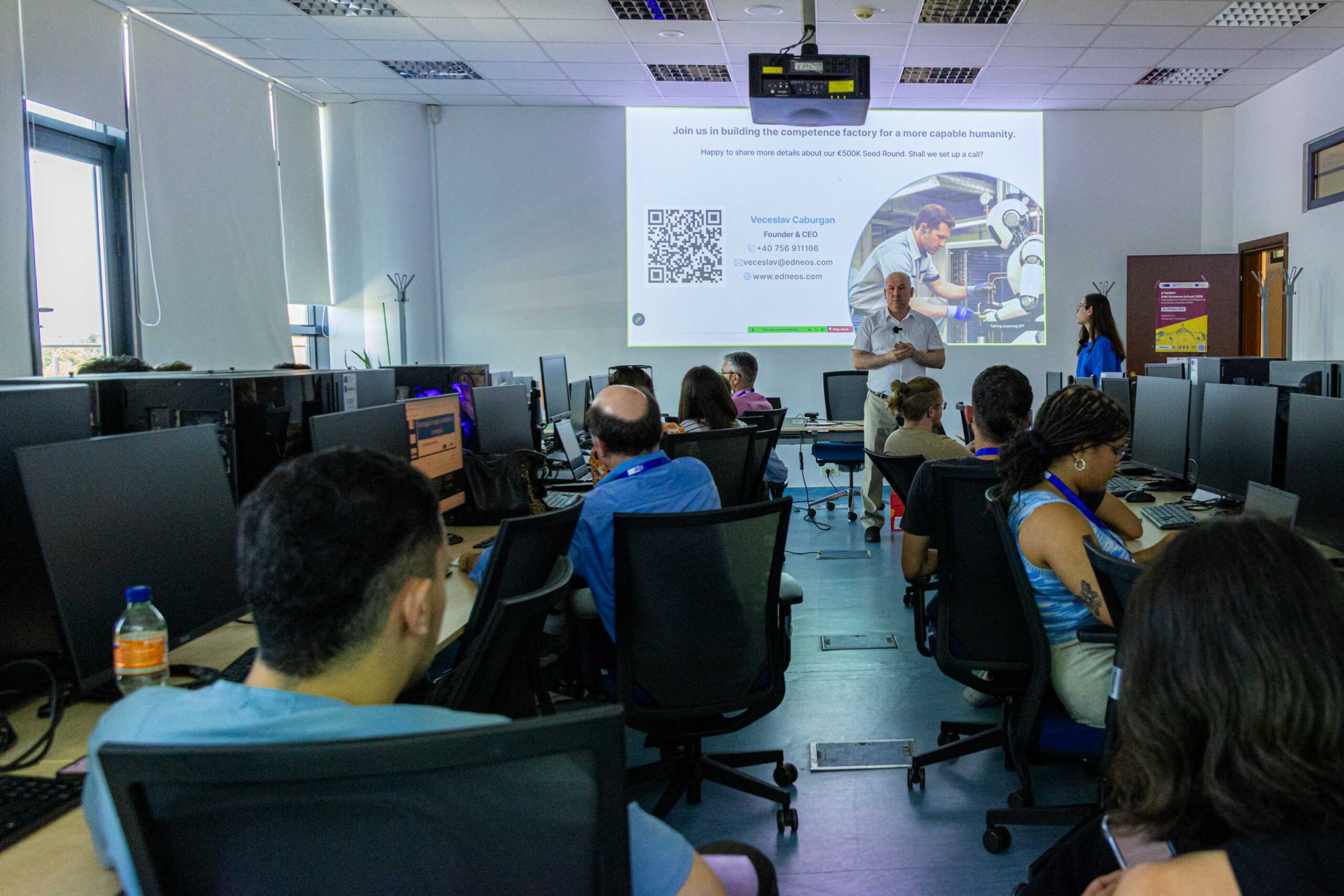
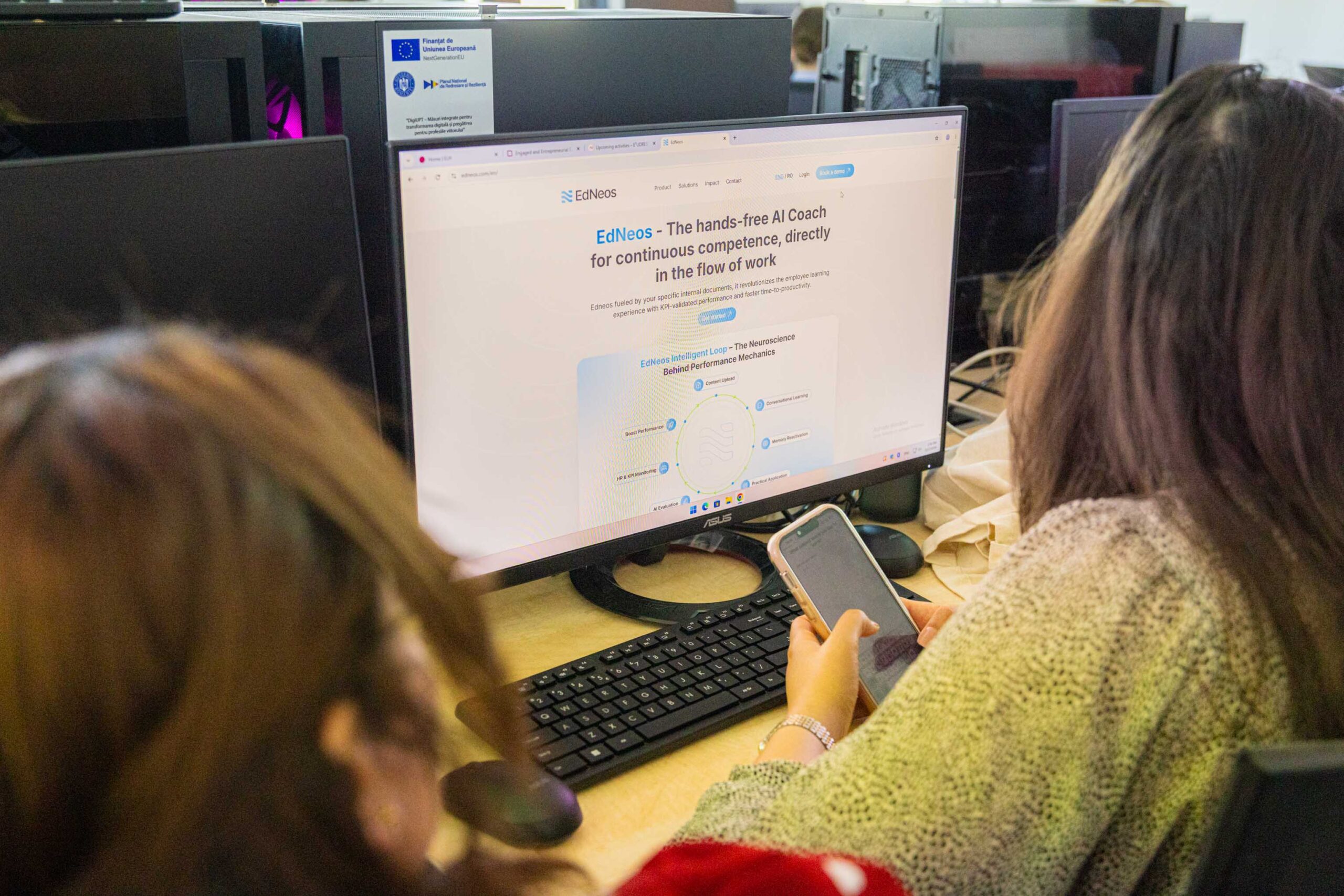
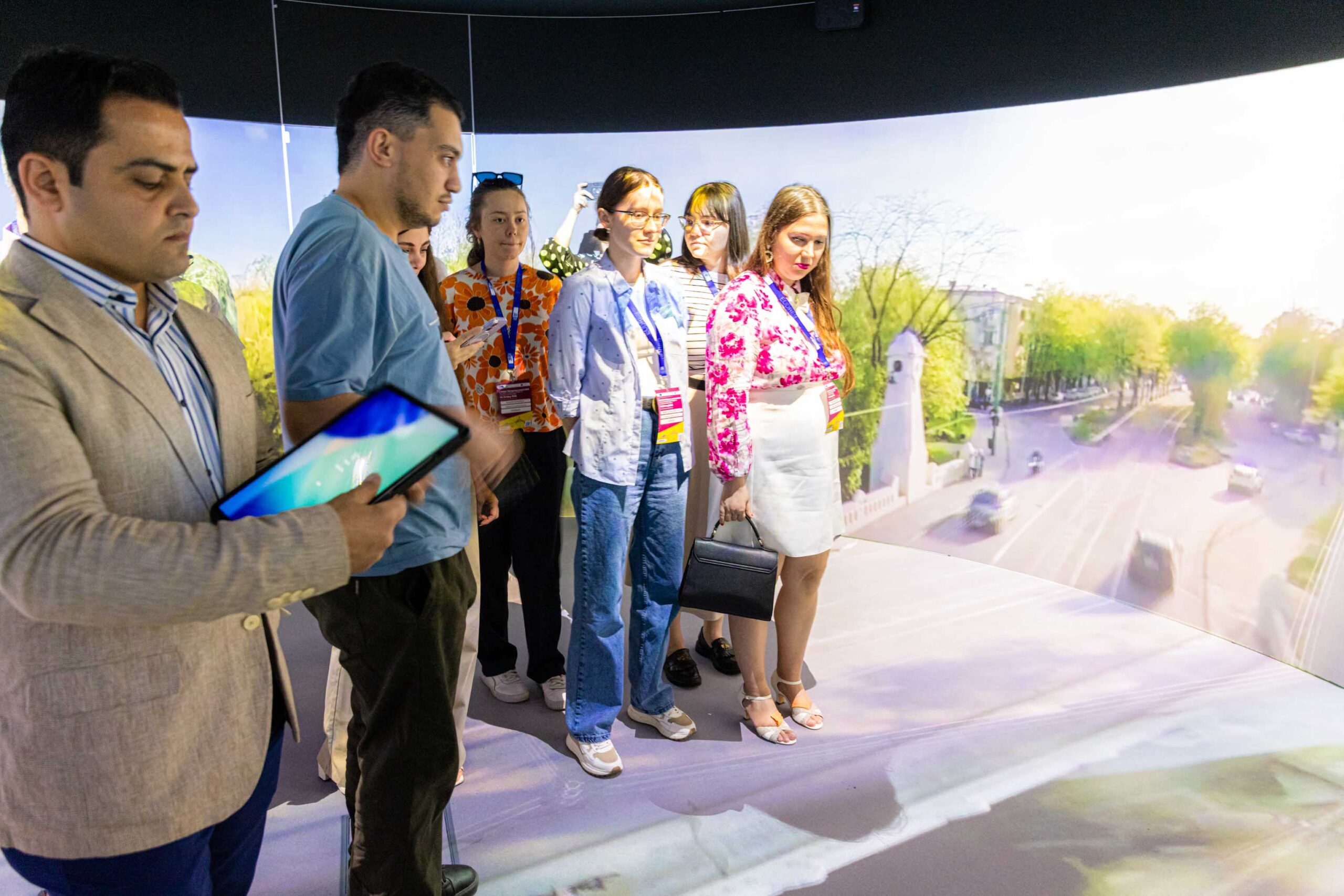
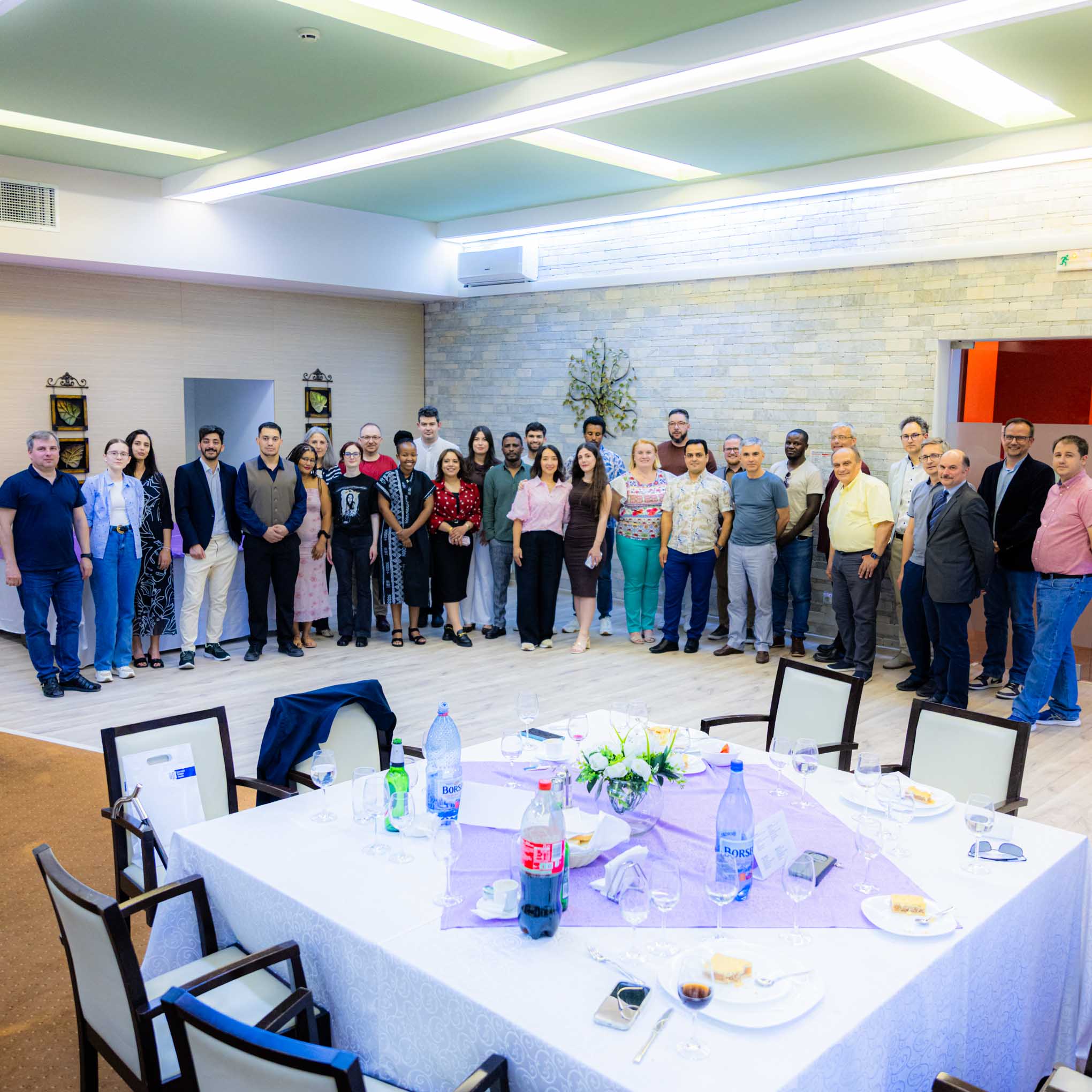
The afternoon included practical workshops delivered by Leopold Štefanič (Knowledge Innovation Center) and Veceslav Caburga (EdNEos AI, education platform demo), followed by mentoring sessions and a private tour of UPT's 360° Igloo Vision immersive space — the first immersive projection cylinder in Romanian higher education, part of the DigiUPT project (PNRR). Participants explored applications developed by the DeL team as part of the Spotlight Heritage Timișoara project: interactive virtual tours built in Unity inside the Opera and the Roman Catholic Church "Sacred Heart of Jesus" in Timișoara, based on high-fidelity 3D scans, and an interactive 360° video filmed by drone. The day concluded with the official Welcome Dinner at the Politehnica House Restaurant (CP 2).
Day 4 — AI in Creative Ways, Campus without Borders, Emerging Technologies, and Circular Economy
FH-Prof. Dipl.-Ing. Hannes Raffaseder from the University of Applied Sciences St. Pölten, Austria, opened the morning with a session on AI and creativity, starting from the fundamental question about the role of art and science in society. He drew a parallel between AI's pattern recognition and the human artistic process, quoting David Byrne on how context changes meaning, and Jack Ma on the need for education to offer competencies different from what machines can do. He explored new perspectives: mission-oriented research, challenge-based education, interdisciplinarity, multidirectional knowledge exchange, and human-centered approaches.
FH-Prof. Dipl.-Ing. Dr. Franz Fidler, also from St. Pölten, explored how network technologies dissolve the physical boundaries of the university campus. He presented the evolution from the physical campus as a historical latency solution to real-time remote laboratories, the concrete 2020 implementation of online laboratories at St. Pölten, and the principles of a well-designed remote laboratory (sufficient, not maximum, interaction; reducing cognitive friction). He explained how 5G brings speed, scalability, and reliability, while 6G will transform the network from a content transport system into a network that learns about its environment and optimizes it with AI.
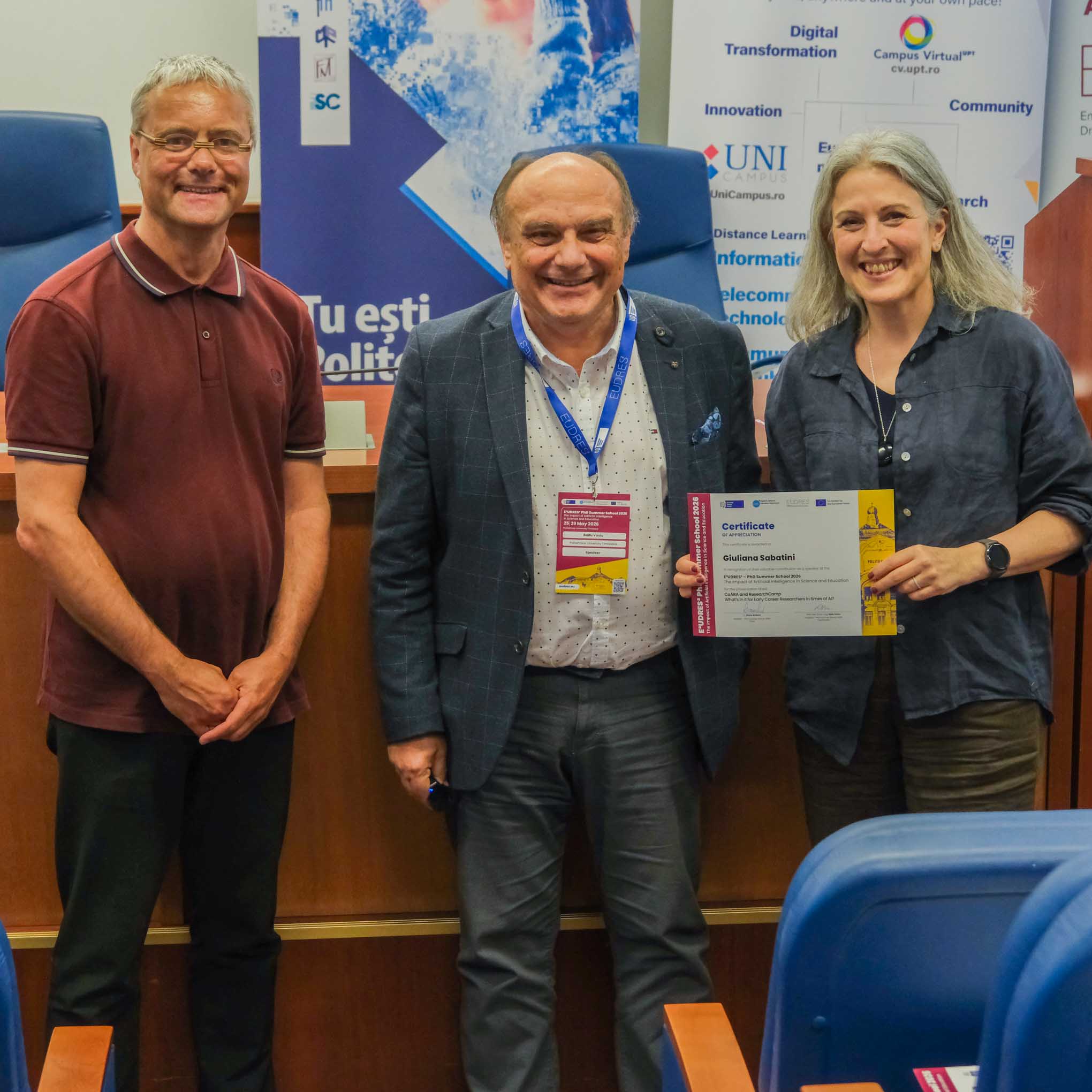
Dr. Giuliana Sabatini from the University of Applied Sciences St. Pölten presented CoARA and ResearchComp — reform of researcher assessment methods and the European Competence Framework for Researchers, with 39 competences in 7 domains and four proficiency levels (foundational, intermediate, advanced, expert). It discussed the direction towards a single market for research and innovation talent and facilitated an active debate on the competences that human intelligence should prioritise in the context of AI — a debate to which participants contributed with diverse answers and perspectives.
Lect. Dr. Eng. Andrei Ternauciuc (UPT) presented a comparative analysis of emerging technologies in science and education: AI, blockchain, AR/VR, IoT, and quantum computing, evaluating the maturity level of each and offering practical recommendations for early-career researchers. He addressed the main benefits and risks of each technology and proposed a framework for responsible adoption: not only "can we use this technology?" but "should we use it, under what conditions and with what safeguards?". He included an interactive poll on the technology that will most affect participants' research in the next two years.
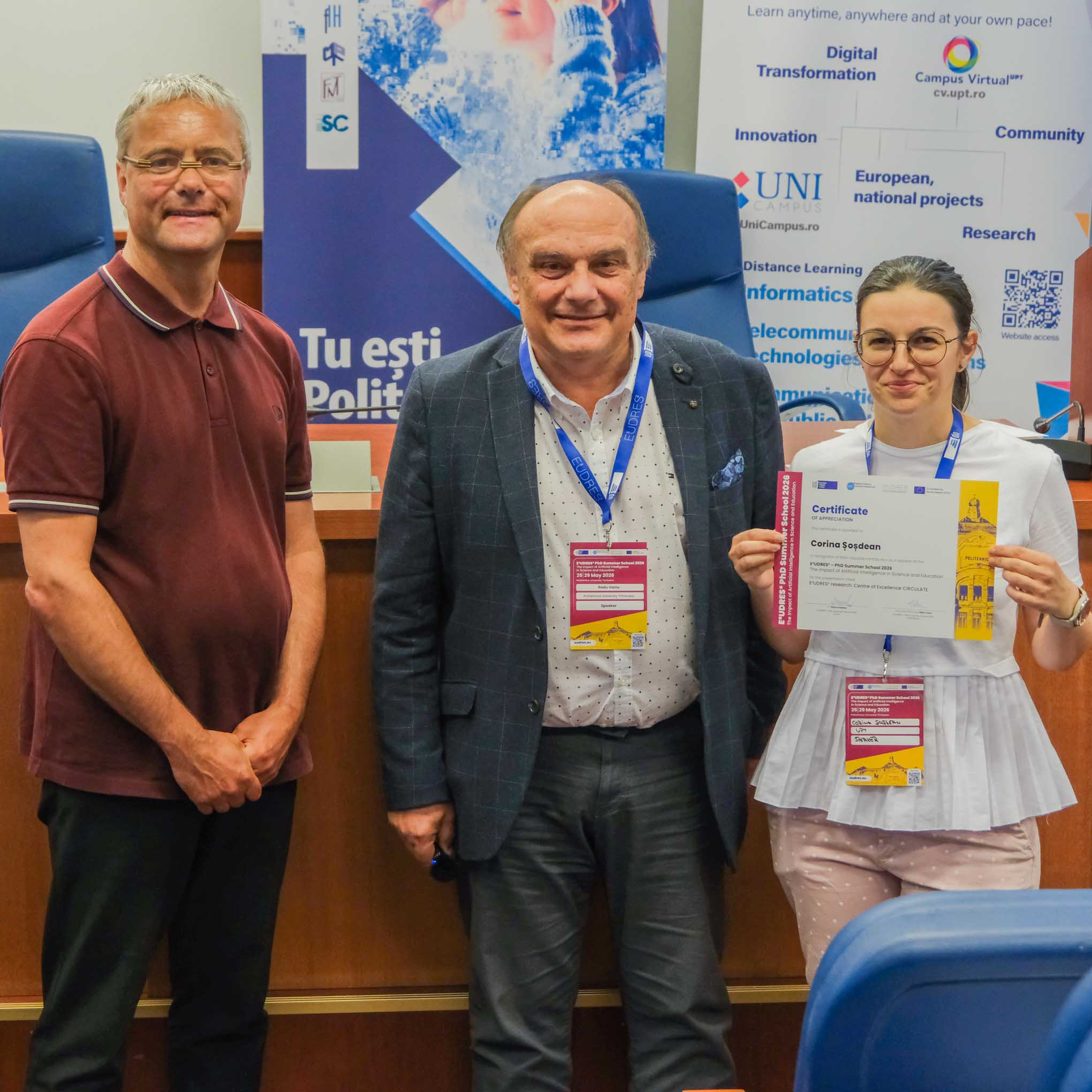
Assist. Dr. Eng. Corina Șoșdean (UPT) presented the CIRCULATE Centre of Excellence of the E³UDRES² alliance, a research initiative dedicated to the circular economy that transforms waste into resources through fundamental and applied research, digital technologies, and AI. She presented priority waste streams, concrete valorization examples — including the valorization of wool waste in Romania — and the centre's future vision.
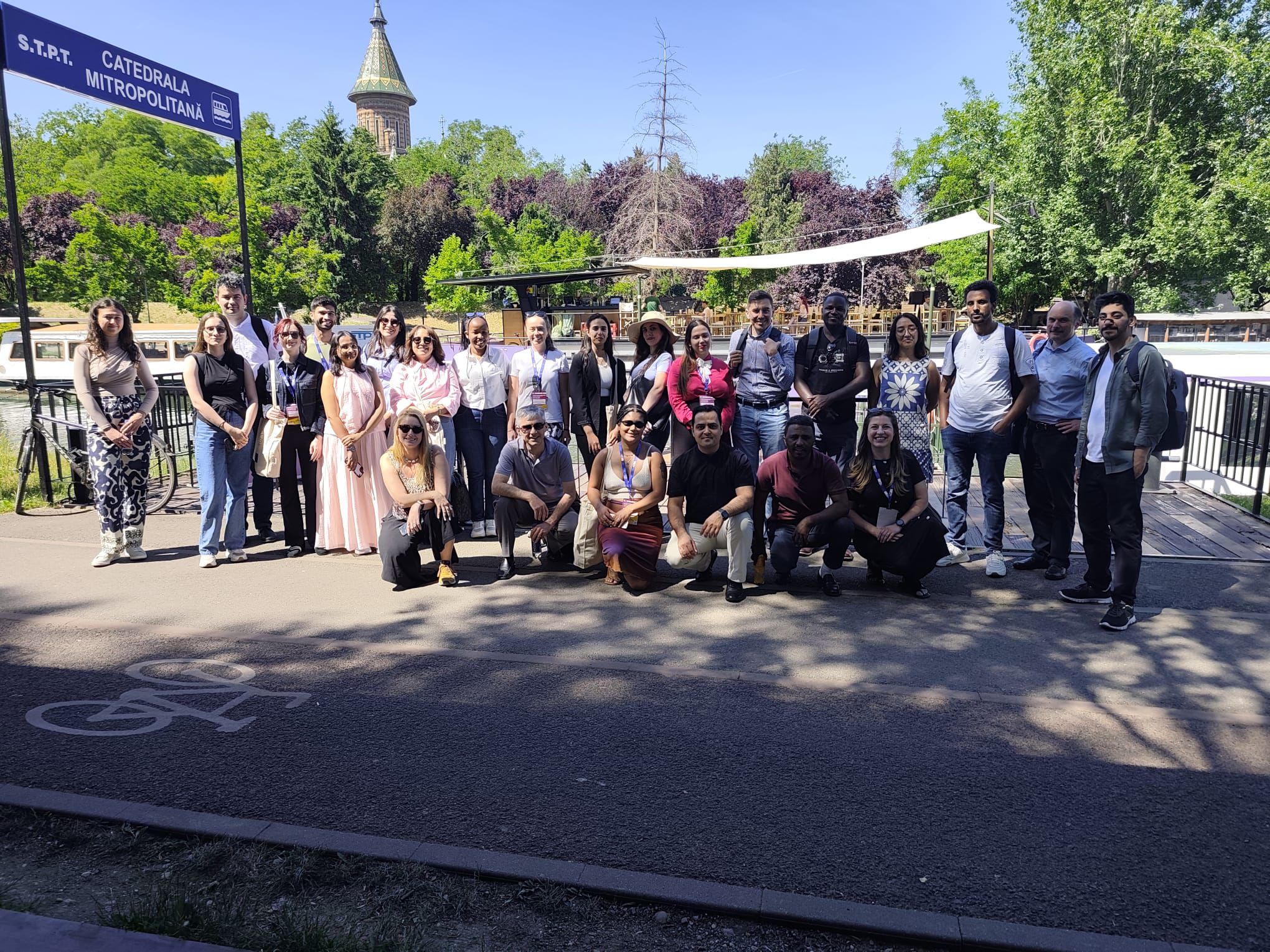
The afternoon was dedicated to an applicative workshop and mentoring and research collaboration sessions. In the evening, participants conducted a vaporetto tour on the Bega Canal.
The Final Day: Research Pitches and Closing Ceremony
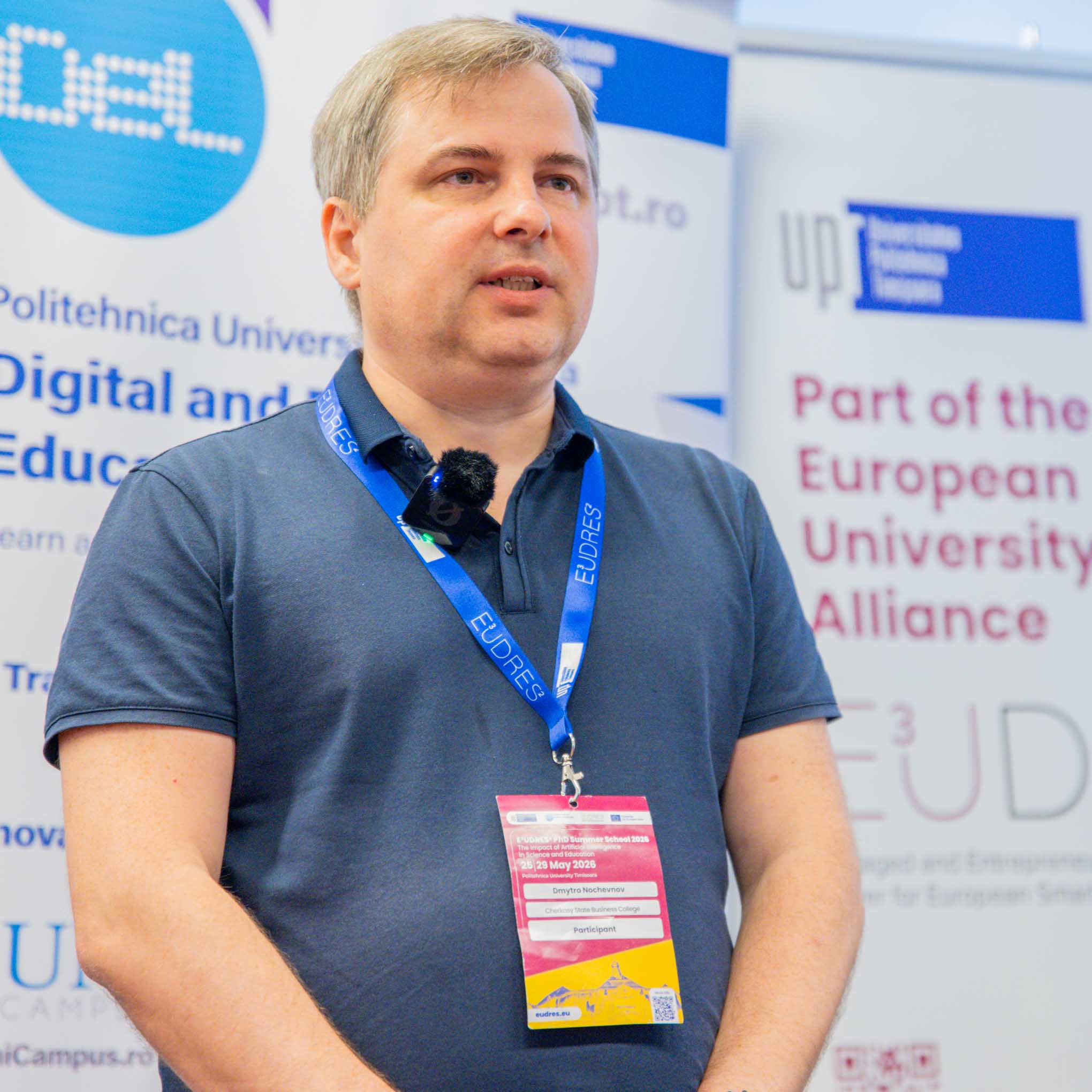
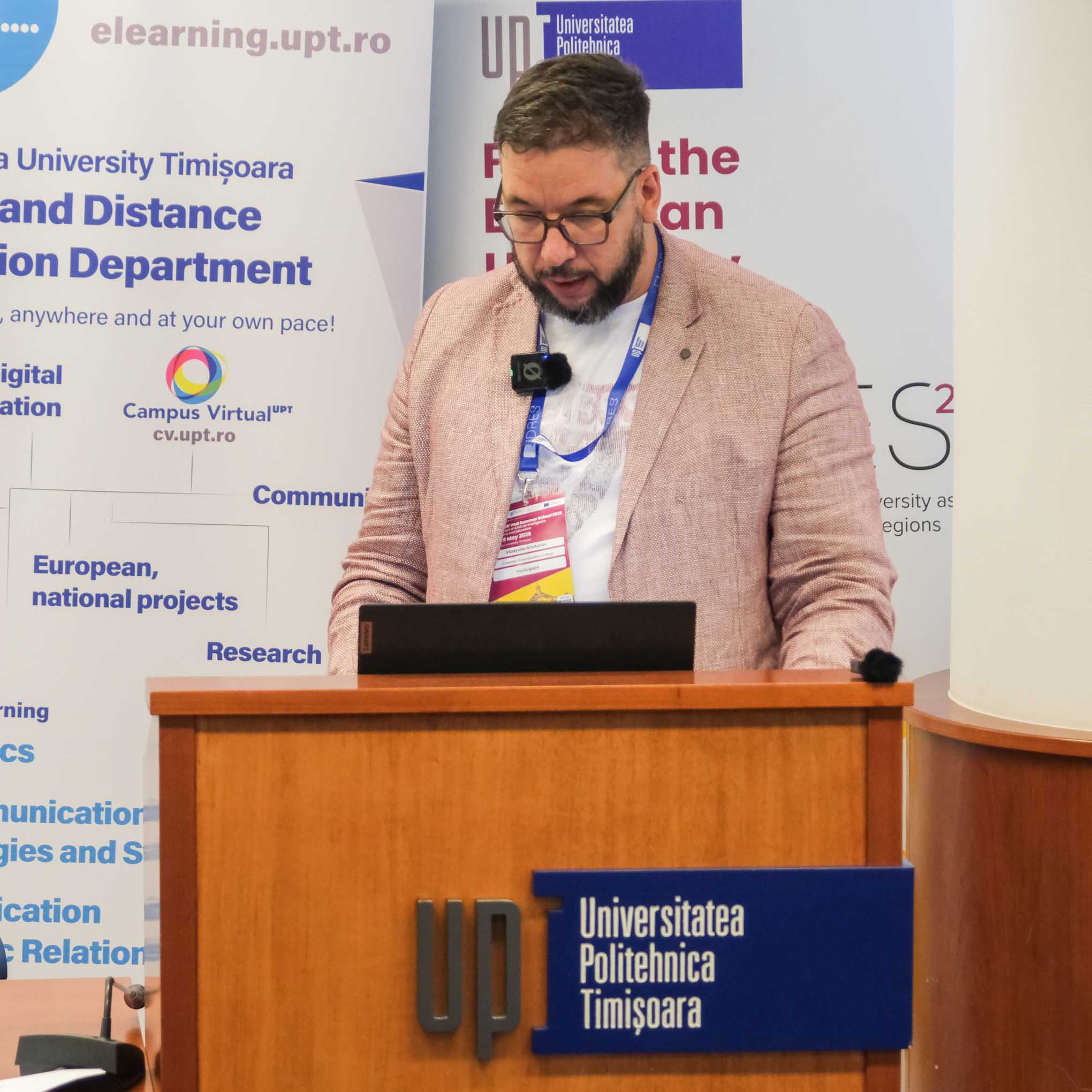
The last day was entirely dedicated to research pitches: each participant presented their own research topic in 5 minutes, in front of their peers, speakers and online participants connected via Zoom. The session reflected the diversity of research topics of students from the six participating countries and was a valuable exercise in concise scientific communication.
us.
A selection of papers presented at the 23rd edition of the International NETTIES Conference (Network Entities), co-organized by IAFeS – International Association for eScience together with the E³UDRES² alliance and Politehnica University of Timișoara, under the theme Artificial Intelligence and Humanity: Shaping Society, Culture, Education and Science Together, will be published in a volume with an ISBN number. All papers underwent a peer review process. The conference was coordinated by FH-Prof. Dipl.-Ing. Hannes Raffaseder, Prof. Em. Dr. Eng. Radu Vasiu, and Dr. Eng. Diana Andone.
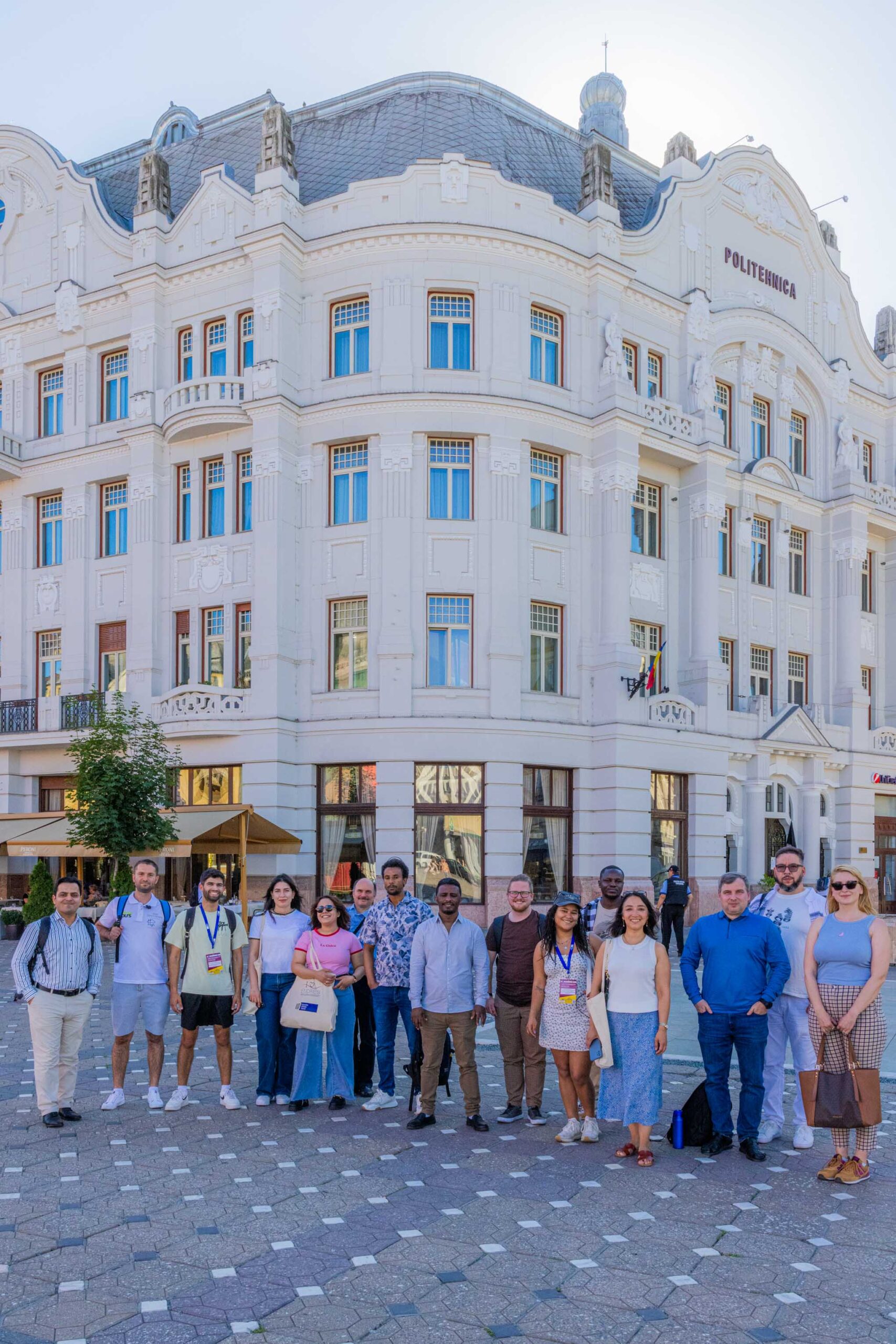
At the same time, two UPT teams that participated in the final Innovation Labs 2026 presented their projects at the E³UDRES² PhD Summer School, with the aim of finding research and innovation synergies for joint start-ups within the Alliance E³UDRES² – AgriTwin (precision farming with AI) and Tenue Vibe (rapid website modernization)
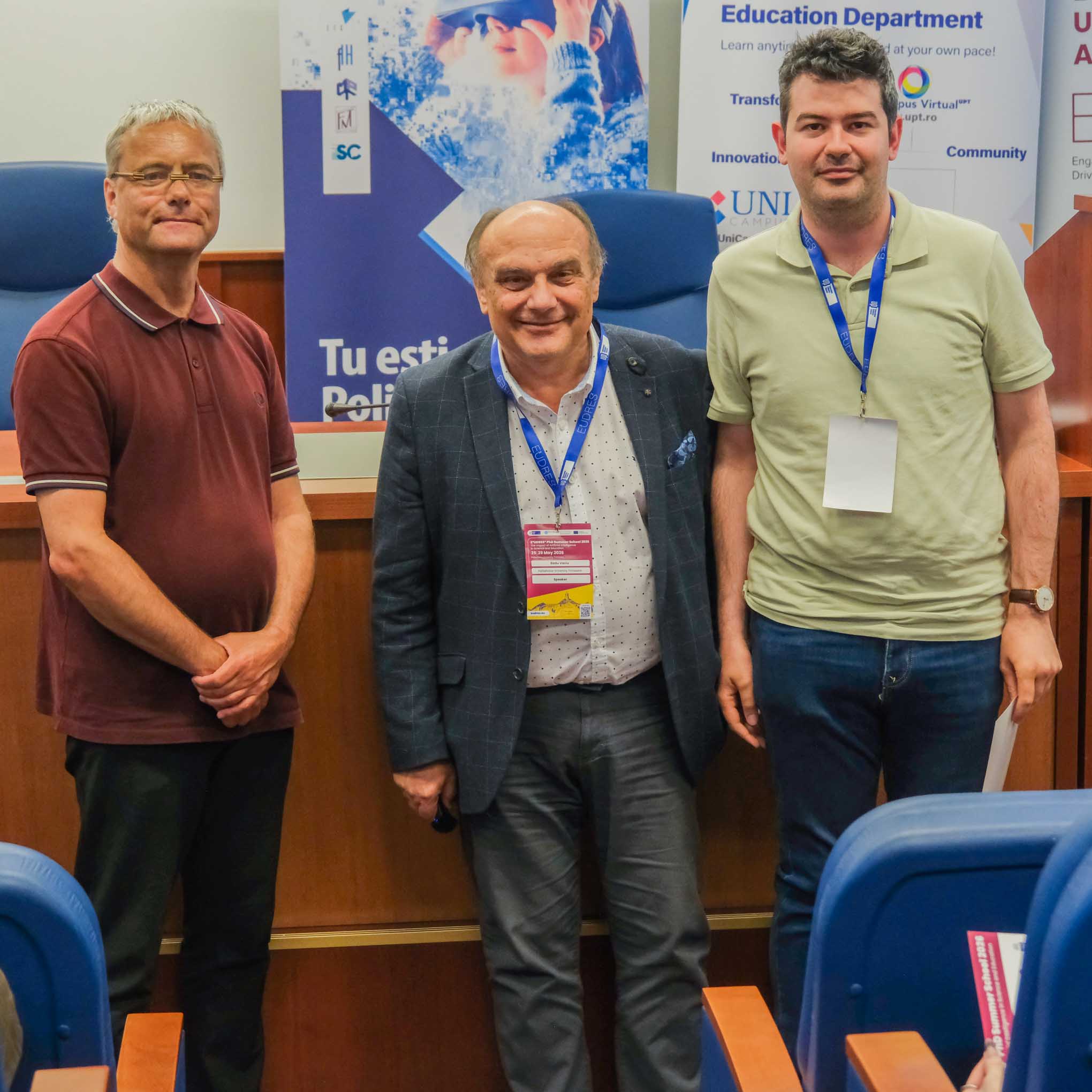
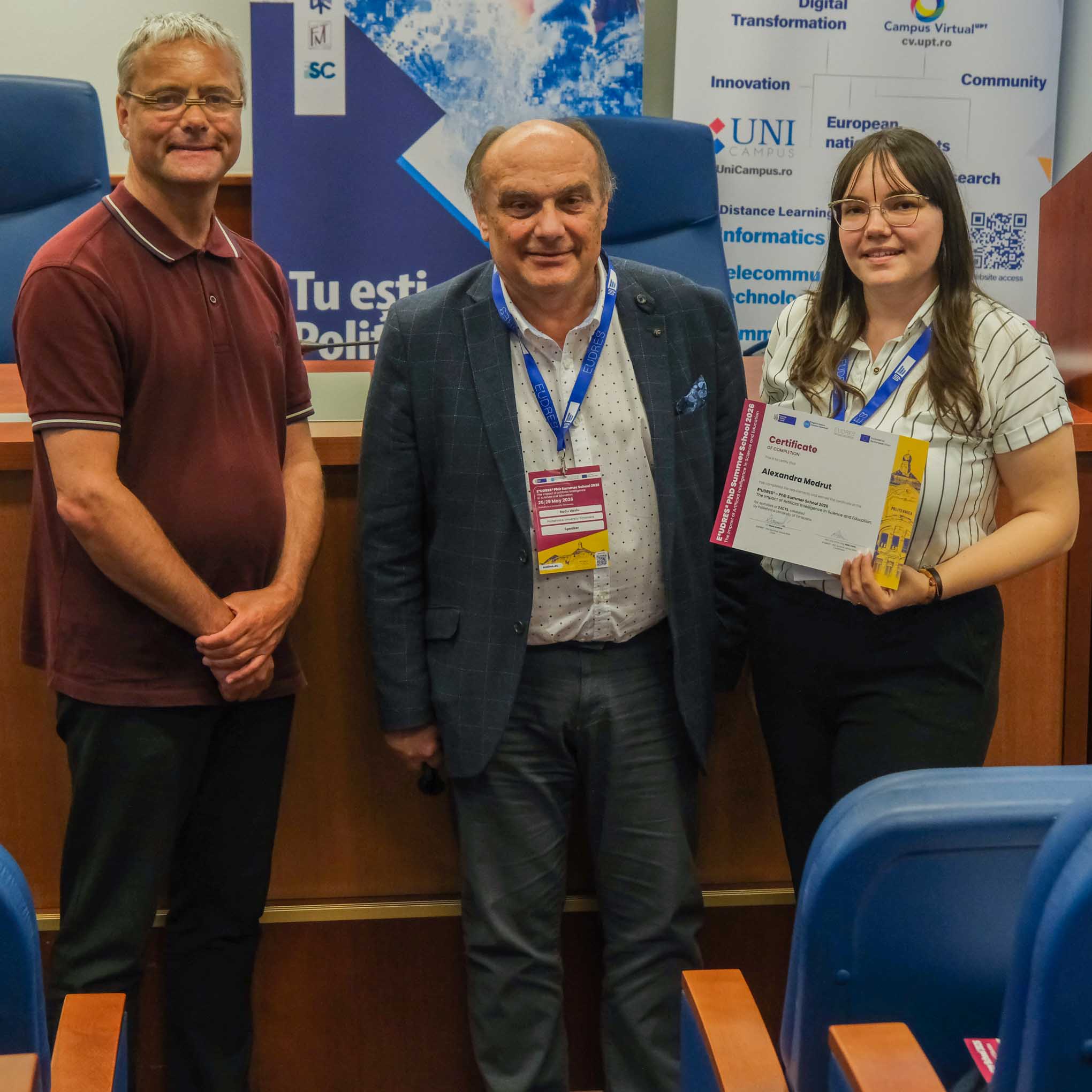
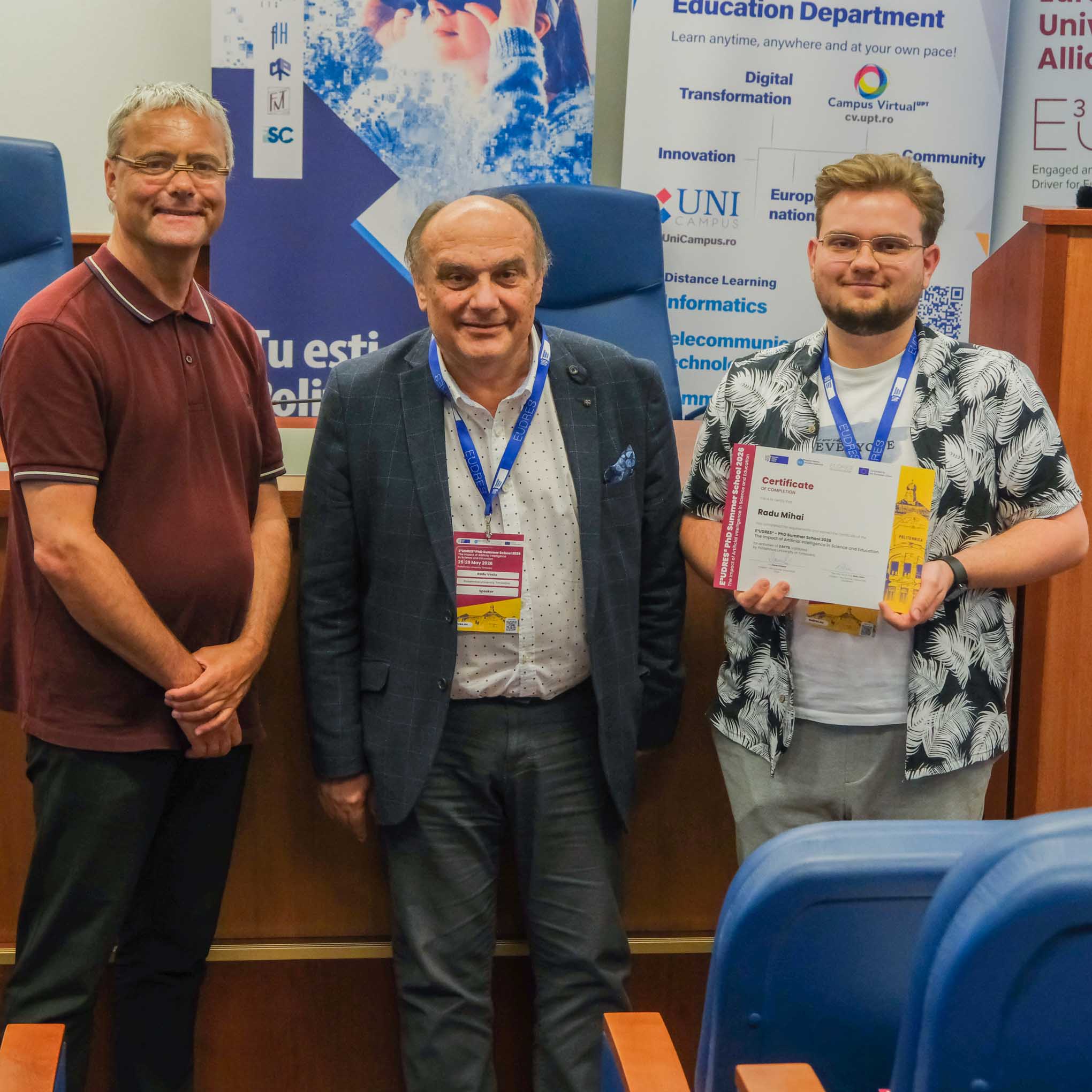
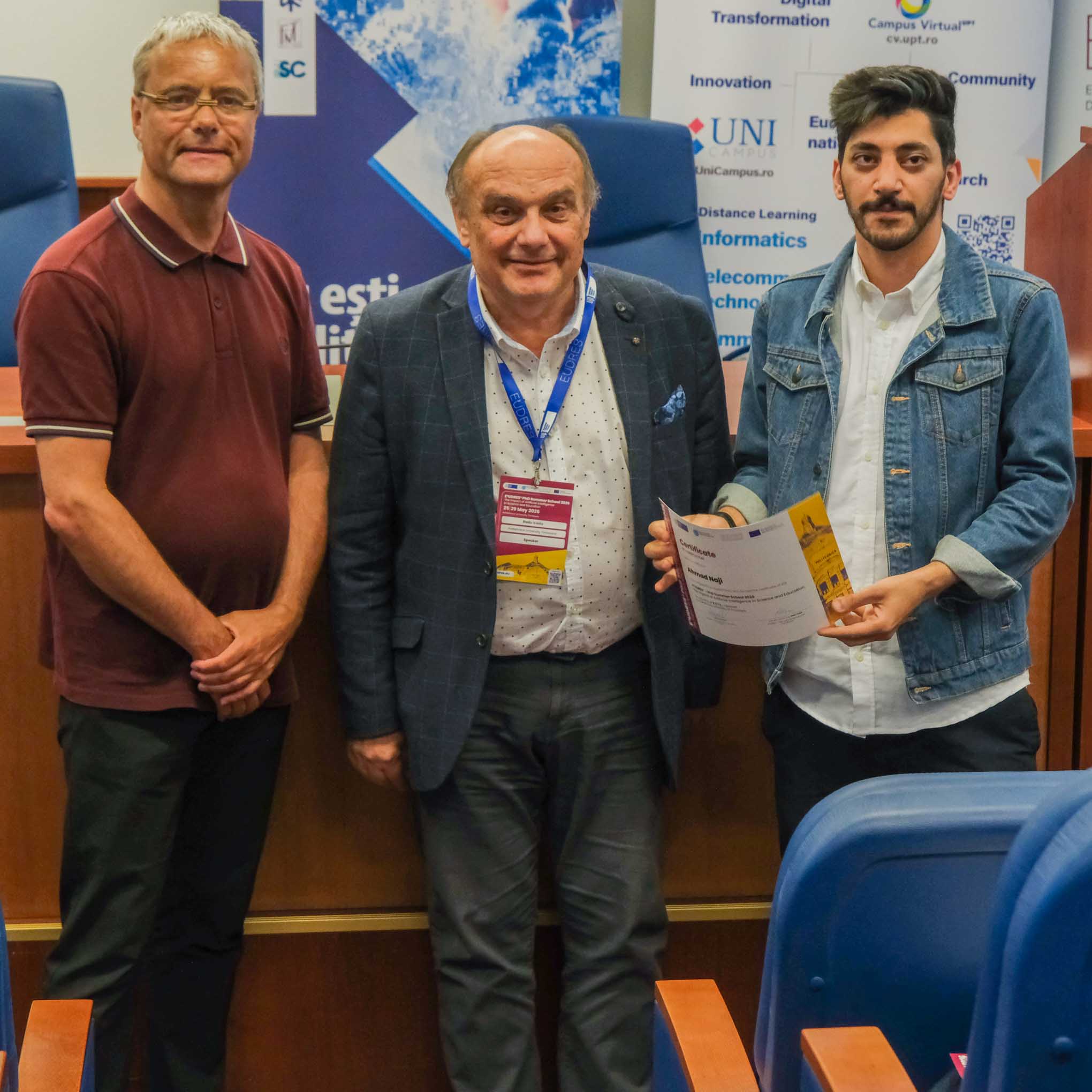
The closing ceremony was held by Prof. Emeritus Dr. Eng. Radu Vasiu, together with FH-Prof. Dipl.-Ing. Hannes Raffaseder, President of the E³UDRES² Association.
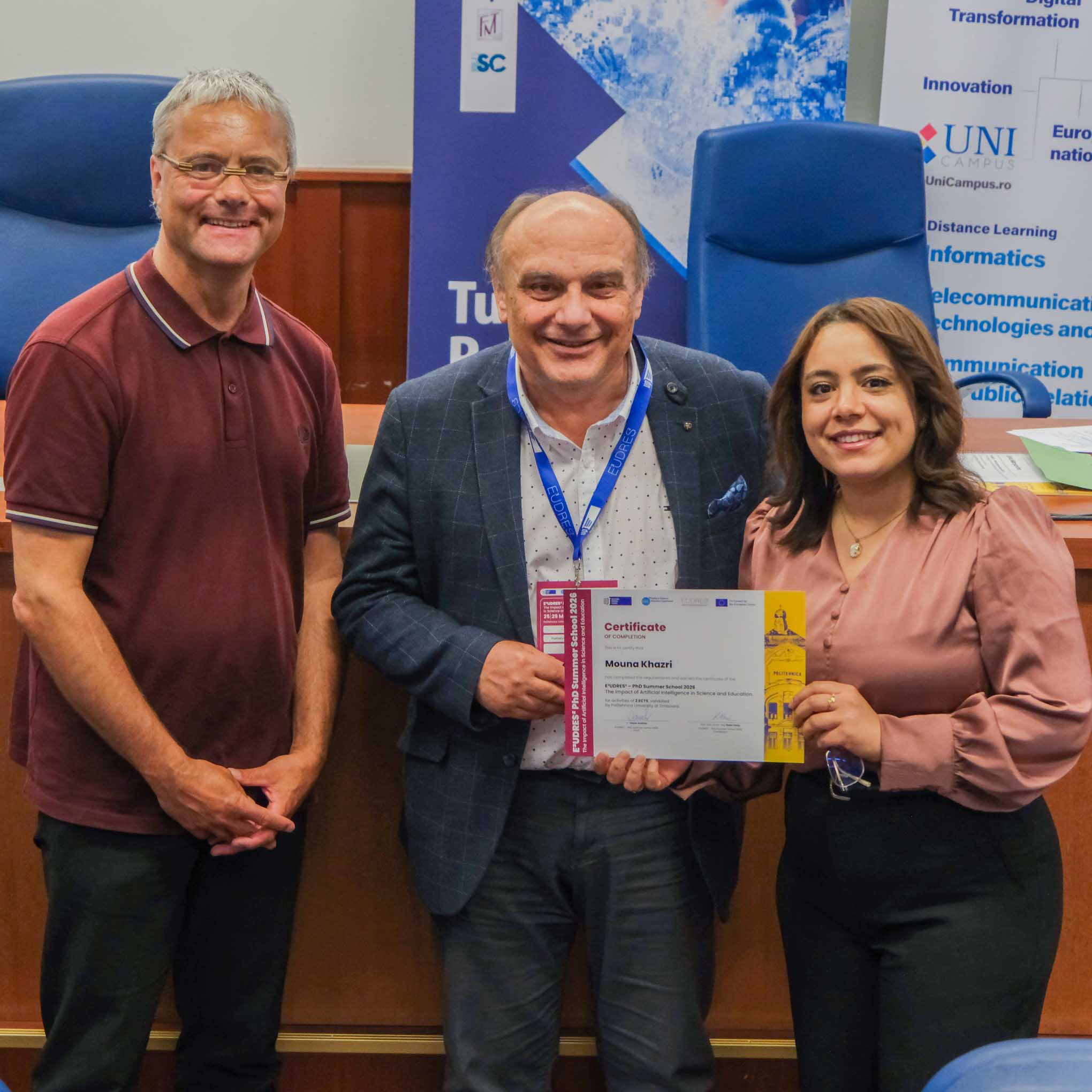
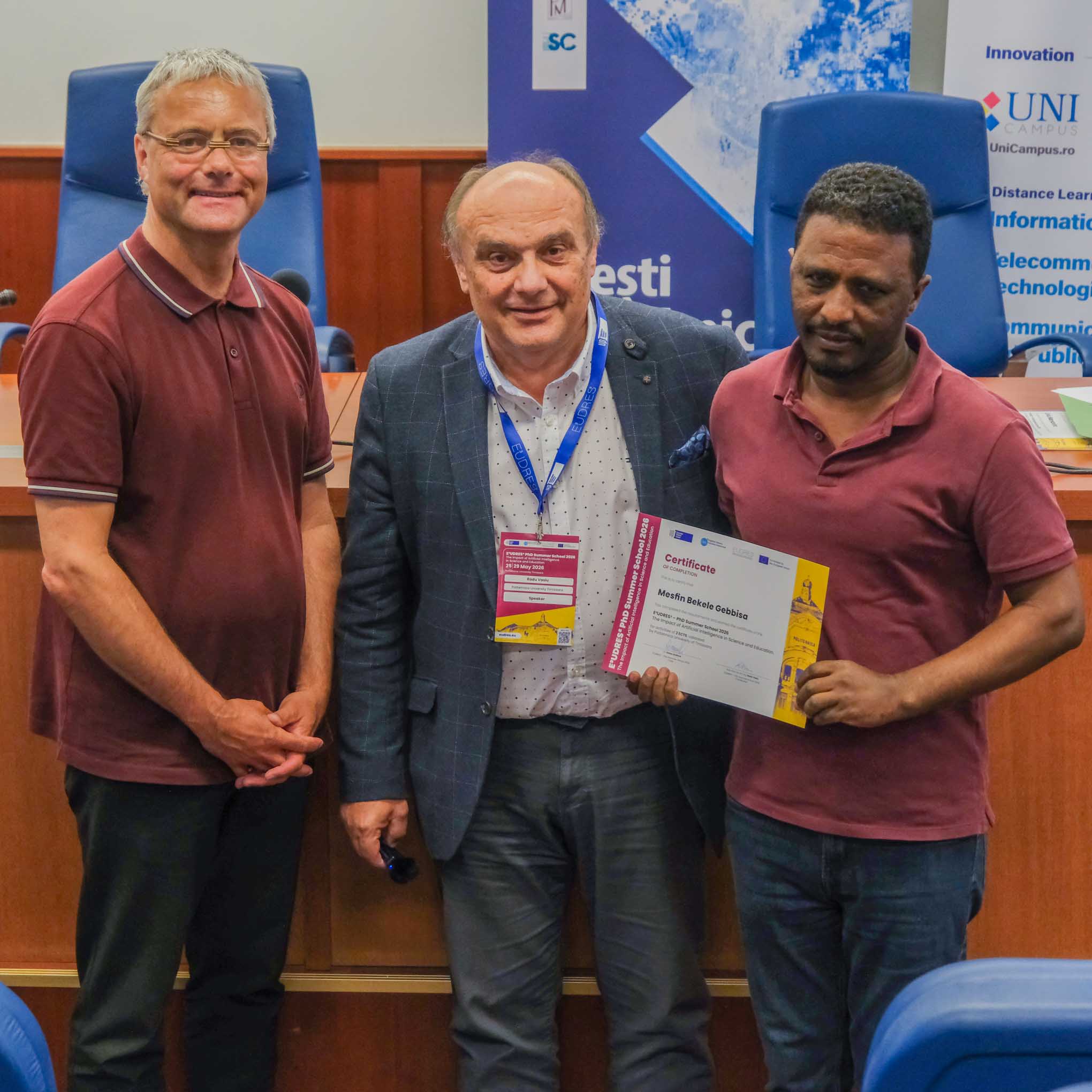
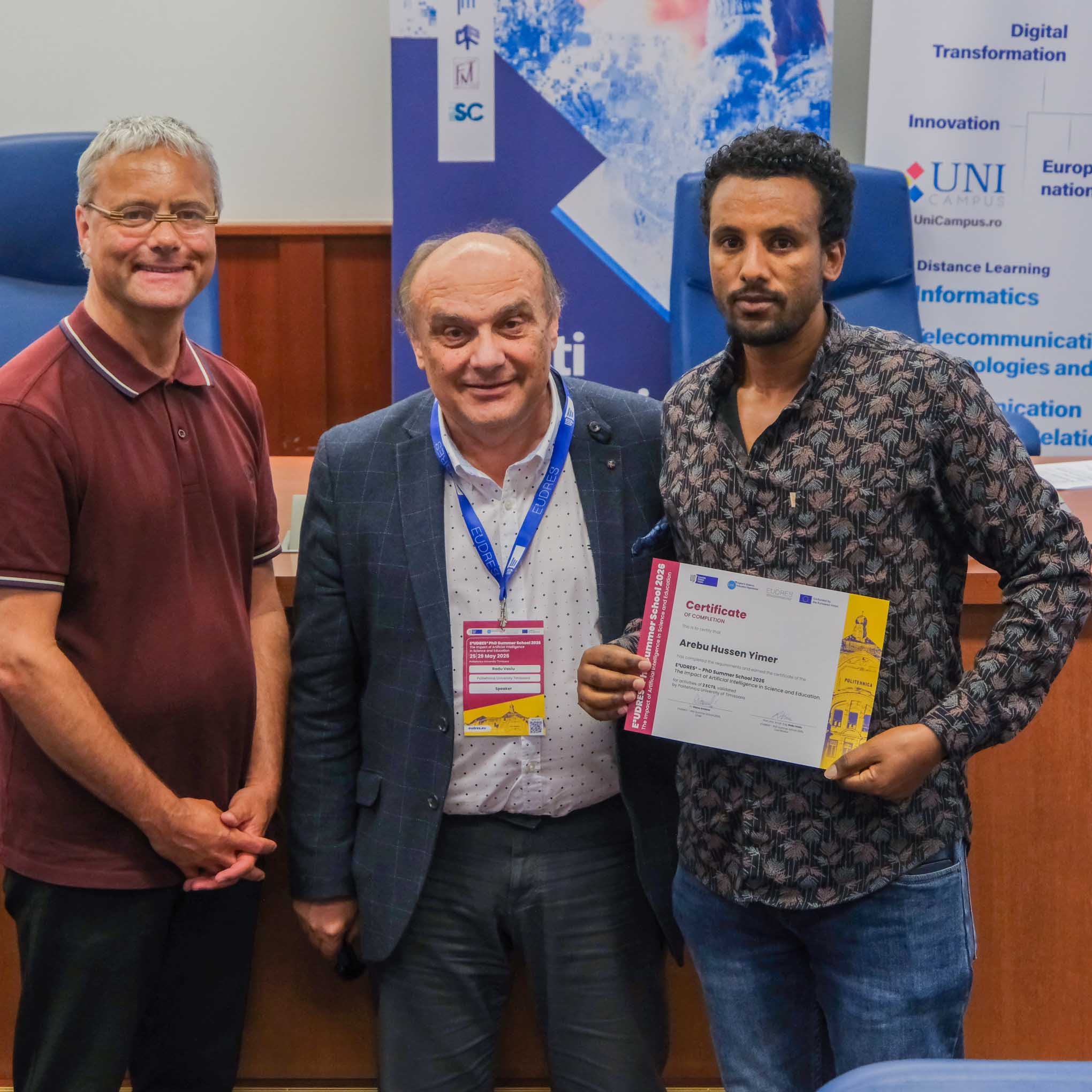
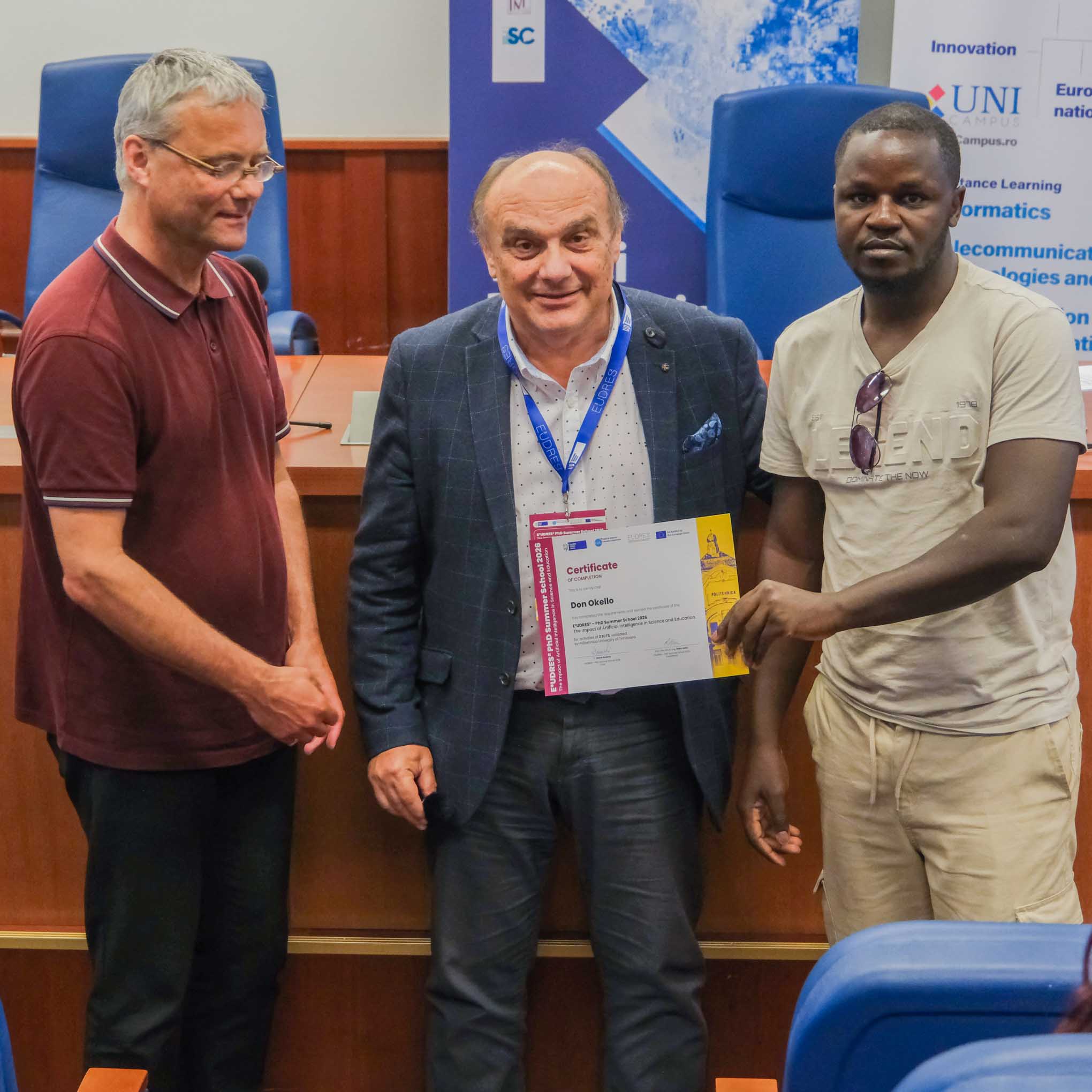
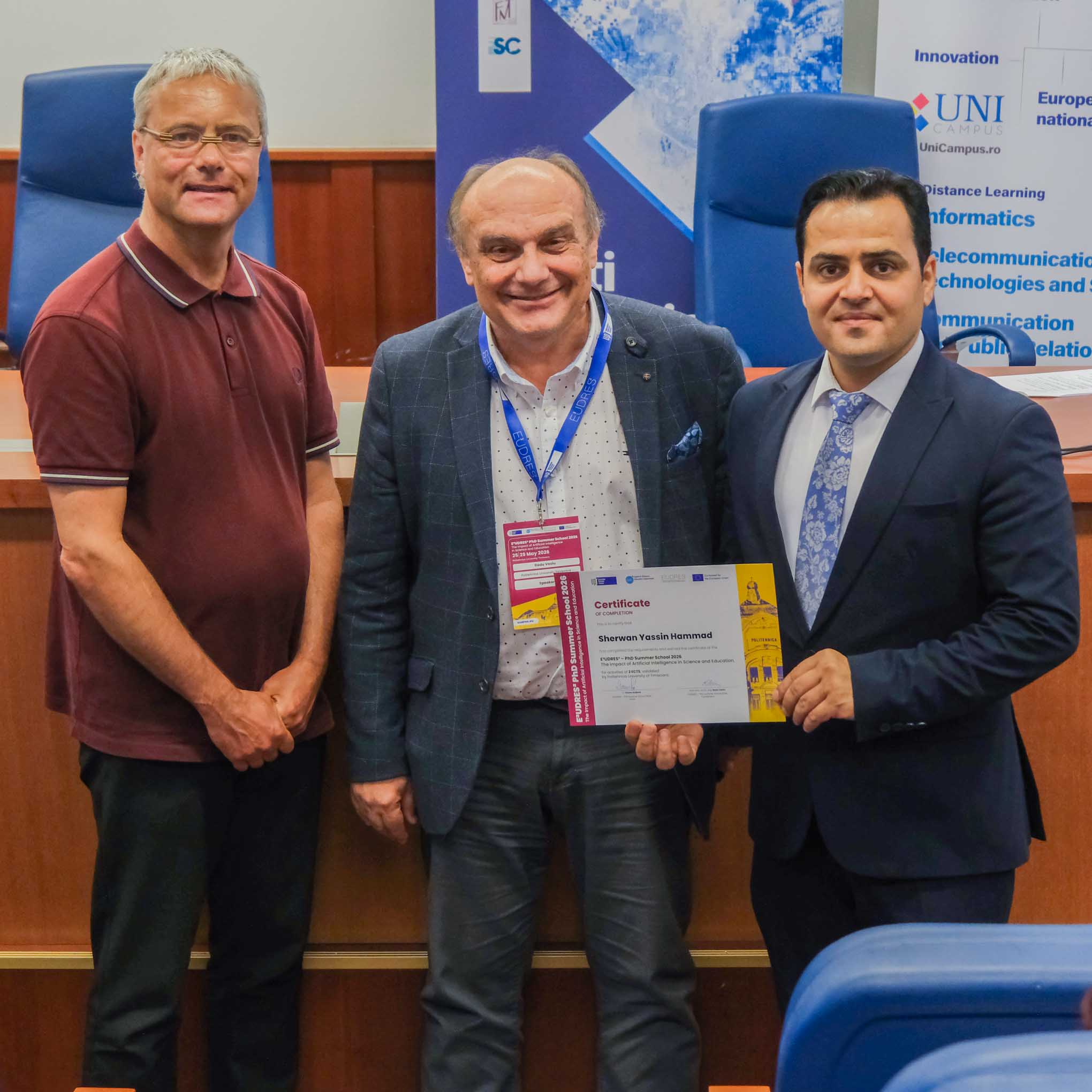
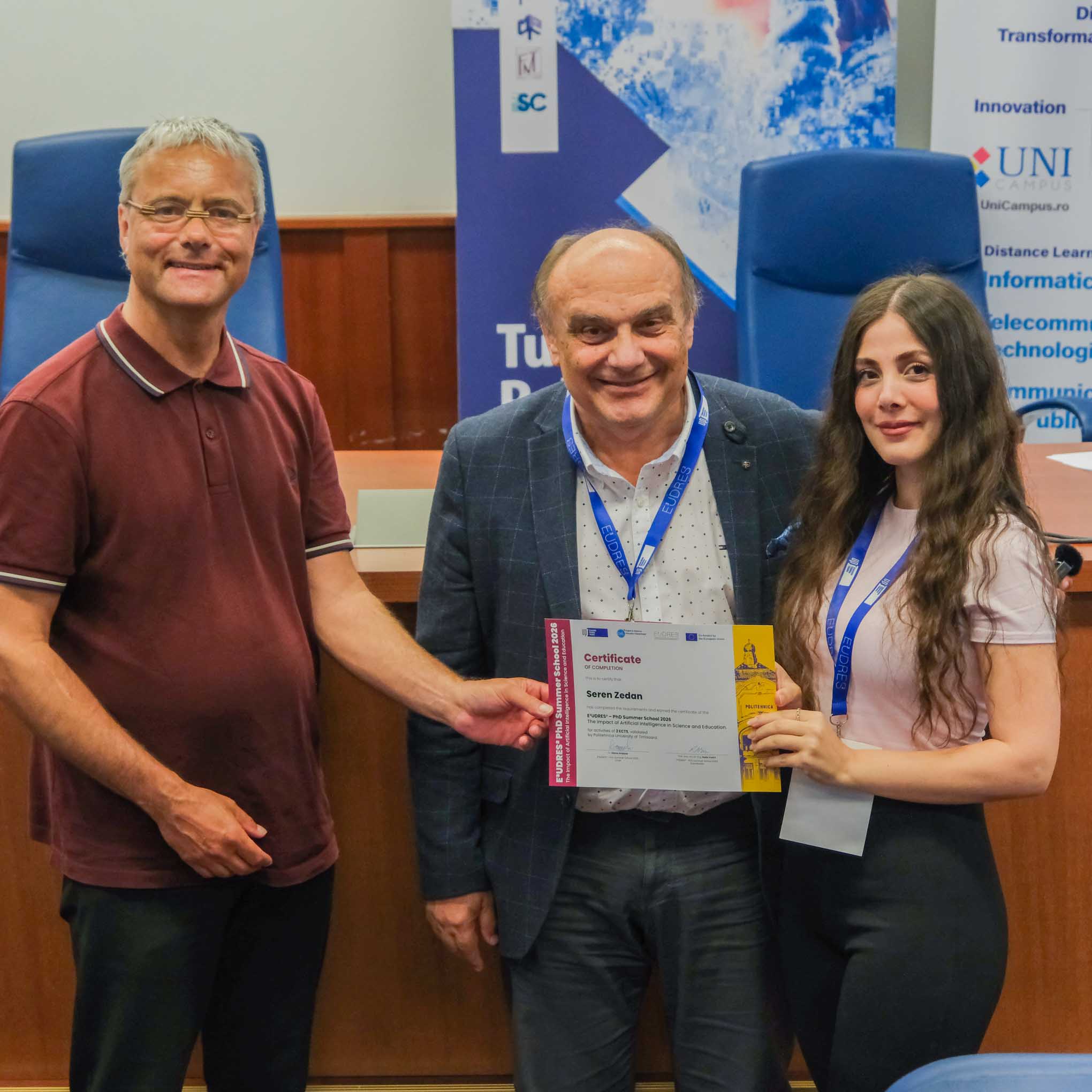
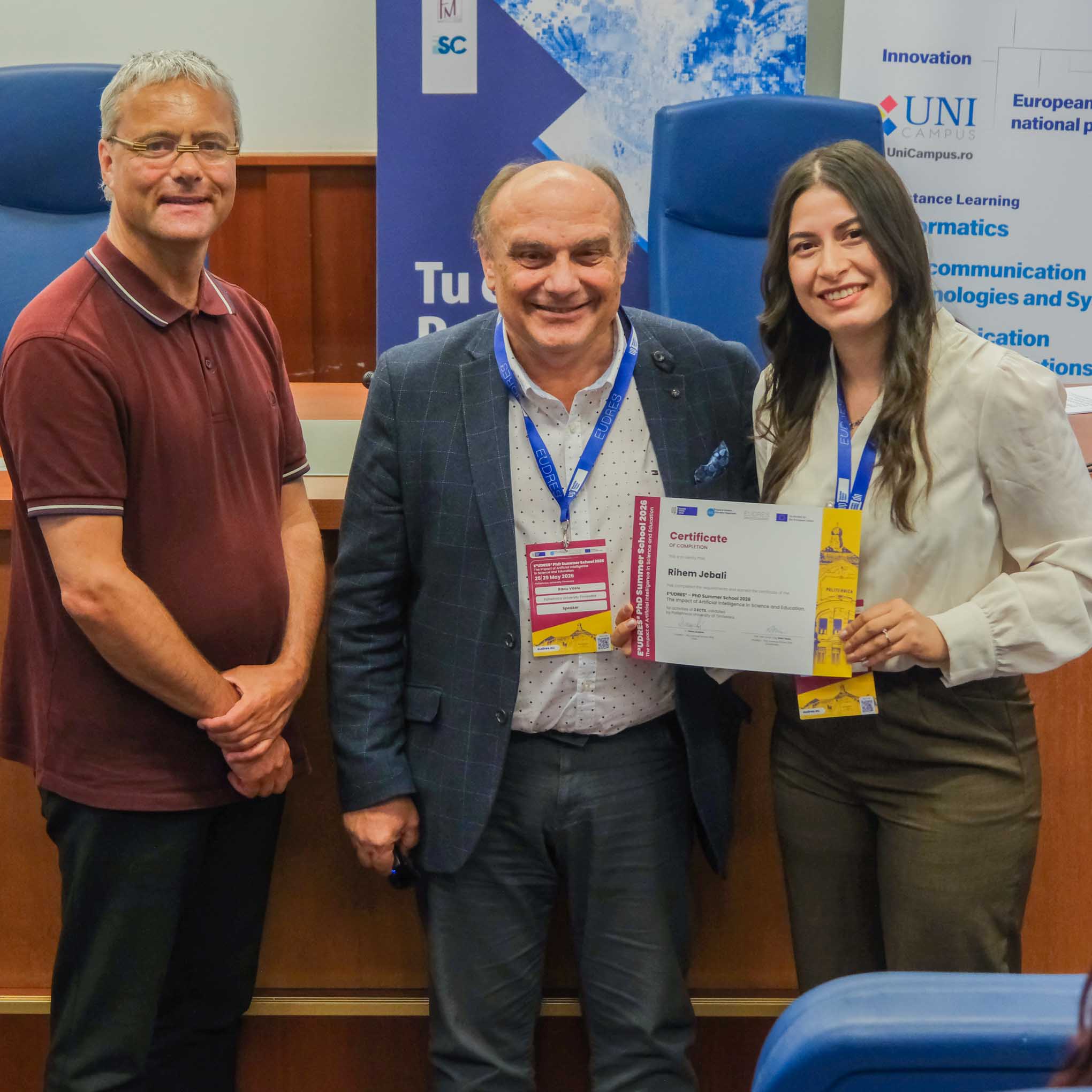
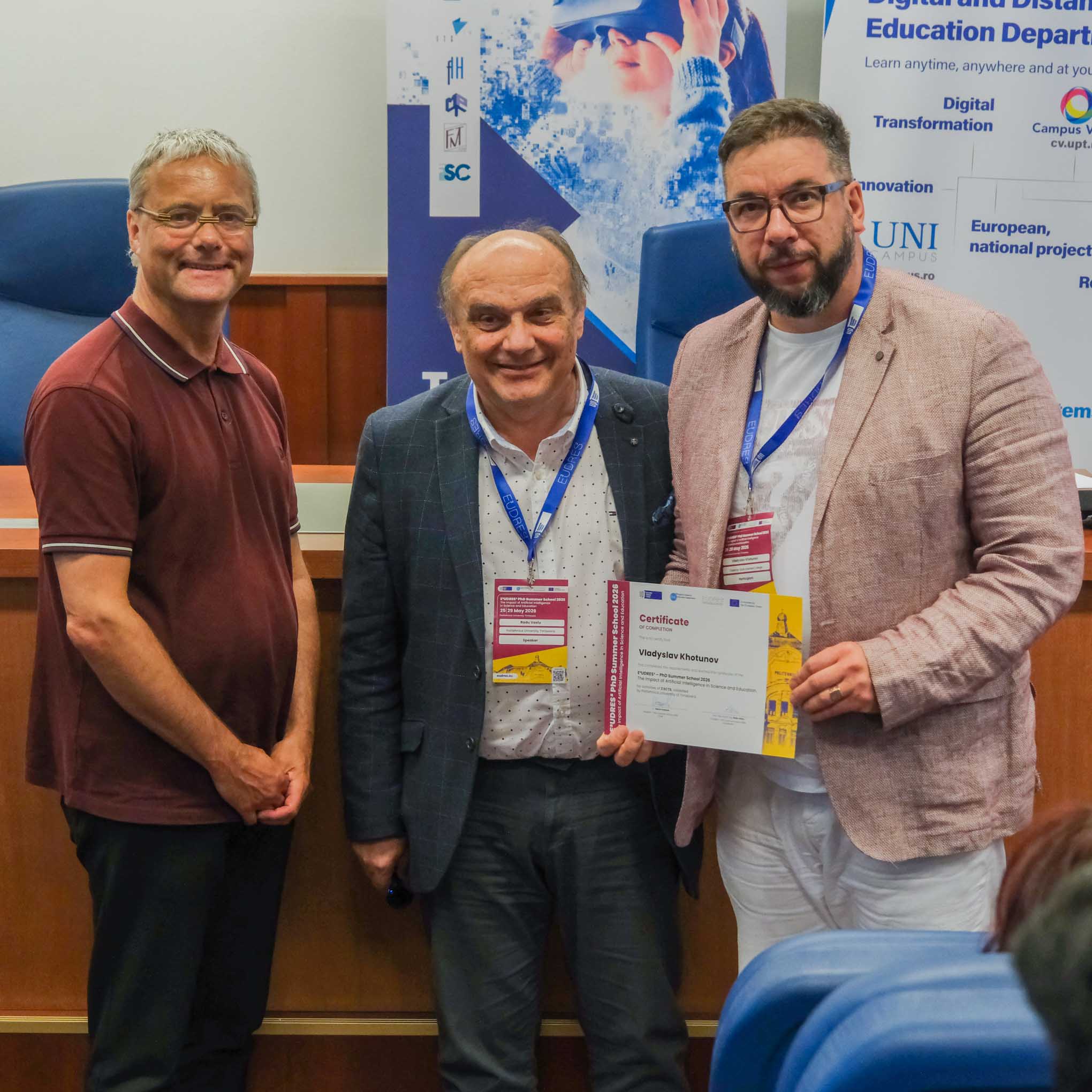
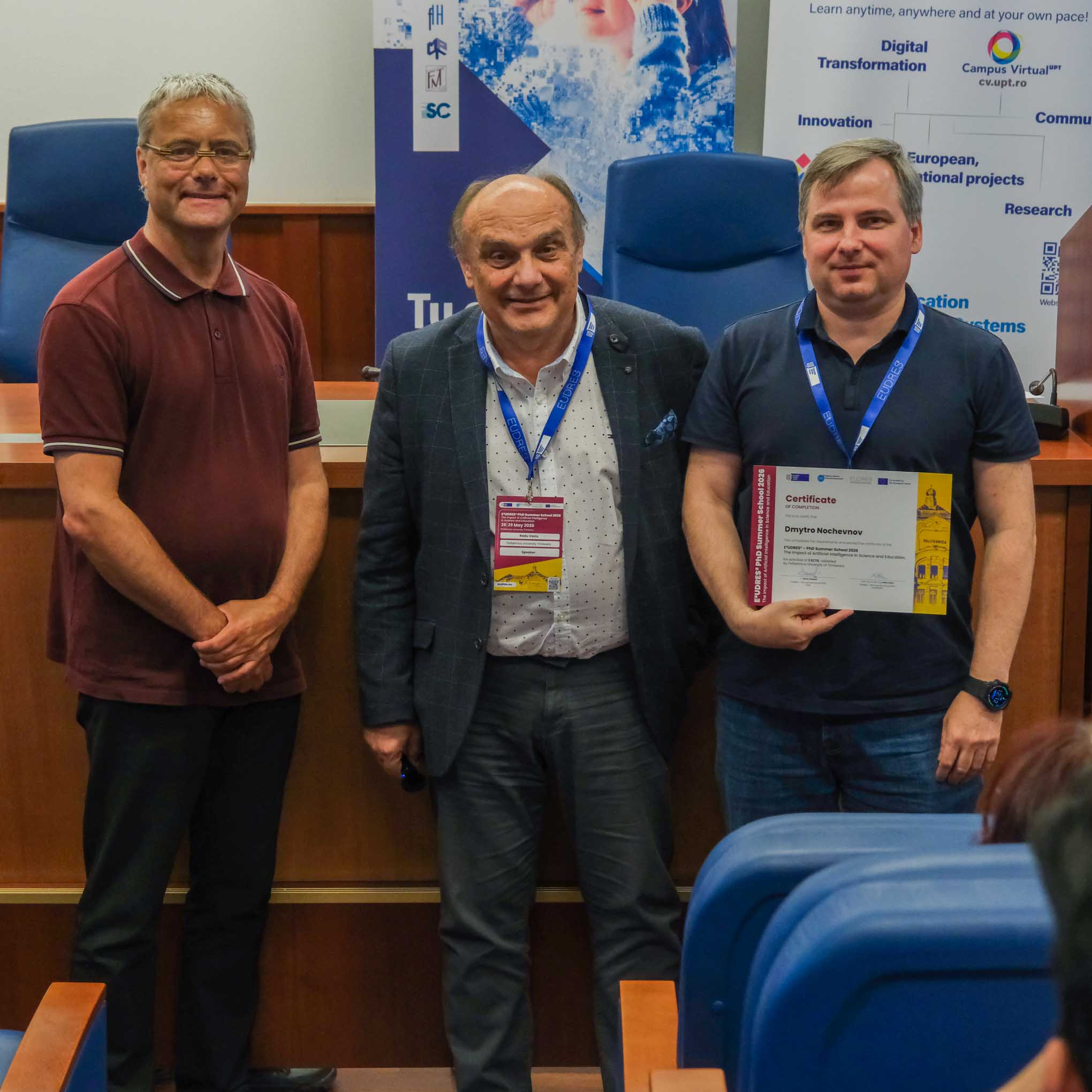
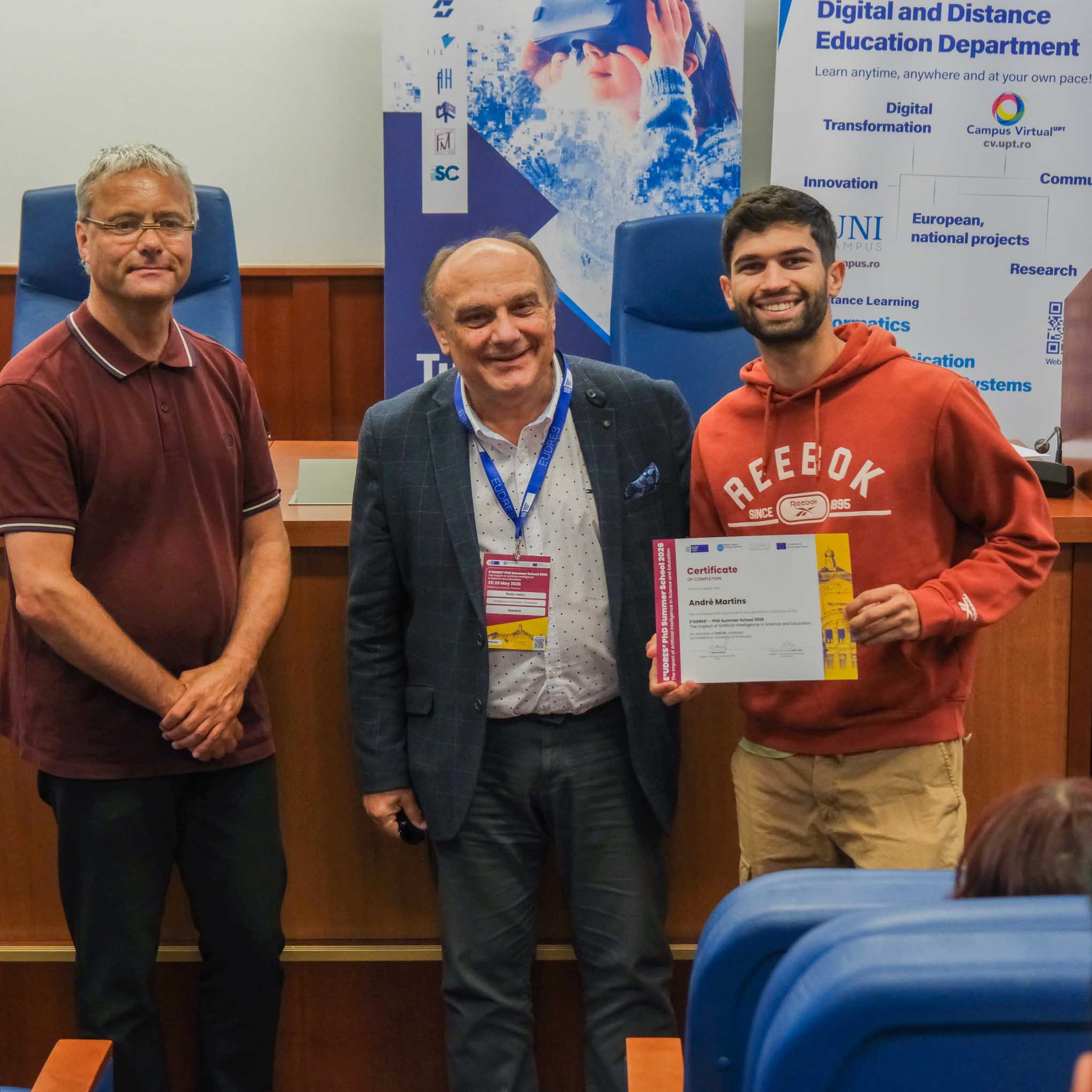
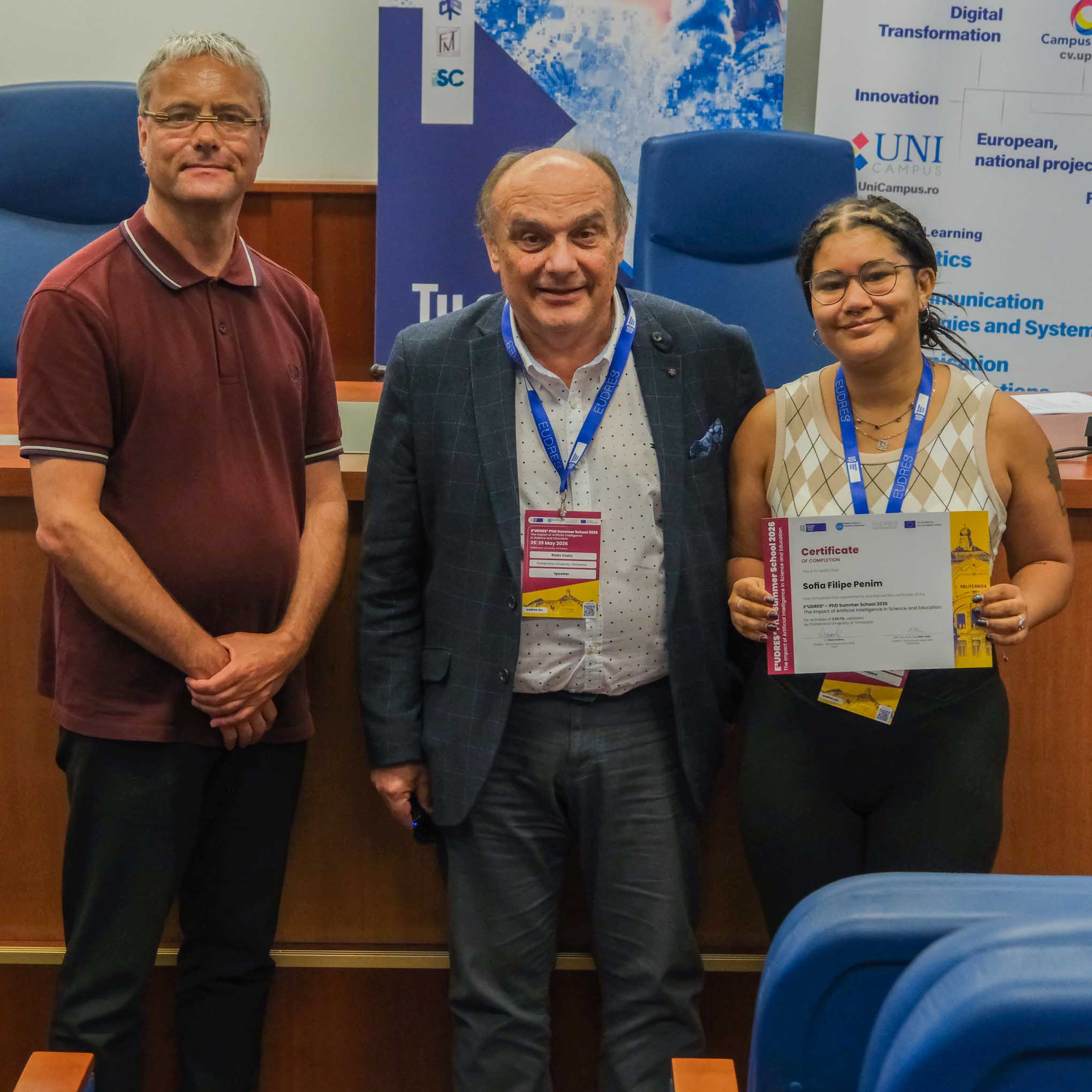
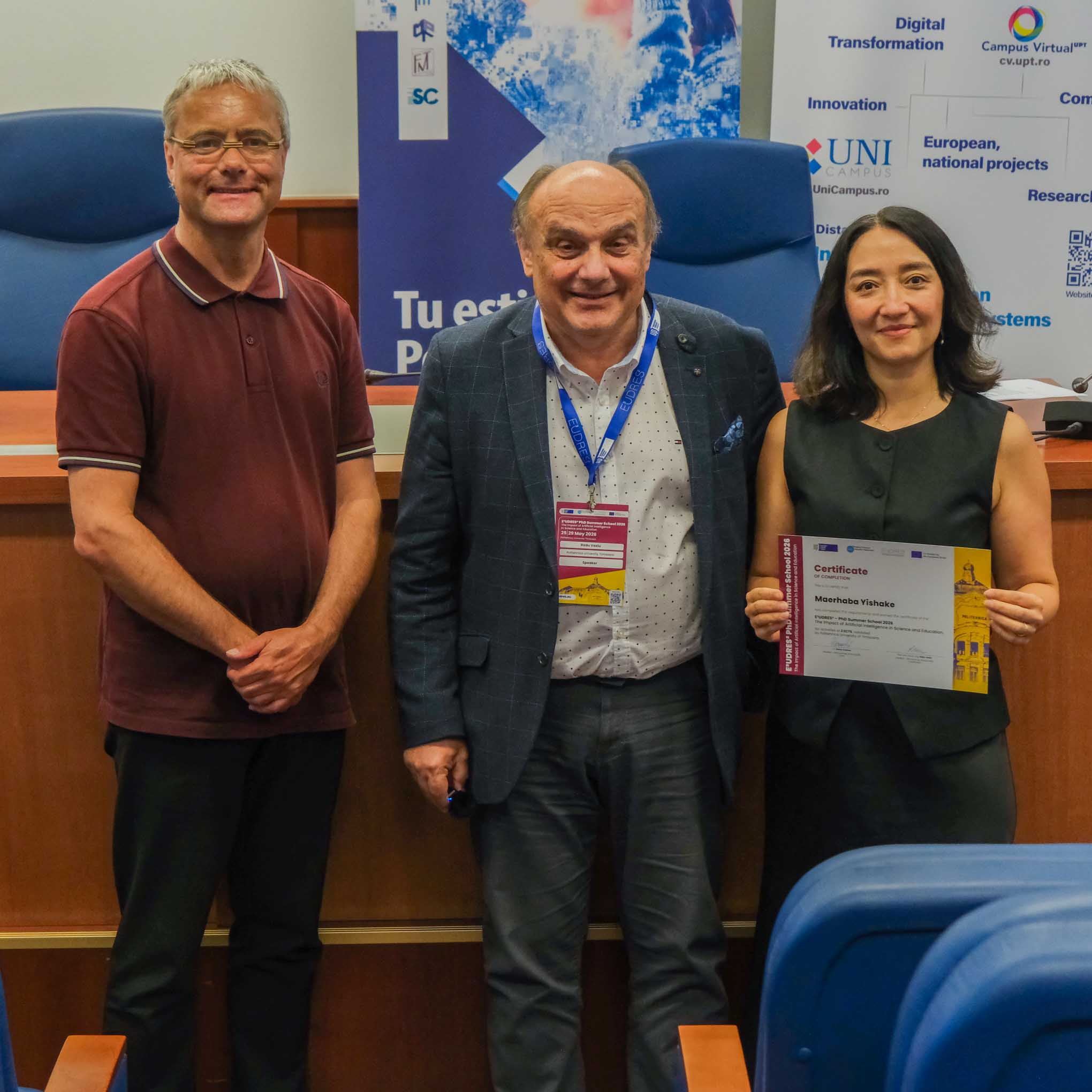
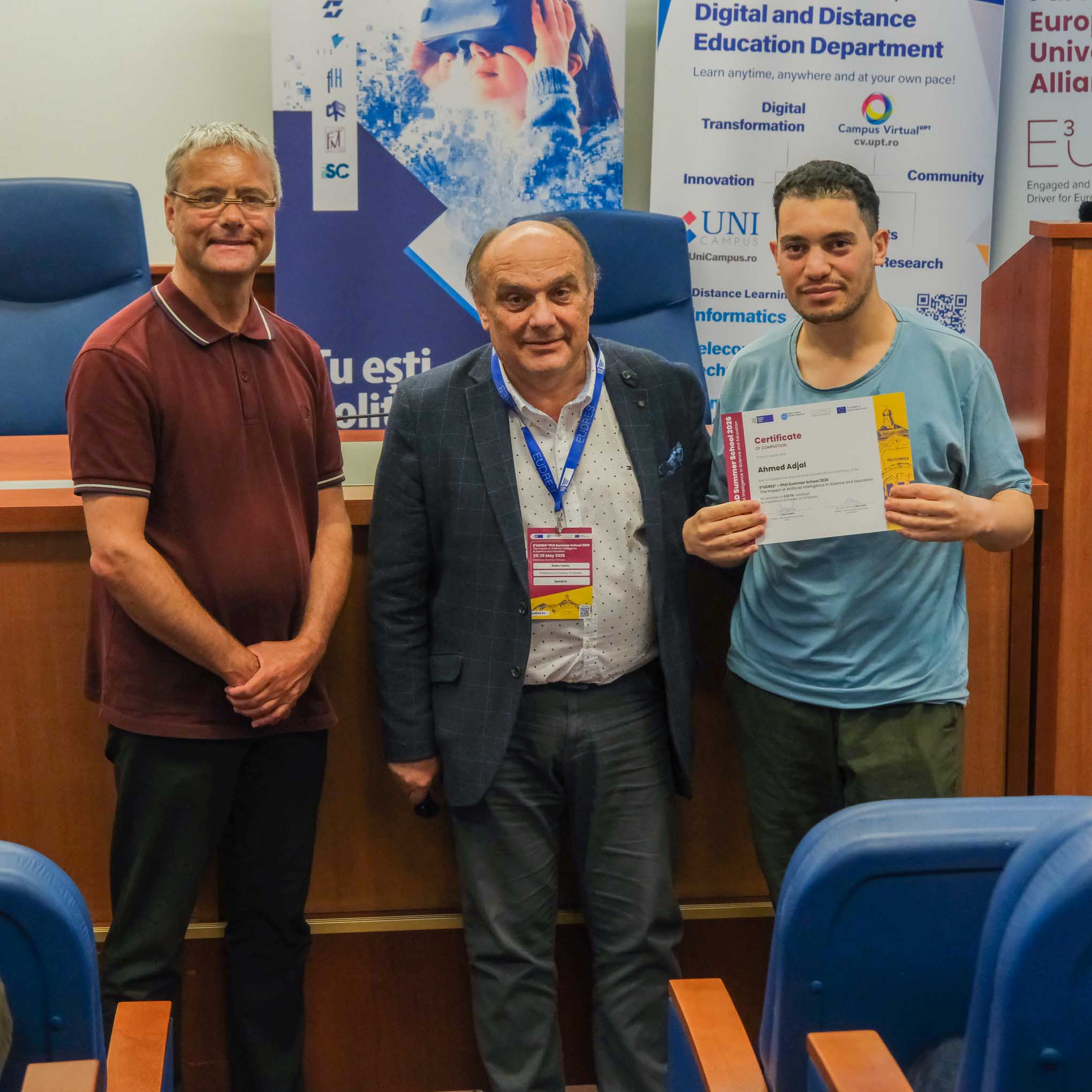
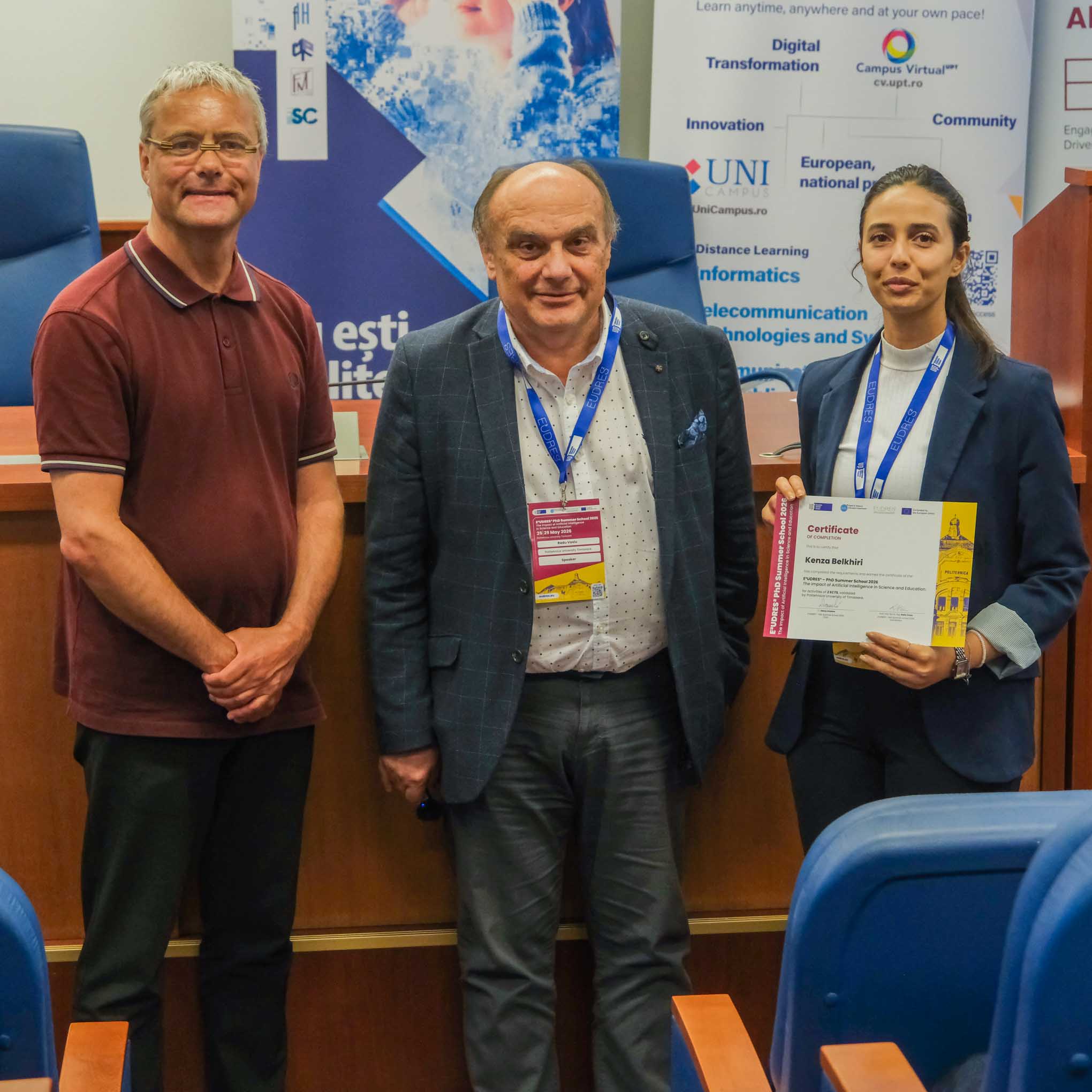
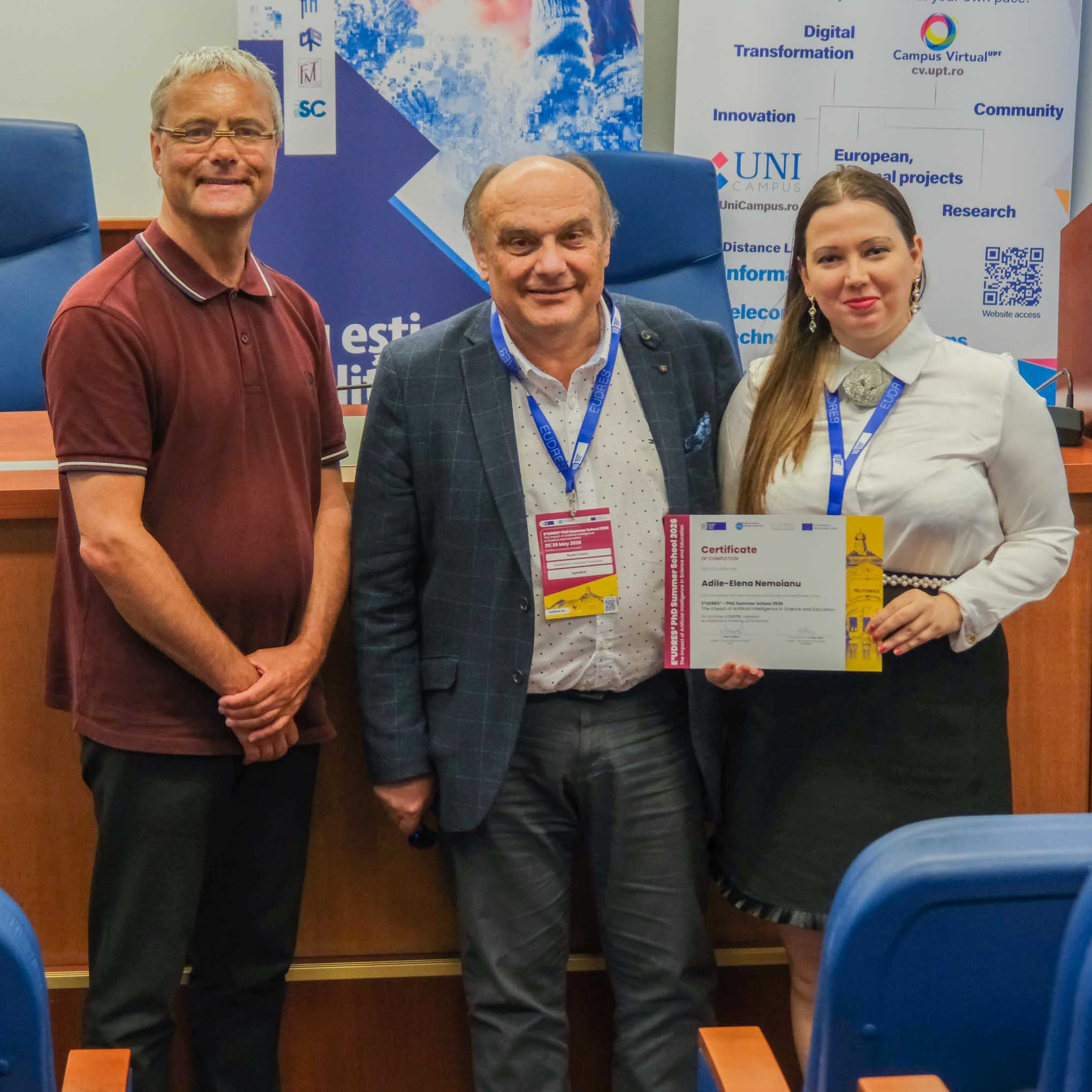
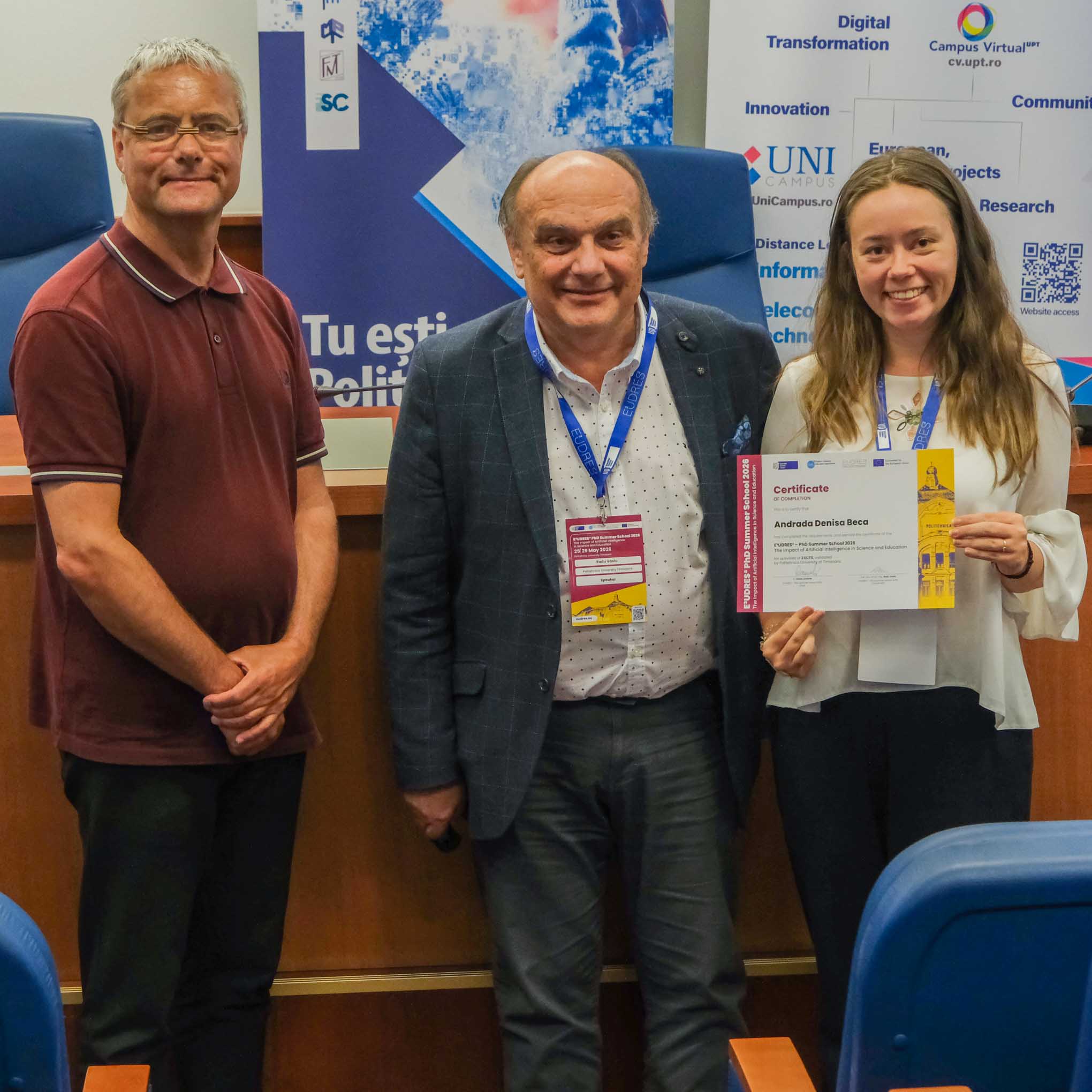
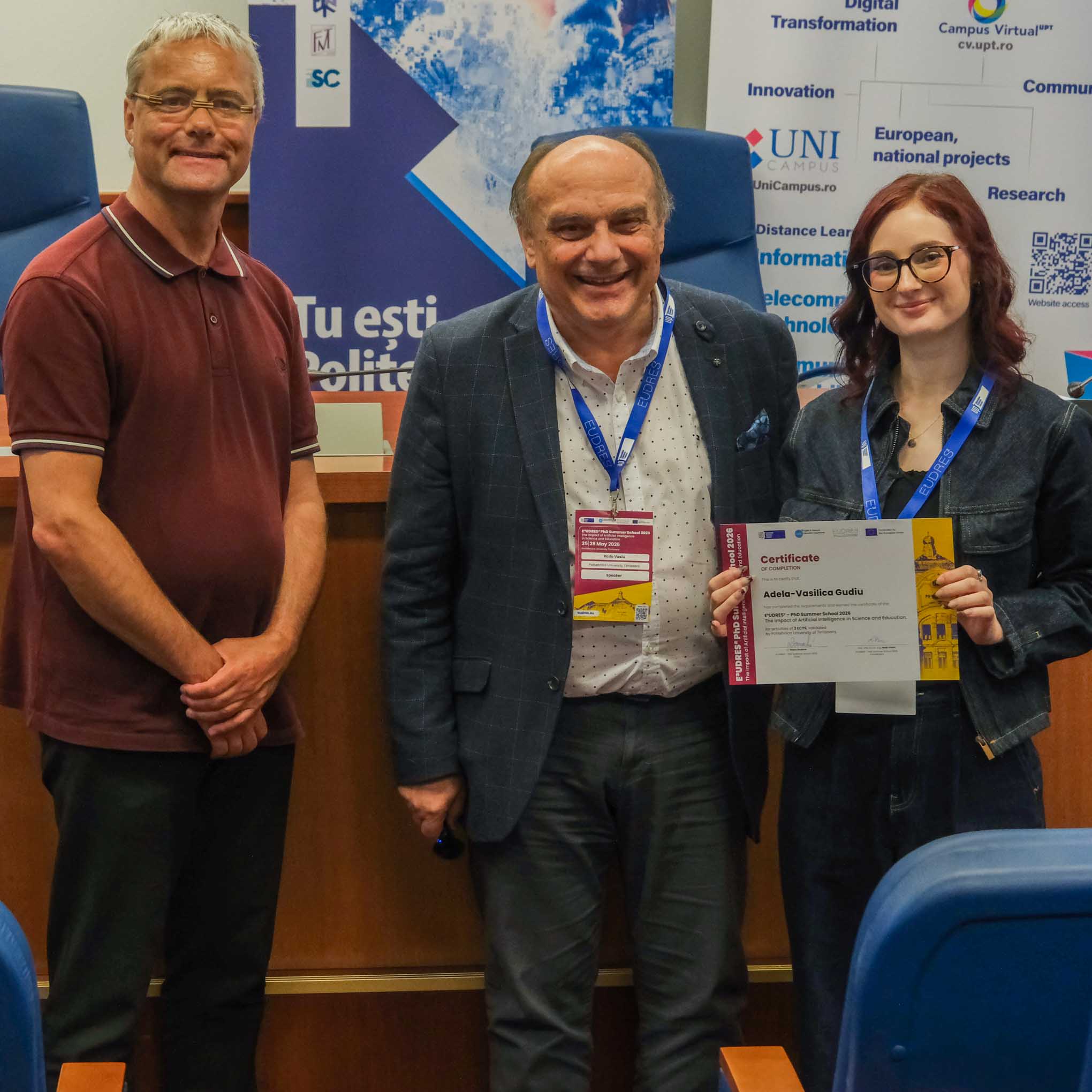
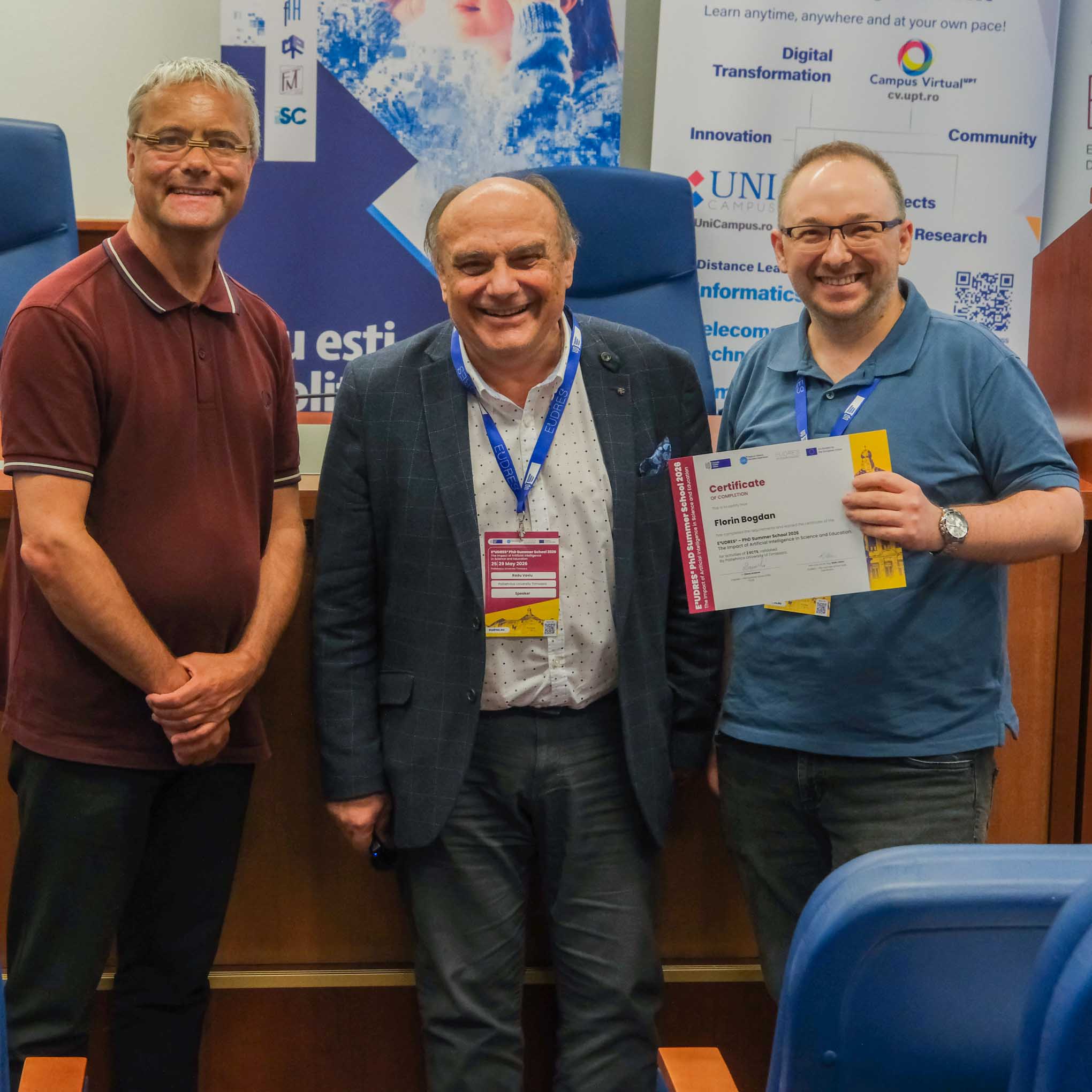
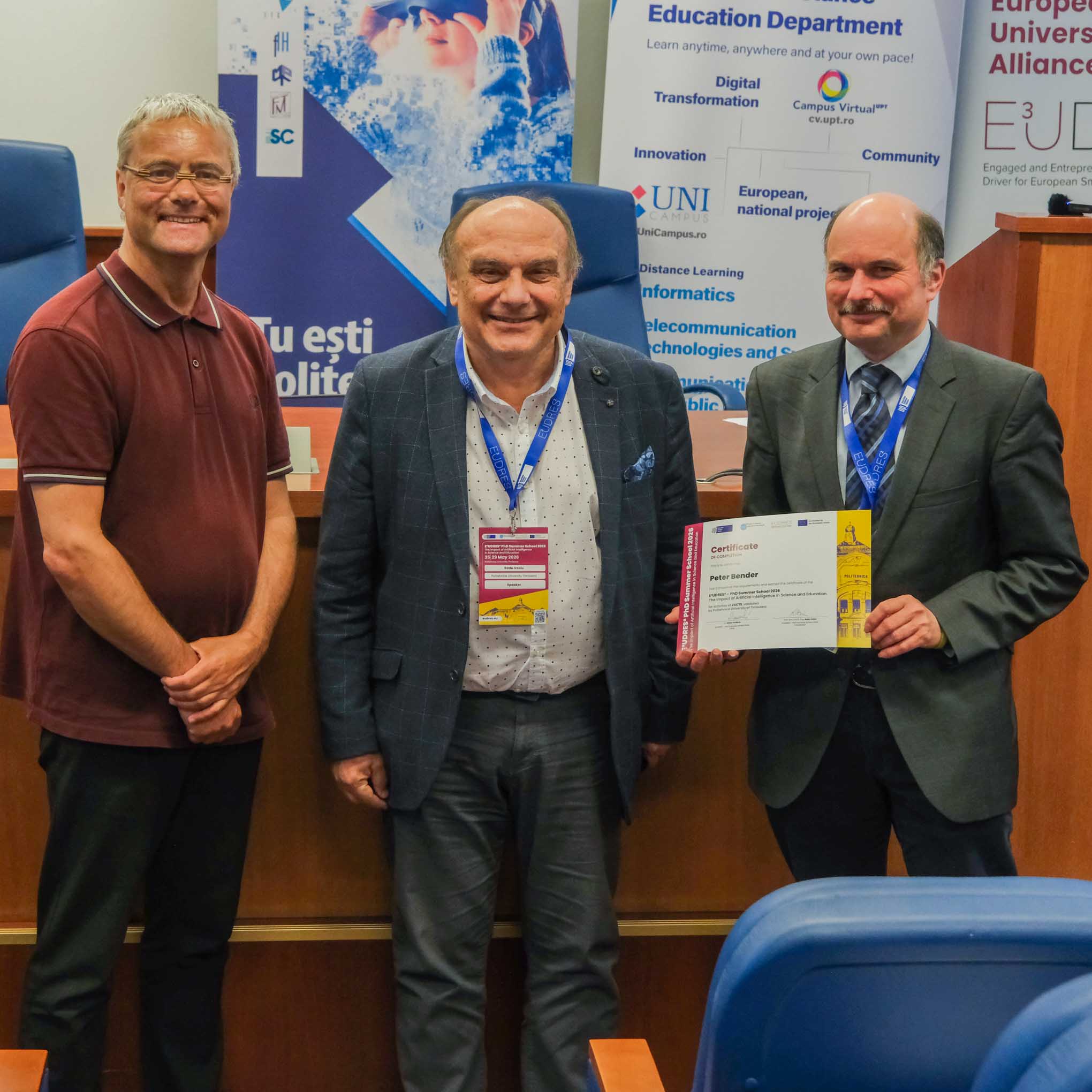
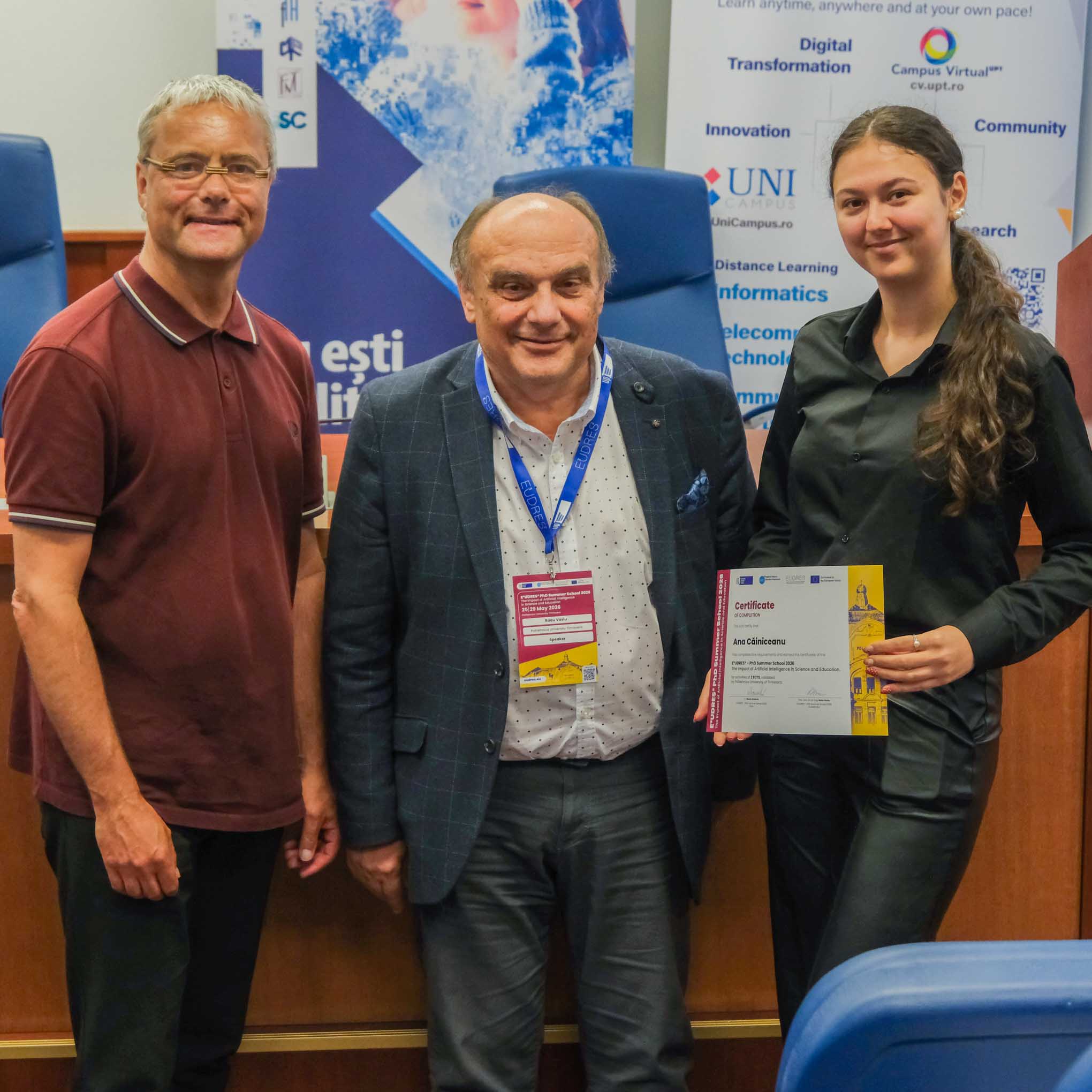
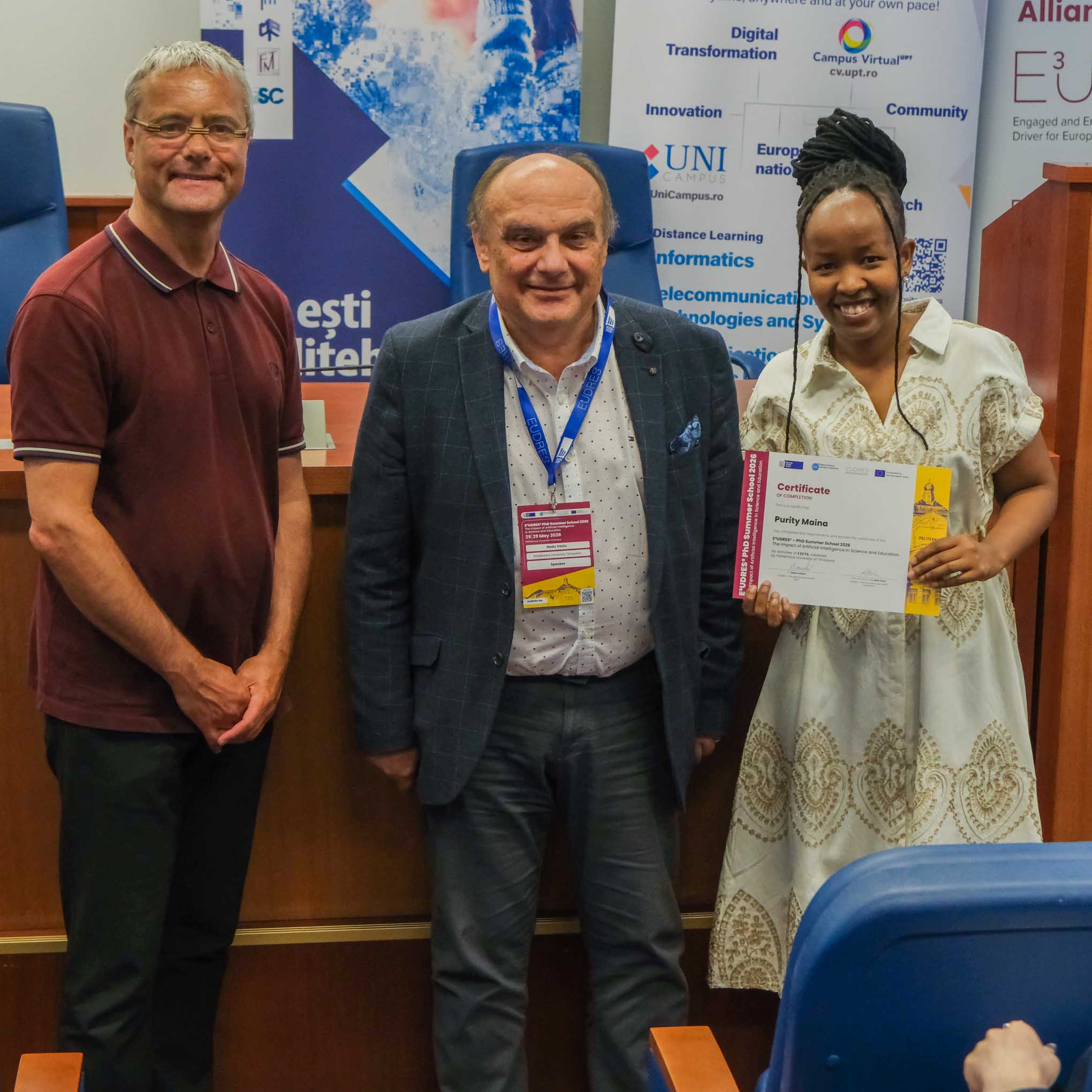
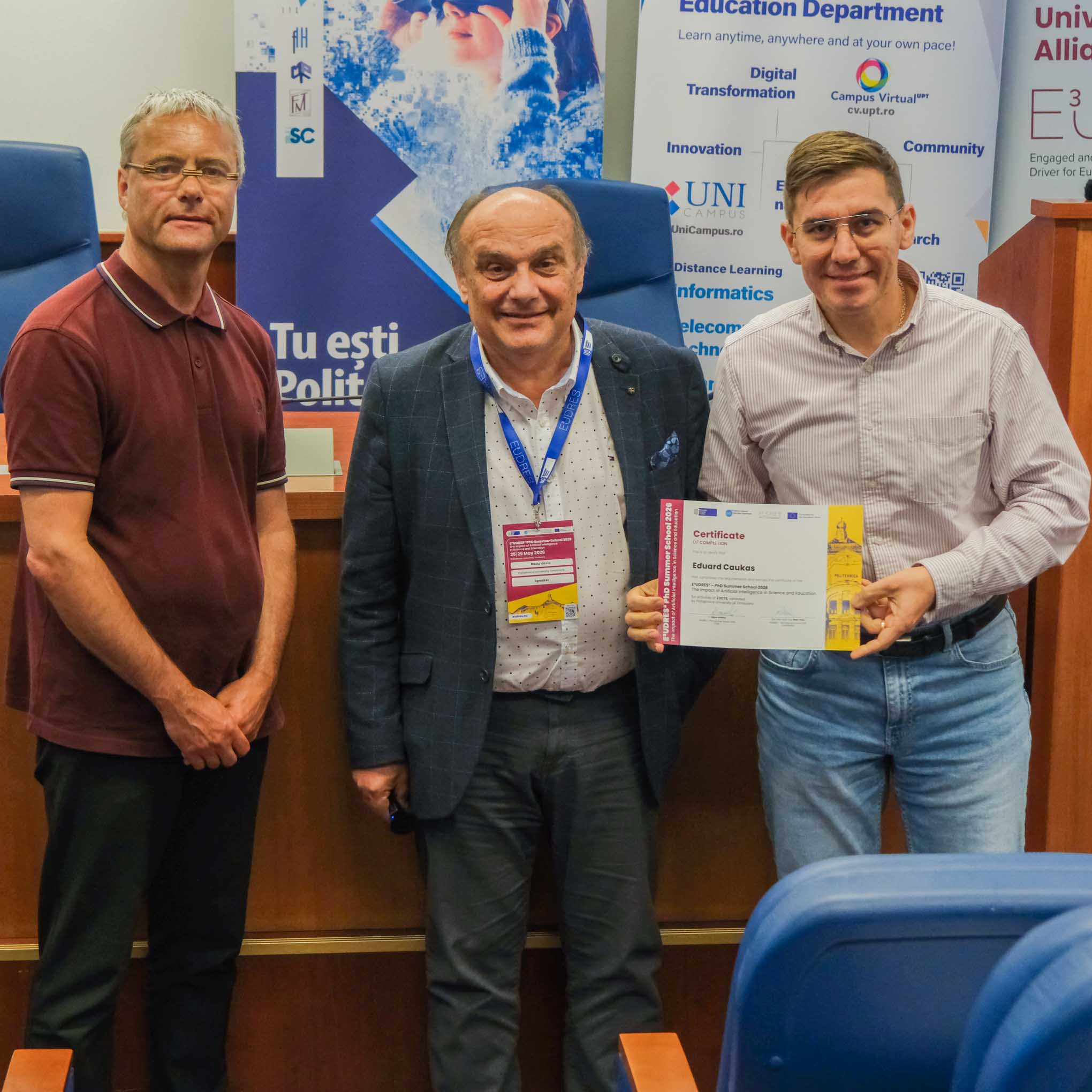
At the end of the program, all participants received digital badges issued through the E³UDRES² platform, physical participation certificates and, those who have completed all the practical activities, 2 ECTS credits. The graduation diplomas were handed over by Prof. Emeritus Dr. Eng. Radu Vasiu and FH-Prof. Dipl.-Ing. Hannes Raffaseder. All speakers of the event also received recognition diplomas, handed over by Prof. univ. em. dr. ing. Radu Vasiu.
The E³UDRES² Alliance is one of 50 European University Alliances in Europe – an initiative launched by the European Commission, indicating excellence in the field of higher education.
The E³UDRES² European University Alliance is comprised of nine higher education institutions: A combination of unique, scientific universities and universities of applied sciences (UAS).