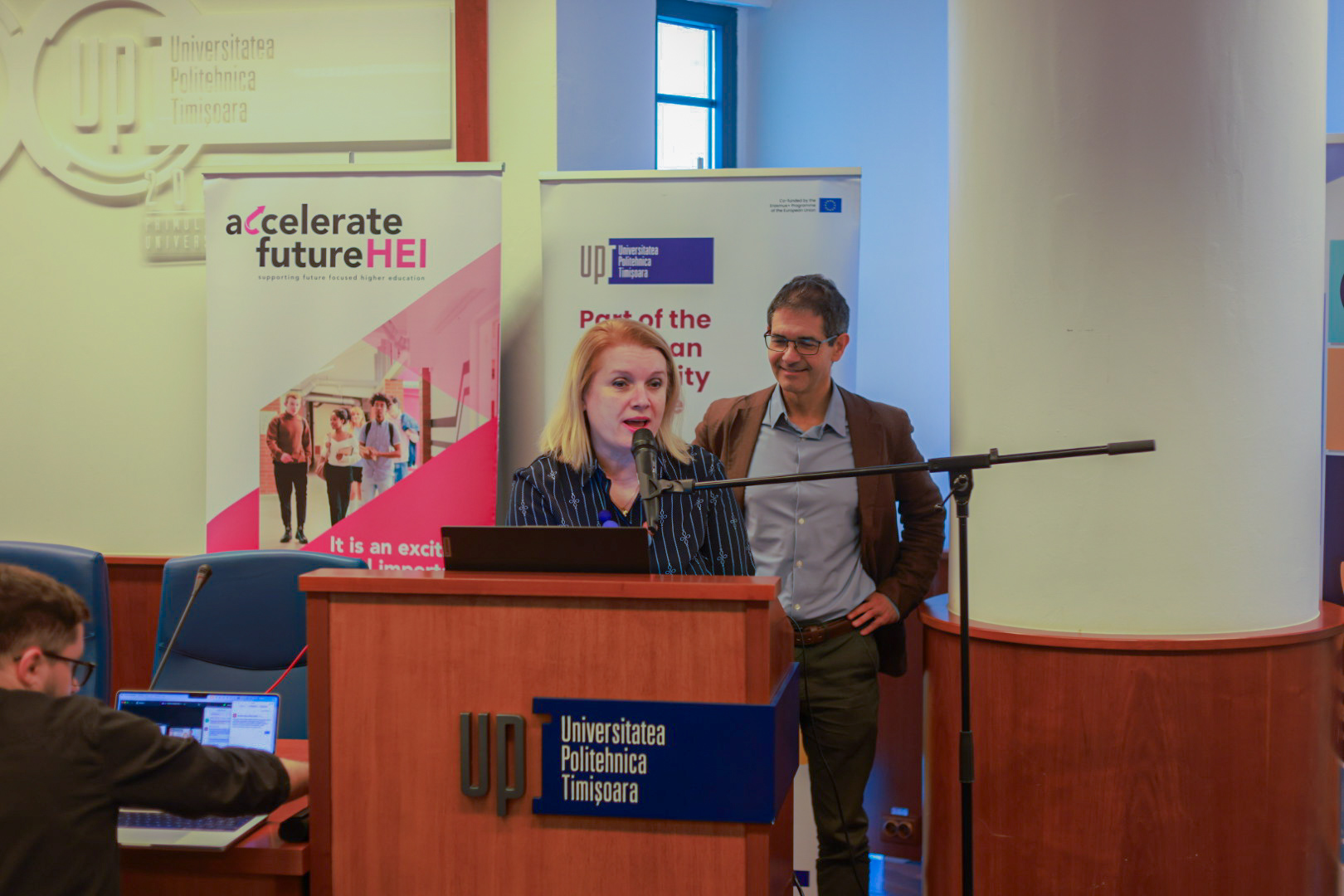
Hundreds of participants at the Open Education & Science Practices Workshop 2026 UPT

Hundreds of participants at the Open Education & Science Practices Workshop 2026 UPT

Politehnica University of Timișoara, through the Digital and Distance Education Department in collaboration with European Universities Alliance E³UDRES², the project Accelerate Future HEI and with the support of IEEE Romania, successfully hosted the 12th edition of the International Open Education & Science Practices Workshop, on Friday, March 6, 2026, as part of Open Education Week 2026, supported by Open Education Global.

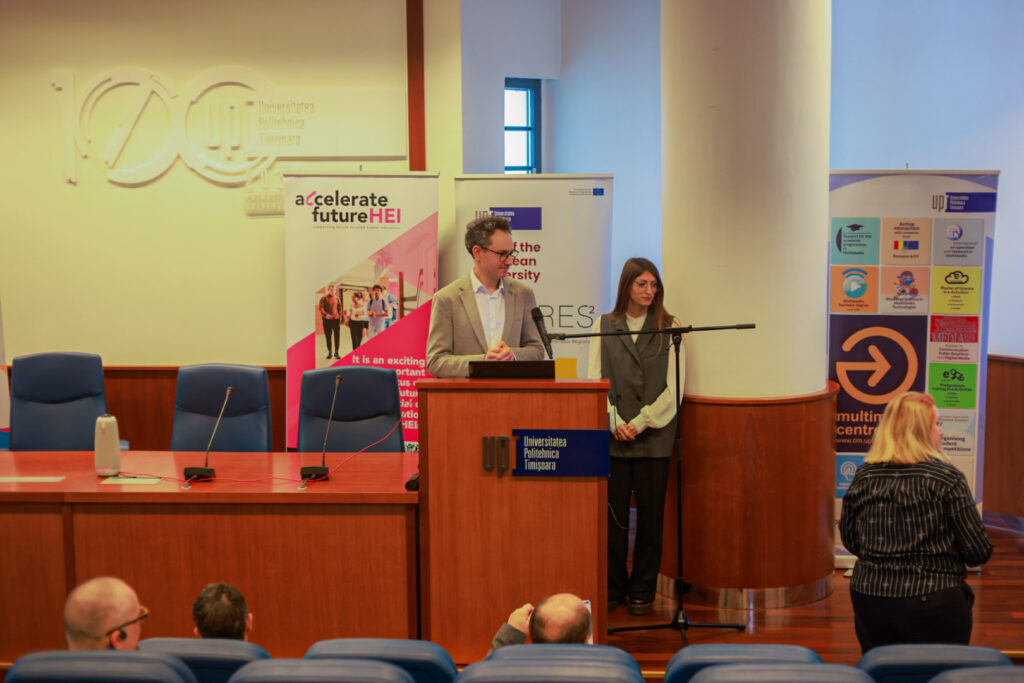
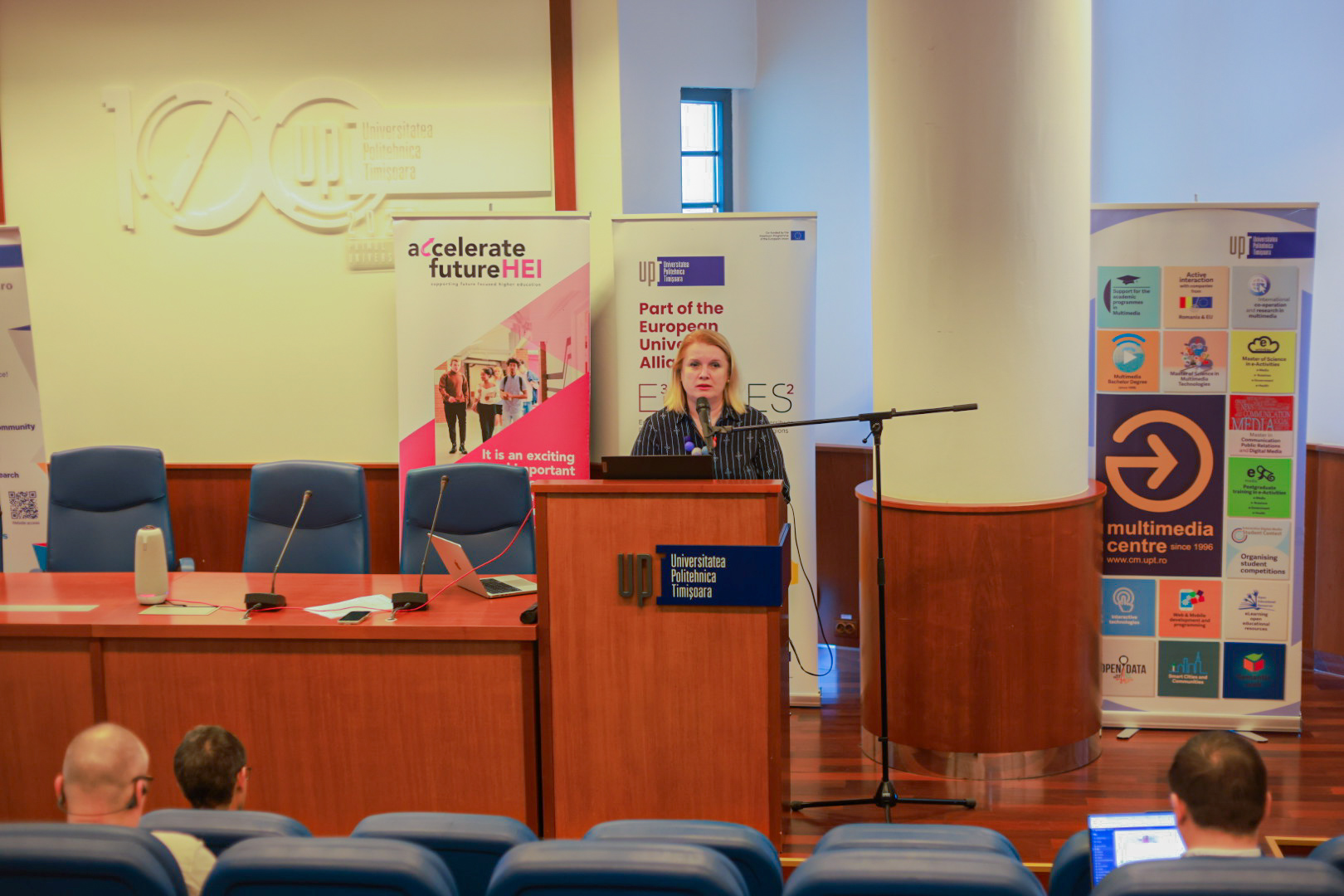
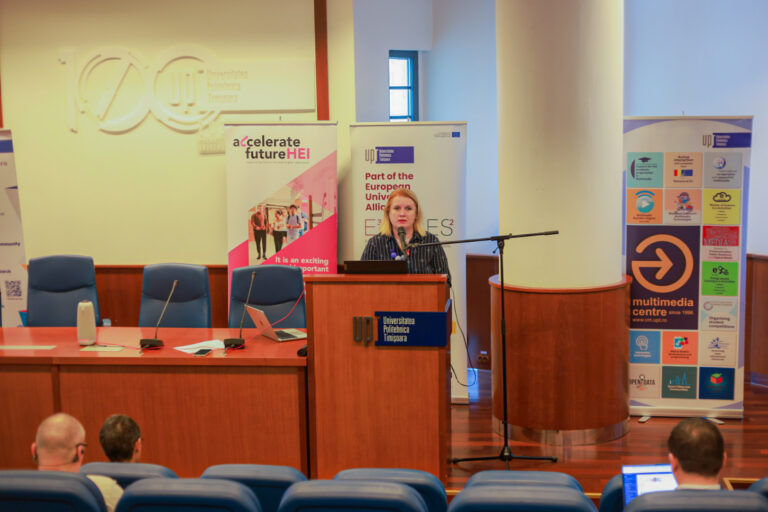
The event took place in a hybrid format, bringing together over 300 participants, of which approximately 280 online and over 30 physical participants in room K1 of the UPT Conference Center. The sessions addressed the impact of artificial intelligence, vibe coding, open educational resources and federated digital platforms on education and research, offering practical examples, live demonstrations and case studies.

Under the theme "Digital and emerging technologies in education and science”, the workshop explored the ways in which open science and open educational resources (OER) are integrated into university practices, research projects and general education. A particular focus was placed on the response of education and research systems to the challenges brought by generative artificial intelligence (GenAI), virtual reality and blockchain.

Exceptional presentations, international experts:

The event was held in a hybrid format, bringing together over 300 participants, of which approximately 280 online and over 30 physically in room K1 of the UPT Conference Center. The sessions addressed the impact of artificial intelligence, vibe coding, open educational resources and federated digital platforms on education and research, offering practical examples, live demonstrations and case studies.

The presentations were marked by an active spirit of collaboration and exchange of ideas: participants asked questions both in the room and online, via Zoom and the live voting app Mentimeter, interacting directly with the speakers and contributing to dynamic debates on the topics presented. The feedback received was positive, with participants appreciating the relevance of the topics addressed and the quality of the presentations provided by the speakers. 14 speakers from 4 countries (Romania, Italy, Spain and the USA).

Keynote Session:
Dr. Jesus Alcober (UNITE! European University Alliance, aUPaEU, Alteraid SL, Spain)

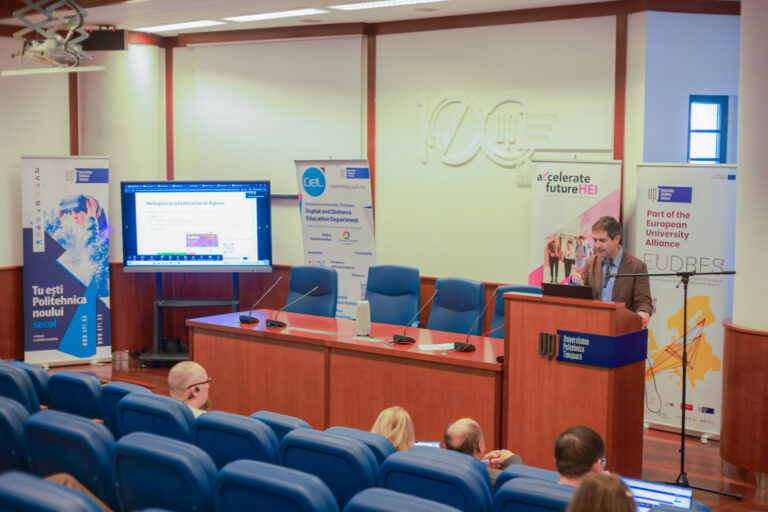
Dr. Jesus Alcober opened the workshop with a keynote presentation on the evolution of open knowledge within European university alliances, through how cross-border collaboration redefines access to knowledge — from traditional structures to integrated and interconnected digital spaces. If Agora represents the physical place of the community, Metagora extends this concept into the virtual space.

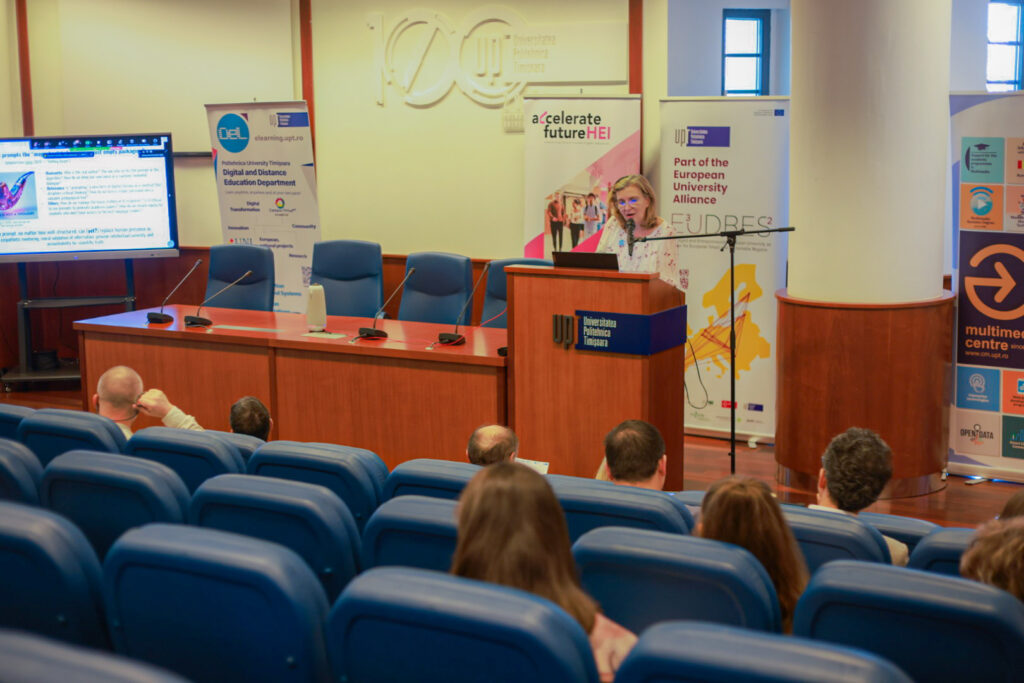
The opening speech was given by Dr. Eng. Diana Andone and by the Vice-Rector of UPT, Prof. Dr. Eng. Liviu Marsavina, who emphasized the importance of international partnerships, especially through the European University Alliance E³UDRES² — and of initiatives that actively support the development of education at all levels, such as the Accelerate Future HEI project.

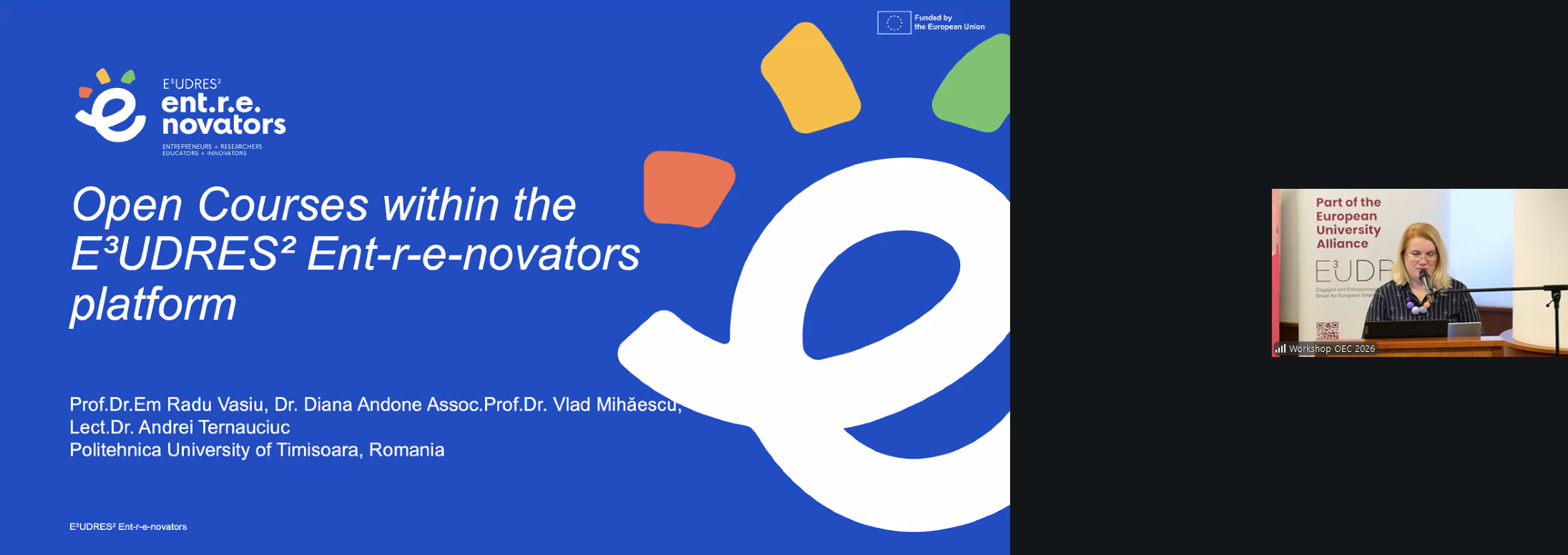
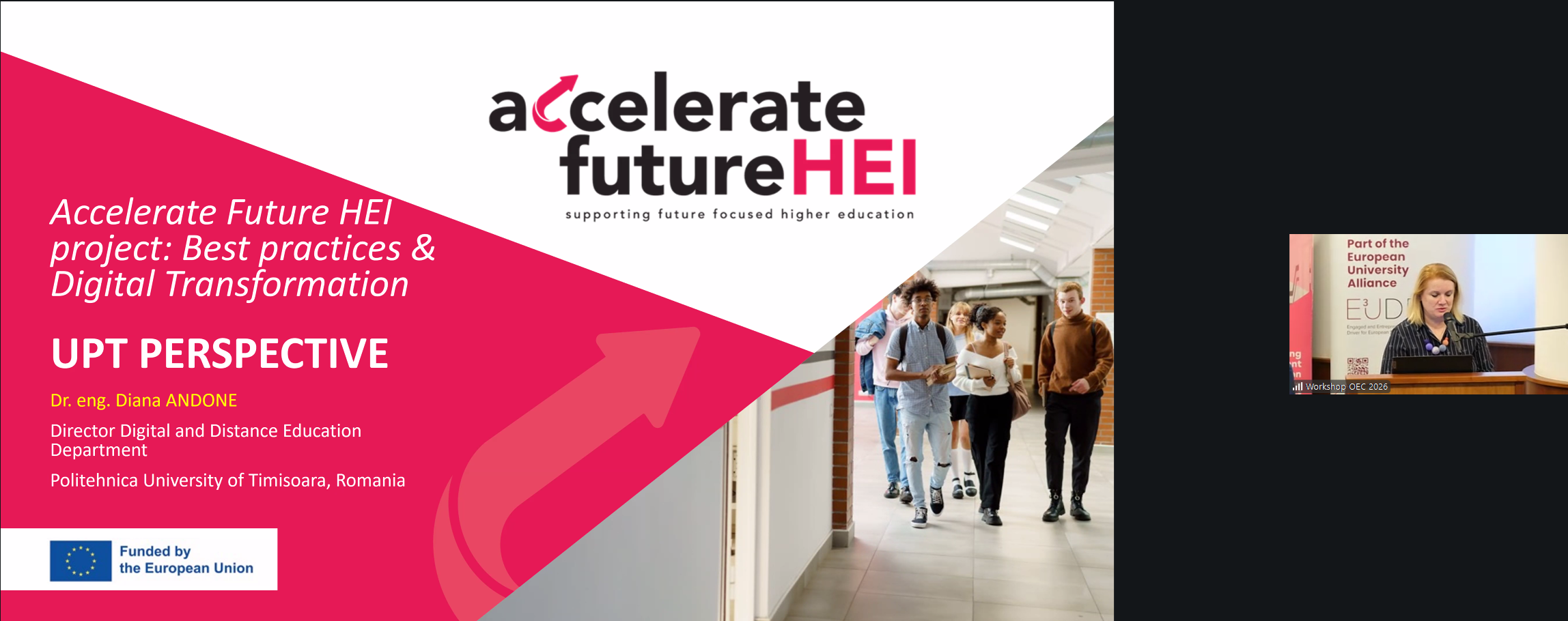
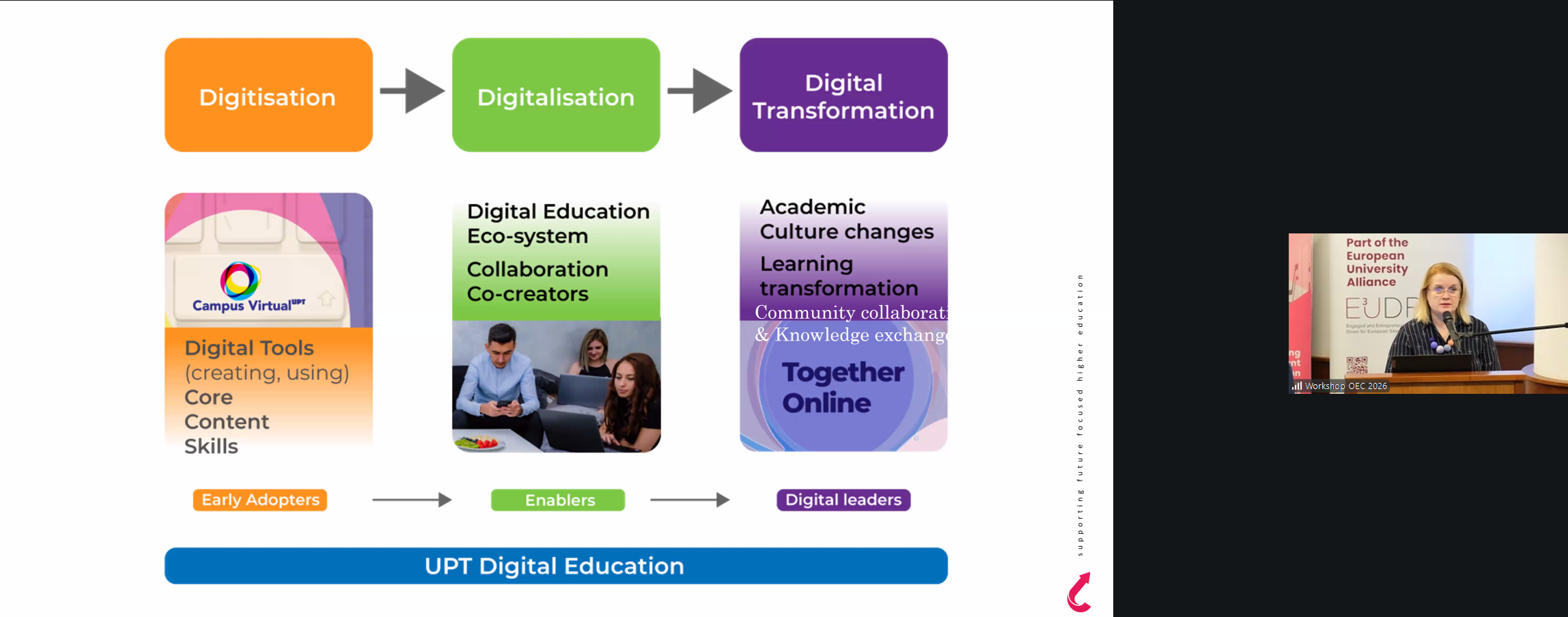
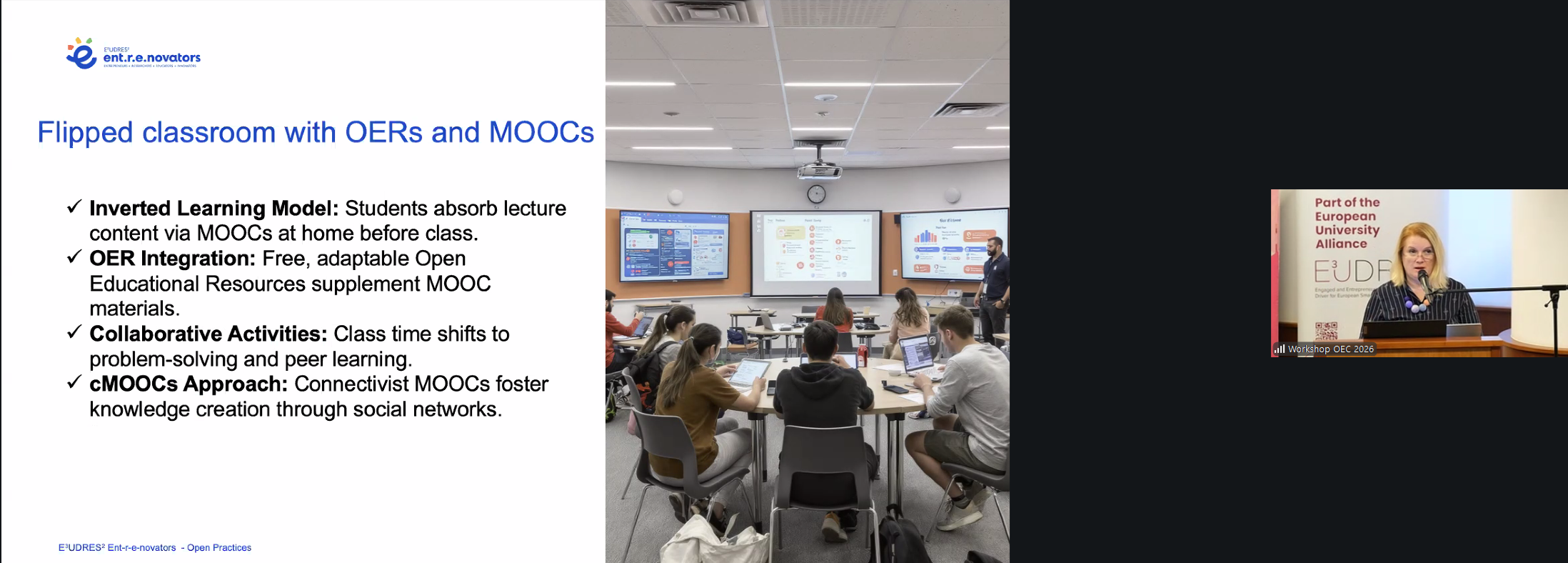
Dr. Eng. Diana Andone (UPT) presented, in two distinct sessions, the project Accelerate Future HEI — with a focus on digital transformation and institutional best practices — and open courses integrated into the platform E³UDRES² Ent-re-innovators, highlighting the flipped classroom model and the recognition of skills through Open Badges.

Univ. Assoc. Dr. Gabriela Grosseck (UVT) explored the concept of RED in the era of artificial intelligence, addressing academic rigor, copyright, and the power of speech in interaction with AI.

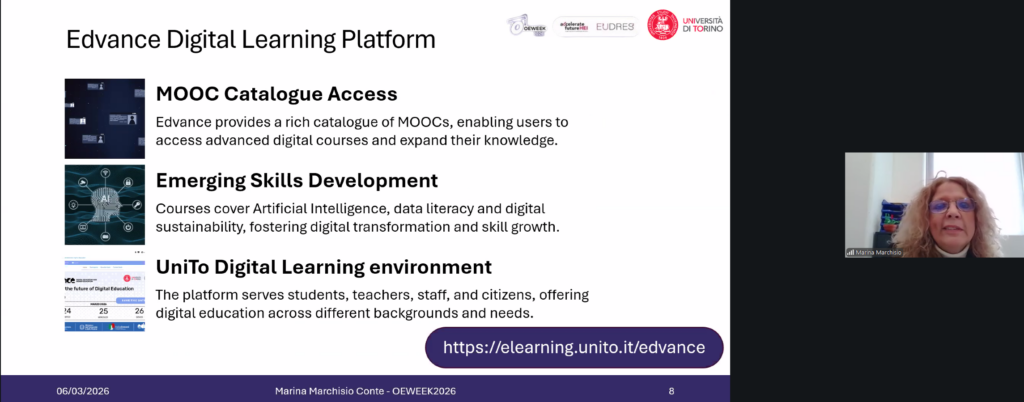
Marina Marchisio (University of Turin) presented the Edvance Digital Education Hub project, a collaborative ecosystem formed by 16 Italian universities, with over 150 MOOC courses in areas such as AI, data literacy and digital sustainability.

Associate Professor Dr. Eng. Vlad Mihăescu (UPT) addressed the use of MOOCs as a tool for increasing student motivation and engagement in their academic journey.

Assoc. Prof. Dr. Eng. Silviu Vert and Dr. Eng. Diana Szekely (UPT) presented an applied study of user-centered redesign of the UPT admissions web platform, demonstrating how user-centered design and candidate feedback can transform the digital university access experience.

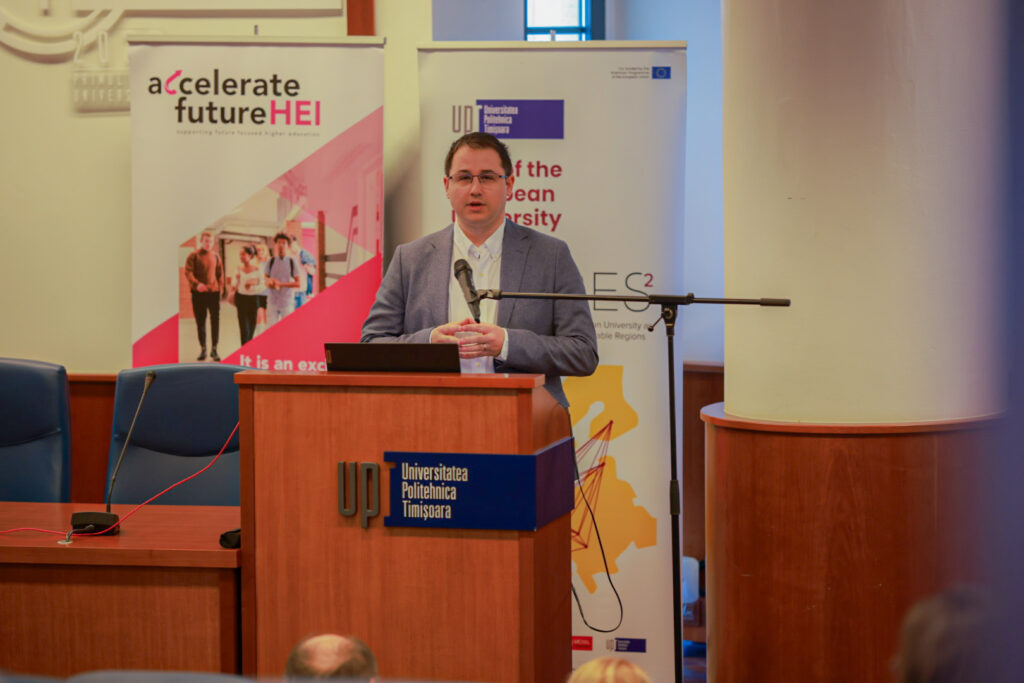
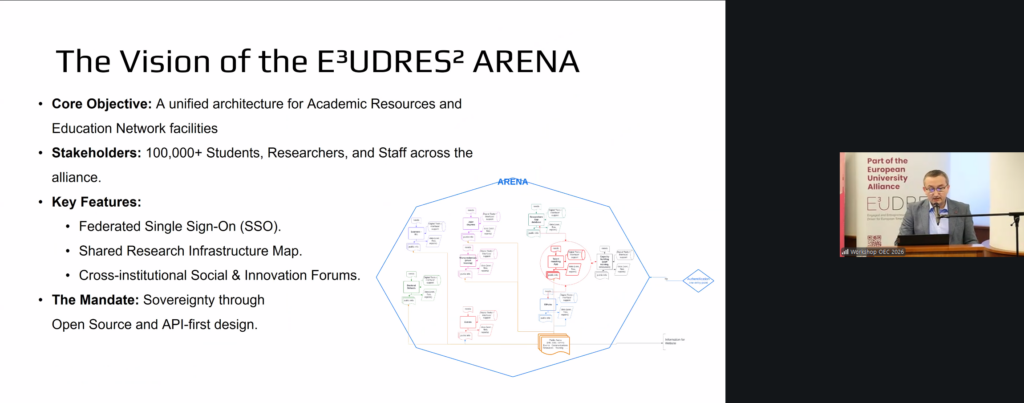
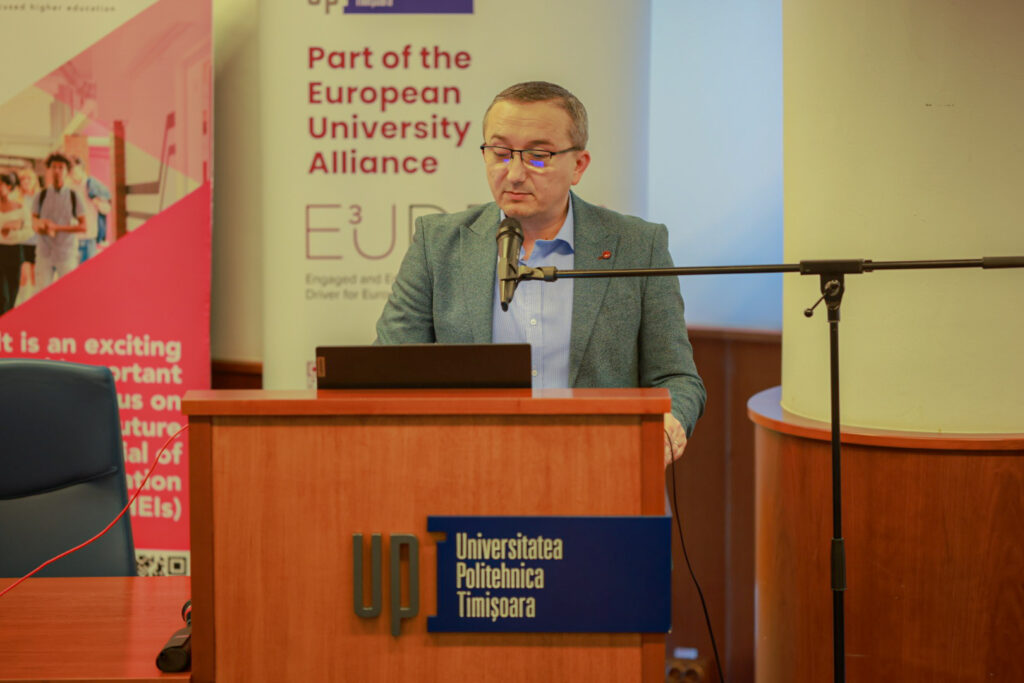
Associate Professor Andrei Ternauciuc (UPT) detailed the architecture E³UDRES² ARENA — the alliance's digital ecosystem, based on federated authentication, open-source microservices (Moodle, Nextcloud, Keycloak) and digital certificate integration via blockchain (EBSI). He also presented the session on GenAI and ABC Learning Design instead of Prof. Dr. Carmen Holotescu, a presentation that demonstrated how generative AI can automate the analysis of university courses and facilitate the transition from OER to open educational practices.

Andrei Ternauciuc presented the paper prepared by Prof. Dr. Carmen Holotescu, about GenAI and ABC Learning Design, a presentation that demonstrated how generative AI can automate the analysis of university courses and facilitate the transition from OER to open educational practices.

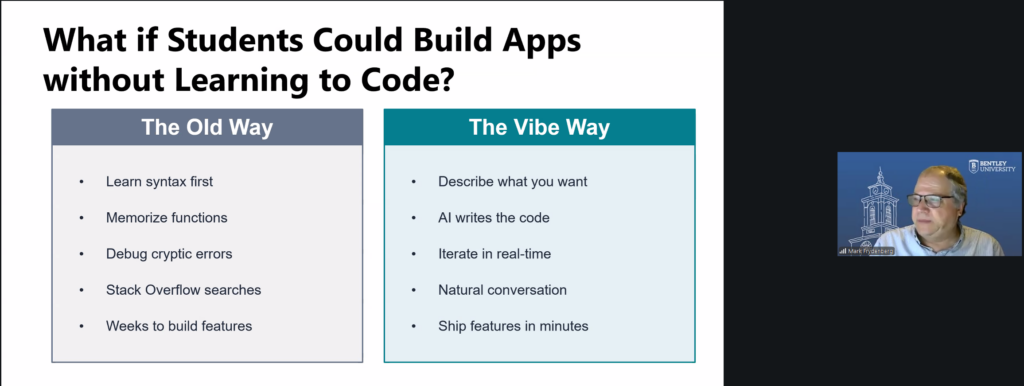
Senior Lecturer Mark Frydenberg (Bentley University, USA — online) captivated the audience with a live demonstration of vibe coding — an approach through which students can create functional applications using simple prompts, without prior knowledge of programming syntax, with AI in the role of co-creator.

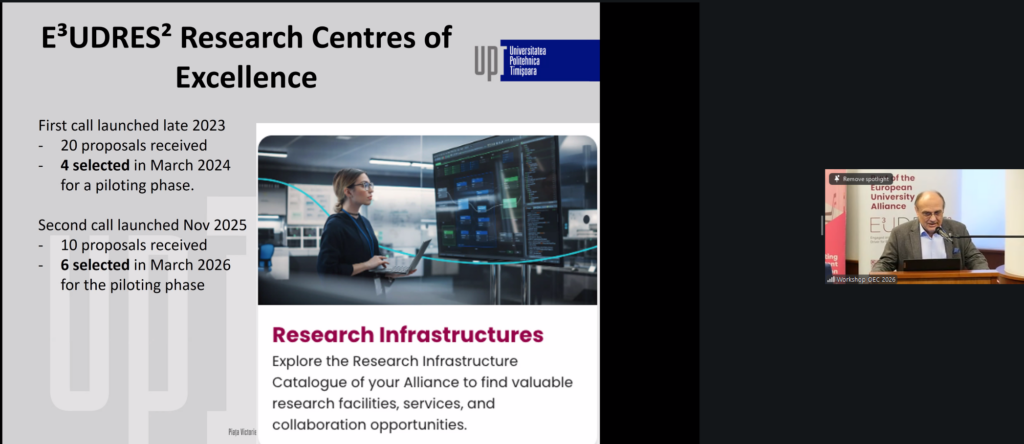
Prof. Em. Dr. Eng. Radu Vasiu (UPT) offered a broad perspective on the integration of Open Science into the E³UDRES² Alliance strategy, presenting concrete tools: E³UDRES² Bank of Researchers (with over 360 researchers connected), joint doctoral programs, centers of excellence and citizen science initiatives.

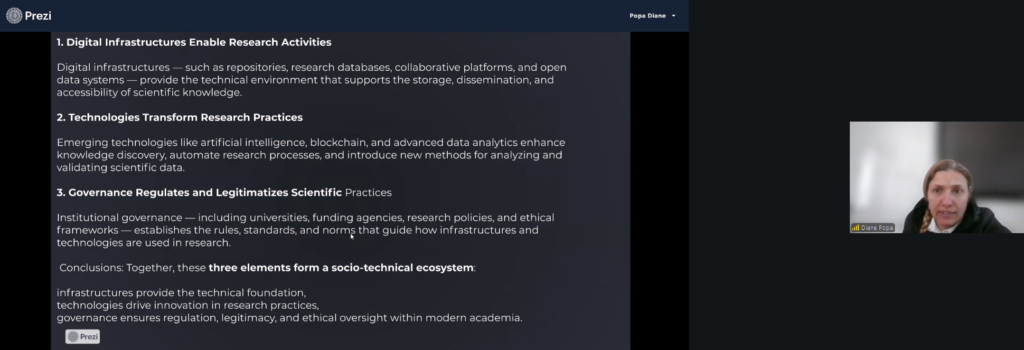
Diane Popa (Florin Fleşeriu Sports High School, Sebeş — online) concluded the workshop with a presentation on the interdependencies between Open Science, digital infrastructures and emerging technologies, emphasizing that the open transformation of research is essentially epistemic, not just technical.

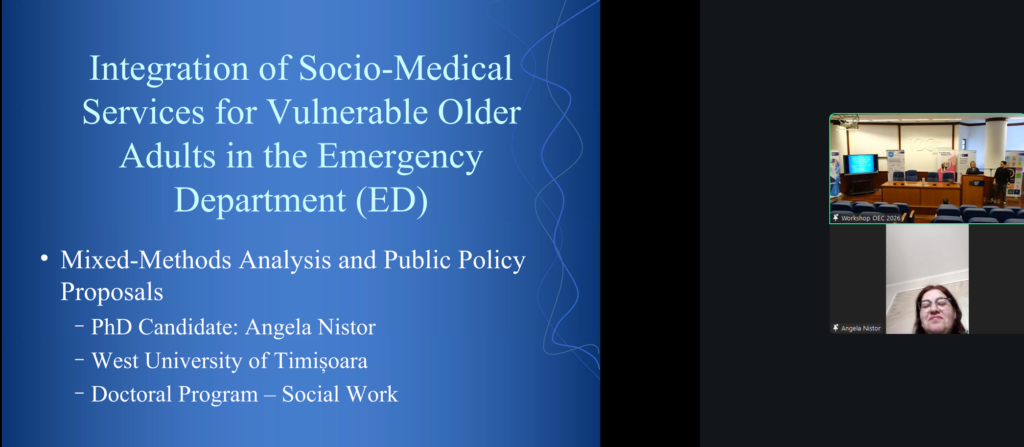
Dr. Angela Nistor (West University of Timişoara — online) presented the results of a mixed study on the integration of social and medical services for vulnerable elderly people in Emergency Rooms, with concrete public policy proposals.

For the first time, within the XII edition of the Workshop Open Education & Science Practices, the papers will be published in open-access format by Publishing House of the Politehnica University of Timișoara, contributing to the dissemination of knowledge and the advancement of the field.

Among the initiatives highlighted in several presentations were the projects E³UDRES² partners and Ent-r-e-novators, with a series of detailed presentations, highlighting initiatives in promoting open science and innovation in open education.

The platform was also highlighted E³UDRES² ARENA, which is to become the alliance's central digital hub, accessible to over 100,000 students, researchers and academic staff.